A family dinner
Gourmet pizza and Italian entrees in a sit-down restaurant.
Italian restaurant franchise opportunities
An Italian restaurant franchise with Russo's combines New York-style pizza, pasta and family recipes in a full-service restaurant. Candidates can review culinary training, operating support and ownership requirements before proposing a market.
Request restaurant franchise informationRusso's is a full-service New York pizzeria and Italian kitchen. The menu brings pizza, pasta, calzones, Italian entrees, salads, sandwiches and desserts into one restaurant.
Chef Anthony Russo founded the concept in Houston in 1992; franchising began in May 1998. Family recipes and fresh-to-order food sit at the center of the brand.
The published ideal footprint is 1,500 to 4,500 square feet, subject to the site, approved restaurant plan and local requirements.
The chef-driven difference
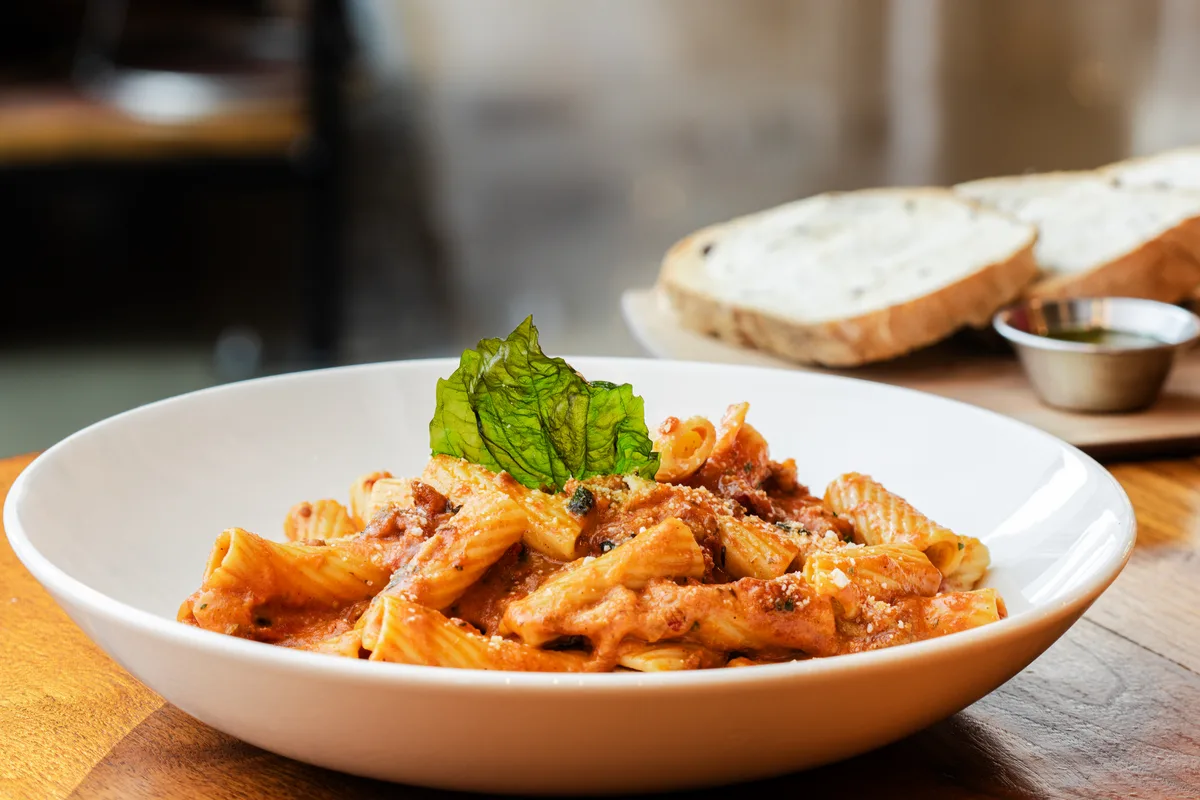
Gourmet pizza and fresh homemade pasta begin with premium flour, fresh dough and scratch-made sauces. We cook with extra virgin olive oil instead of seed oils, keeping Chef Anthony Russo's food story at the center of the restaurant.
The cooking-oil statement does not certify every purchased ingredient as seed-oil-free. Menu availability varies by restaurant and market.
Meet the chef, explore the recipes and understand the kitchen standards before you evaluate ownership.
Explore Chef & IngredientsThe guest occasions
Gourmet pizza and Italian entrees in a sit-down restaurant.
Fresh pasta, salads and pizza for guests on the go.
A full menu ordered for home or work.
Italian trays and group options for offices and celebrations.
These are guest occasions, not guarantees of demand, sales mix or results.
Compare restaurant franchise formats
Restaurant franchise candidates usually weigh three formats. Each one serves a different occasion and asks for a different owner, kitchen and site.
| Decision point | Pizza-only franchise | Fast-casual counter concept | Russo's Italian kitchen |
|---|---|---|---|
| What the guest comes for | A pizza order, usually carried out or delivered. | A quick individual meal ordered at the counter or a kiosk. | A family dinner, a pasta lunch, a catered office tray or a pizza night, all from one menu. |
| The dinner daypart | Depends on at-home pizza demand. | Often thinner than lunch; dining rooms are built for turnover. | Fresh pasta, Italian entrees and a sit-down room give the restaurant a dinner trade of its own. |
| Kitchen skills | Dough, sauce, toppings and oven timing. | Assembly-line preparation with a fixed build list. | Scratch dough, house-made marinara and pesto, fresh pasta cooked to order and hand-rolled meatballs. |
| Sales channels | Carryout and delivery, sometimes a few seats. | Counter service and takeout, with delivery through third parties. | Dine-in, takeout, delivery and catering run from the same kitchen. |
| Real estate | Small inline or end-cap units. | Compact inline space in high-traffic retail. | 1,500 to 4,500 square feet with seating, subject to the site and approved plan. |
| What to verify in the FDD | Delivery economics and third-party fees. | Technology and kiosk packages, premium rents. | Equipment, ventilation and seating lines in Item 7, plus the training program. |
A full Italian menu often adds cooking equipment, refrigeration, ventilation and seating compared with a carryout pizza format, so the investment comparison must start with each brand's complete Item 7 table rather than its franchise fee. In return, the broader menu gives guests more reasons to visit and the owner more than one occasion to sell.
The trade-off is operating discipline. Fresh pasta and scratch sauces require culinary training, prep planning and a management bench that a narrow menu does not. Russo's addresses that with hands-on training at the Houston flagship and recipe, ingredient and supplier standards, described on the training and support page. The full-service vs. fast-casual comparison goes deeper on guest experience, staffing and real estate.
Published U.S. total investment range.
Initial U.S. franchise fee.
Liquid capital requirement.
Net worth requirement.
Investment includes the franchise fee and varies by site and restaurant plan. Review the current FDD, including Items 5, 6 and 7. U.S. figures are not international investment quotes.
Beyond the opening budget, candidates should evaluate staffing, kitchen execution, rent, inventory, local marketing and working capital for their own market. Sales are not profit; use independent advisors and the full franchise disclosures.
| Total initial investment (FDD Item 7) | $439,350 – $1,501,000 |
|---|---|
| Initial franchise fee (included in the total) | $35,000 |
| Royalty | 6% (see FDD for fee base) |
| Brand Management Fund and local advertising | A mandatory Brand Management Fund and local advertising obligations apply. Item 6 and Item 11 state different fund rates; obtain written clarification before budgeting. |
| Ideal restaurant footprint | 1,500 to 4,500 sq. ft. |
The range covers the buildout, kitchen equipment and furnishings, the opening food order, training, grand opening marketing, technology, vendor setup and working capital reserves.
A full Italian kitchen needs more cooking equipment, refrigeration and seating than a carryout counter. The condition of the space you lease, its ventilation and electrical service, and the size of the dining room move your number more than the franchise fee does. The complete Item 7 table, category by category, is on the pizza franchise cost page.
Item 19 performance information
For fiscal year 2025, the top 25% of franchised Russo's stores averaged $1,368,586 in net sales and the top 50% averaged $1,042,444 in net sales, as reported in Item 19 of the Franchise Disclosure Document.
These are historical net sales averages for two defined groups of franchised stores. They show what some restaurants have sold; they do not show what any restaurant earned. Rent, labor, food cost, debt service, taxes and insurance all come out before an owner sees income.
Some outlets have sold these amounts; there is no assurance you will sell as much. These are historical net sales averages for the stated groups of franchised stores, not profit, owner income, cash flow or forecasts. Individual results vary. The current FDD contains the complete Item 19 definitions, outlet population, notes and qualifications. No sales, profit or return is guaranteed.
Read Item 19 together with Items 5, 6 and 7, then review the Item 19 explanation and how restaurant revenue differs from profit before building projections for your market.
Candidates prepared to lead a restaurant team and follow the brand's operating standards.
Operators with management, real estate and development capacity.
Qualified groups with local-market, food-service and supply-chain experience.
Candidate approval and required owner participation are governed by the applicable franchise documents and agreements.
Training can address dough, sauces, pizza, pasta, kitchen operations, food safety, guest service, ordering and catering. Confirm the current program, responsibilities and ongoing support in the FDD.
Explore restaurant training and supportHow ownership happens
Russo's uses one six-step process for single-unit and multi-unit candidates. Here is what each step means for a restaurant owner.
Fifteen minutes on your market, your restaurant background and the basic qualifications: $250,000 in liquid capital and a $550,000 net worth.
Describe the trade area you want reviewed, who will run the restaurant day to day and how you plan to fund the opening.
Read the full disclosure with a franchise attorney and accountant: Item 7 costs, Item 6 fees, Item 19 sales history and the training obligations.
Come to Houston, tour operating restaurants and meet senior leadership before you commit.
Signed when both sides confirm the fit. Groups planning several restaurants sign a development agreement that sets the area and schedule.
Site review, lease, design and construction coordination, hands-on training at the Houston flagship, supplier setup and grand opening support in your market.
Timelines vary with site selection, lease, permitting, construction and local conditions. The current FDD and franchise agreement define the training program, attendance requirements and support obligations.
Candidates without restaurant experience should read whether you can own a restaurant franchise without experience, and anyone planning a first opening can follow the step-by-step guide to opening a pizza restaurant.
Owner evidence
Kevin Barth and Phuong Thai were longtime Russo's guests before they became first-time franchise entrepreneurs in Mesa, Arizona. The food, the service and a personal connection with Chef Anthony Russo drew them to the brand, and their path from guest to operator is one the owner profiles explore in detail.
Kristina and Christian Alvarez own and operate Russo's second Arizona restaurant at 521 S. College Avenue in Tempe, announced on September 24, 2026. The opening announcement credits the food, quality ingredients and scratch-made recipes for their decision.
In the franchisee videos, multi-unit owner Sam explains what he values about being part of Russo's, Guillermo Medellin talks through opening a restaurant, and Waruna describes owning a Russo's in Doha, Qatar. Statements are the views of individual franchisees; experiences and results vary by owner, market, restaurant and time period.
Russo's restaurants operate in Texas, Arizona, California and Oklahoma, with international operations in Qatar; the first international restaurant opened in Dubai in 2013. Signed area development agreements cover three restaurants in Fresno and three in Sacramento, and international development agreements are in place for Mexico, Qatar and the Philippines.
Owners train at the Houston flagship and work from the same recipes: fresh dough made in-house, sauce from California-grown tomatoes, 100% mozzarella from a Wisconsin dairy farm, and extra virgin olive oil rather than seed oils in the cooking. Chef Anthony Russo's rule still governs the kitchen: "If it isn't fresh, don't serve it."
The cooking-oil statement is a kitchen standard, not a certification that every purchased ingredient is seed-oil-free. Menu items vary by restaurant and market.
The menu gives guests a choice of shared pizza, individual pasta dishes, salads, calzones and other Italian kitchen dishes. Owners must plan preparation, staffing, equipment and inventory for the full menu. Training and approved sourcing help teams follow the brand's recipes and kitchen standards.
The published U.S. total initial investment is $439,350 to $1,501,000, including the $35,000 initial franchise fee. Read Item 7 of the current Franchise Disclosure Document for the complete investment table and assumptions. Costs vary by site and approved plan. International development requires a separate review of applicable terms and costs.
Item 6 states a 6% royalty on Gross Sales. A mandatory Brand Management Fund and local advertising obligations apply. Item 6 and Item 11 state different fund rates; obtain written clarification before budgeting. Review all fees and payment terms in the current FDD.
Published U.S. qualifications are $250,000 in liquid capital and $550,000 in net worth. These are separate from the total opening budget. Meeting them does not guarantee franchise or financing approval. International requirements need a separate review with Franchise Development.
There is no single opening timeline for every site. Candidate review, financing, site approval, the lease, permits, construction and training affect the schedule. Ask Franchise Development for the milestones and responsibilities for your proposed restaurant before committing to a property.
Russo's offers introductions to lenders familiar with restaurant franchising. Independent lenders make their own decisions based on credit, capital, collateral and the proposed restaurant. Financing approval and loan terms are not guaranteed.
Submit your preferred city, state or country to Franchise Development. A published market guide or inquiry does not reserve a territory or guarantee availability. The team must review the candidate and proposed market; the applicable disclosure documents and signed agreements define any territory rights.
Ask about culinary and operational training, approved recipes and suppliers, site review, opening preparation, technology, marketing guidance and ongoing support. The current FDD and applicable agreements define the program, attendance requirements, expenses and the responsibilities of both parties.
Research your market
Russo's FDD is active in 36 states and the District of Columbia. Each state guide explains the disclosure status, how to compare restaurant franchises there and which trade areas to study first. A guide is a research starting point, not a confirmation that a site or territory is available.
Start with restaurant franchise research for Texas, the Arizona guide covering Tempe and Mesa, and California, where Fresno and Sacramento development agreements are signed. Oklahoma candidates can review the Oklahoma guide.
Compare Florida, Georgia, Colorado and Utah before proposing a trade area to Franchise Development.
Groups planning three or more restaurants should read about multi-unit development, and Florida candidates can review the Florida restaurant franchise program. For the concept overview, see the Russo's pizza franchise opportunity.
Compare the restaurant concept, sourcing options and published U.S. costs before discussing your market. International terms and territory availability require a separate review.
Your ownership conversation
Tell us how to reach you. Franchise Development will help you explore the concept, your market and the next steps toward ownership.
Prefer to talk? Call our franchise team.
Call (832) 849-0724anthony@nypizzeria.com
Submitting an inquiry does not reserve a territory or guarantee franchise approval. Review the applicable franchise disclosures before making a decision.
Talk through your next step
Choose a time that works for you to discuss your market and ownership plans. The booking calendar opens in Google Calendar in a new tab.
Prefer that we contact you? Ask about financing or ask about investor visa plans.
Financing is subject to independent lender review. Investor visa eligibility and strategy require advice from qualified immigration counsel. No financing or visa approval is guaranteed.