
$439,350–$1,490,000
Published U.S. total investment range.
Pizza franchise opportunities
A full service pizza franchise with Russo's brings New York-style pizza and an Italian kitchen into one restaurant. The model combines a dine-in experience with takeout, delivery and catering, supported by recipes, training and operating guidance.
Request the franchise kit Review cost & qualificationsQualified candidates can explore developing an approved Russo's restaurant, with single-unit, multi-unit and international paths subject to qualification, territory status and applicable law. This is not a listing to buy an existing operating restaurant.
Published U.S. total investment range.
Initial U.S. franchise fee.
Liquid capital requirement.
Net worth requirement.
Investment includes the franchise fee and varies by site and restaurant plan. Review the current FDD, including Items 5, 6 and 7. U.S. figures are not international investment quotes.
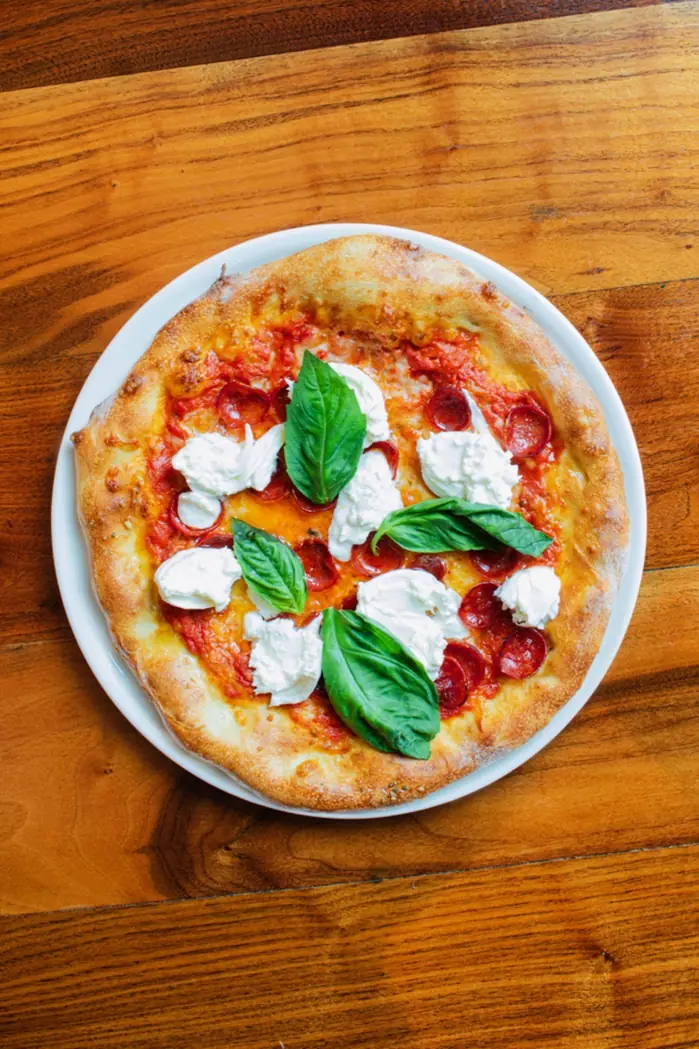
What makes the concept different
Chef Anthony Russo introduced the concept in Houston in 1992, and the brand began franchising in 1999. Family recipes, fresh dough and chef-led food standards shape the restaurant experience.
Fresh pasta, calzones, salads, sandwiches, Italian entrees and desserts make Russo's a full-service Italian kitchen, not just a pizza-only format.
Explore the Italian restaurant modelThe chef-driven difference
Gourmet pizza and fresh homemade pasta begin with premium flour, fresh dough and scratch-made sauces. We cook with extra virgin olive oil instead of seed oils, keeping Chef Anthony Russo's food story at the center of the restaurant.
The cooking-oil statement does not certify every purchased ingredient as seed-oil-free. Menu availability varies by restaurant and market.
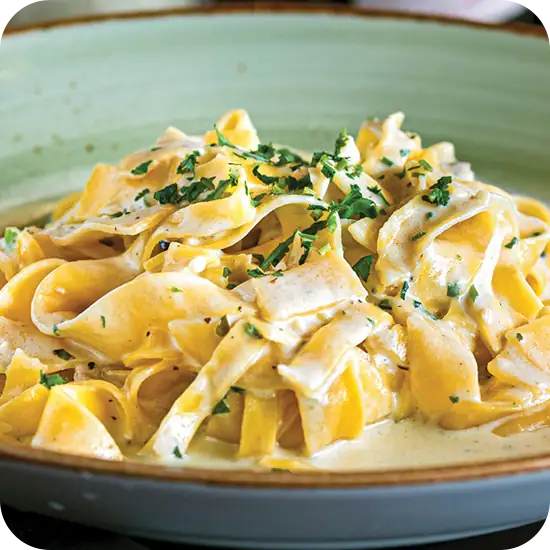
Meet the chef, explore the recipes and understand the kitchen standards before you evaluate ownership.
Explore Chef & IngredientsSit-down hospitality for families, friends and neighborhood guests.
Fresh meals ready for pickup.
Pizza and a full Italian menu for homes and workplaces.
Corporate lunches, private celebrations and group orders.
Sales mix and results vary by market, restaurant and operator. Multiple channels do not guarantee revenue or profit.
Compare the models
Most pizza franchise opportunities fall into one of three formats. The label matters less than what each format asks of the owner, the site and the kitchen.
| What to compare | Pizza-only delivery or carryout | Fast-casual pizza | Russo's full kitchen |
|---|---|---|---|
| Menu | Pizza, sides and drinks built around a short order list and speed. | Individual pizzas, often assembled in front of the guest, with a limited set of salads or sides. | New York-style pizza plus fresh pasta, calzones, Italian entrees, salads, sandwiches and desserts. |
| Guest occasions | Quick dinners at home and group orders. | Fast weekday lunches and counter-service dinners. | Family dinners, date nights, lunch pickup, office delivery and catered events from one kitchen. |
| Service format | Counter, phone and app ordering, with little or no seating. | Counter or digital ordering with limited table service. | Sit-down hospitality with full takeout, delivery and catering programs. |
| Kitchen and staffing | A narrow prep list and a smaller crew per shift. | Line-style assembly and a fast oven; staffing follows the lunch and dinner peaks. | Scratch dough, house-made sauces and fresh pasta call for culinary training and a management bench. |
| Footprint | Typically the smallest box in the category. | Small to mid-size inline space in retail centers. | 1,800 to 3,500+ square feet, subject to the site and approved plan. |
| Due-diligence question | Can one or two channels carry the rent? | Does weekday lunch traffic exist where the site sits? | Does the trade area support dinner, lunch, delivery and catering together? |
A broader menu creates more reasons to visit, but it also raises the bar on training, prep, equipment, inventory and quality control. A narrower menu simplifies some tasks, yet the site, the lease and local demand still decide whether the model works. Russo's asks candidates to weigh the complete operating model, not the category name, and to compare full FDD investment tables rather than franchise fees alone.
Read the full-service vs. fast-casual pizza franchise comparison and the franchise vs. independent pizzeria guide before you settle on a format.
Investment summary
The figures below are the published U.S. references. The current Franchise Disclosure Document, including Items 5, 6 and 7, controls the complete costs, assumptions and terms.
| Total initial investment (FDD Item 7) | $439,350 – $1,490,000 |
|---|---|
| Initial franchise fee (included in the total) | $35,000 |
| Royalty | 6% (see FDD for fee base) |
| National advertising fee | None mandatory |
| Liquid capital requirement | $250,000 |
| Net worth requirement | $550,000 |
| Ideal restaurant footprint | 1,800 – 3,500+ sq. ft. |
The total covers the real estate buildout, kitchen equipment and furniture, the opening food order, franchisee training, grand opening marketing, technology and opening systems, vendor setup and working capital reserves, as well as the franchise fee itself. Where your restaurant lands inside the range depends on the site, its condition, the restaurant size and the approved plan. A former restaurant with usable ventilation and electrical service prices differently from a new buildout.
The pizza franchise cost page walks through the Item 7 categories one by one, and the opening-budget guide explains how to build a budget around a specific site. Financing introductions are available; approval is always subject to independent lender review.
Item 19
Russo's publishes two Item 19 figures for fiscal year 2025: the top 25% of franchised stores averaged $1,368,586 in net sales, and the top 50% averaged $1,042,444 in net sales.
Use these numbers to frame questions, not to forecast your restaurant. Some outlets have sold these amounts; there is no assurance you will sell as much. These are historical net sales averages for the stated groups of franchised stores, not profit, owner income, cash flow or forecasts. Individual results vary. The current FDD contains the complete Item 19 definitions, outlet population, notes and qualifications. Results differ with site, rent, labor, food cost, management, competition and financing.
Pair the sales figures with the Item 7 investment table and the Item 6 fee schedule, then build your own operating model. How much can a Russo's owner make walks through that reading, and pizza franchise revenue vs. profit explains what sits between net sales and what an owner keeps.
The process
Every Russo's candidate follows the same path. The pace depends on your market, your site and your financing.
A 15-minute conversation about your questions, your preferred market and the basic financial qualifications.
You share your goals, ownership role, capital plan and the city or trade area you want reviewed.
Receive the current Franchise Disclosure Document and work through territory, fees, Item 7, Item 19 and the ownership model with your advisors.
Visit Houston, tour operating restaurants, see the kitchen standards in practice and meet senior leadership.
Signed when both sides confirm the fit. Groups planning several restaurants sign a development agreement that sets the area and schedule.
Site selection, lease, design and construction coordination, training at the Houston flagship, vendor setup and grand opening support.
Timelines vary with site selection, lease negotiation, permitting, construction and local conditions. Signing an agreement does not guarantee a site or an opening date.
The training and support page describes each service in more detail, and the franchise inquiry form lets you share your market, budget and background before the first conversation.
Owner evidence
Kristina and Christian Alvarez opened Russo's second Arizona restaurant at 521 S. College Avenue in Tempe, near Arizona State University. The opening was announced on September 24, 2026. According to the announcement, the food, the quality ingredients and the scratch-made recipes drove their choice of concept.
In Mesa, Kevin Barth and Phuong Thai were longtime Russo's guests before becoming first-time franchise entrepreneurs. The food, the service and a personal connection with Chef Anthony Russo drew them to the brand.
Multi-unit owners Sam and Guillermo Medellin, and Waruna in Doha, Qatar, describe training, opening and growth in their own words on the franchisee stories page. Experiences differ by owner, market, restaurant and time period.
"I came from corporate America. The Russo's team helped me understand the business, the training, and the opening process. We were ready to move forward with confidence."Jeff Lewis, Russo's Northeast, Houston, TX
Russo's restaurants operate in Texas, Arizona, California and Oklahoma, with international operations in Qatar. Chef Anthony Russo opened the concept in Houston in 1992, franchising began in 1999 and the first international restaurant opened in Dubai in 2013.
In California, restaurants are open in Clovis and Fresno, and signed area development agreements cover three restaurants in Fresno and three in Sacramento. Internationally, area development agreements are signed in Mexico, Qatar and the Philippines.
Research your market
Russo's FDD is active in 36 states and the District of Columbia. Start with the market guide for your state, then compare trade areas with Franchise Development. A guide is a research starting point, not a confirmation that a site or territory is available.
Compare pizza franchise opportunities in Texas, where Russo's operates across Houston, Dallas–Fort Worth, San Antonio and the Gulf Coast, with the Arizona pizza franchise guide covering Tempe and Mesa, and California, where Fresno and Sacramento development agreements are signed.
Review the state guides for Florida, Georgia, Colorado and Nevada, each with its disclosure status and a section on how to compare pizza franchises in that state.
Texas candidates can review the Texas pizza franchise program; groups planning three or more restaurants should start with multi-unit development.
Review culinary and operational training, site guidance and opening preparation. Meet the team, speak with franchisees and consult independent advisors before signing an agreement.
Review training and supportPlan a dining room and full kitchen, not only a delivery counter. The owner is responsible for staffing, guest service, food preparation and daily execution across dine-in, takeout, delivery and catering. Review the approved layout, equipment, menu and staffing plan with Franchise Development before choosing a site.
The published U.S. total initial investment is $439,350 to $1,490,000, including the $35,000 initial franchise fee. Read Item 7 of the current Franchise Disclosure Document for the complete investment table and assumptions. Costs vary by site and approved plan. International development requires a separate review of applicable terms and costs.
Russo's publishes a 6% royalty and no mandatory national advertising fee. These are fee summaries, not a complete list of ongoing obligations. Item 6 of the current FDD defines the fee base, timing, local marketing duties and other charges.
Published U.S. qualifications are $250,000 in liquid capital and $550,000 in net worth. These are separate from the total opening budget. Meeting them does not guarantee franchise or financing approval. International requirements need a separate review with Franchise Development.
There is no single opening timeline for every site. Candidate review, financing, site approval, the lease, permits, construction and training affect the schedule. Ask Franchise Development for the milestones and responsibilities for your proposed restaurant before committing to a property.
Russo's offers introductions to lenders familiar with restaurant franchising. Independent lenders make their own decisions based on credit, capital, collateral and the proposed restaurant. Financing approval and loan terms are not guaranteed.
Submit your preferred city, state or country to Franchise Development. A published market guide or inquiry does not reserve a territory or guarantee availability. The team must review the candidate and proposed market; the applicable disclosure documents and signed agreements define any territory rights.
Ask about culinary and operational training, approved recipes and suppliers, site review, opening preparation, technology, marketing guidance and ongoing support. The current FDD and applicable agreements define the program, attendance requirements, expenses and the responsibilities of both parties.
See how Russo's compares to the top pizza franchises of 2026.
Explore how dine-in, takeout, delivery and catering fit the Russo's pizza and Italian kitchen model.
Compare the restaurant concept, sourcing options and published U.S. costs before discussing your market. International terms and territory availability require a separate review.
Ownership research
Compare a pizza franchise with an independent pizzeria across brand systems, menu freedom, support, costs, sourcing and ownership responsibilities.
Read the guide →Compare full-service and fast-casual pizza franchise models by guest experience, menu, staffing, real estate and operating complexity.
Read the guide →Review the opportunity, investment, training, markets, performance information, and due-diligence guides.
Visit the resource center →Your ownership conversation
Tell us how to reach you. Franchise Development will help you explore the concept, your market and the next steps toward ownership.
Prefer to talk? Call our franchise team.
Call (832) 849-0724anthony@nypizzeria.com
Submitting an inquiry does not reserve a territory or guarantee franchise approval. Review the applicable franchise disclosures before making a decision.
Talk through your next step
Choose a time that works for you to discuss your market and ownership plans. The booking calendar opens in Google Calendar in a new tab.
Prefer that we contact you? Ask about financing or ask about investor visa plans.
Financing is subject to independent lender review. Investor visa eligibility and strategy require advice from qualified immigration counsel. No financing or visa approval is guaranteed.