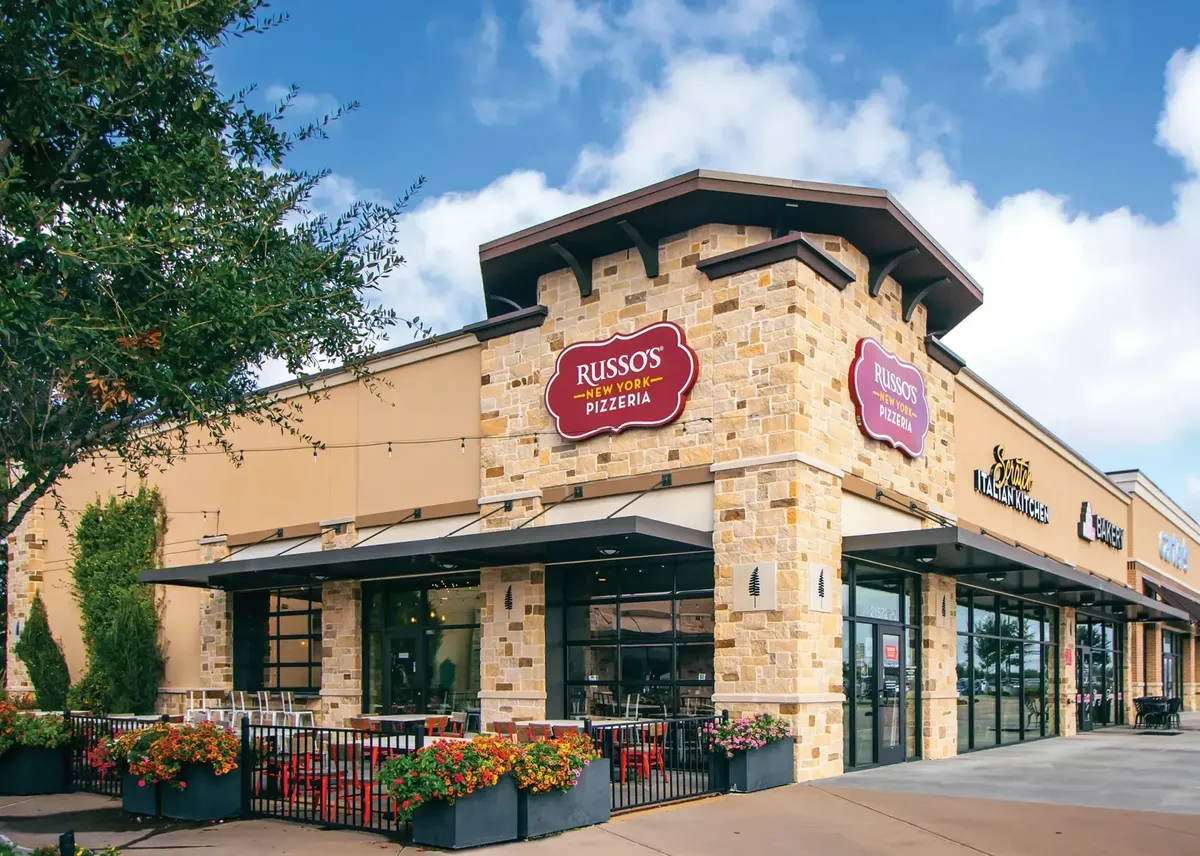
Looking for the best pizza franchises to own in 2026? Here are ten worth a serious look, with the numbers that matter: total investment, franchise fee, royalty and unit count.
Pizza is the most franchise-friendly restaurant category in America, and the one with the most room for an independent-minded owner. U.S. pizza restaurants will do roughly $50 billion in sales in 2026 across about 75,000 locations. The four biggest chains run only about 28% of those stores, the lowest top-four share of any quick-service category. The rest is regional chains, emerging franchises and independents, which is where most of the growth has come from over the past decade.
That fragmentation is good news for a franchisee. In burgers or coffee, you are fighting a handful of giants for every corner. In pizza, a strong regional brand with a real menu can win a trade area on food, not just on price.
This list covers the ten pizza franchises most worth evaluating in 2026, from national delivery chains to chef-driven Italian kitchens. For each one you will find the founding year, how long it has franchised, how many units it runs, the estimated total investment, and the royalty rate. All figures come from each brand's Franchise Disclosure Document (FDD) or its published franchise materials and are rounded; always confirm current numbers in the FDD itself before you invest.
Best Pizza Franchises of 2026 at a Glance
| Franchise | Founded | Franchising since | Units | Total investment (est.) | Franchise fee | Royalty |
|---|---|---|---|---|---|---|
| Russo's New York Pizzeria | 1992 | 1999 | 50+ total, open and in development | $439K – $1.49M | $35,000 | 6% |
| Domino's | 1960 | 1967 | 6,900+ U.S. | $107K – $744K | $10,000 | 5.5% |
| Pizza Hut | 1958 | 1959 | 6,000+ U.S. | $297K – $2.1M | $25,000 | 6% |
| Little Caesars | 1959 | 1962 | 3,800+ U.S. | $393K – $1.72M | $20,000 | 6% |
| Papa John's | 1984 | 1986 | 3,100+ U.S. | $110K – $989K | $5,000 – $25,000 | 5% |
| Marco's Pizza | 1978 | 1979 | 1,100+ | $287K – $807K | $25,000 | 5.5% |
| Jet's Pizza | 1978 | 1990 | 410+ | $628K – $843K | $30,000 | 8% |
| Hungry Howie's | 1973 | 1982 | 520+ | $292K – $567K | $25,000 | 5.5% |
| Blaze Pizza | 2011 | 2012 | 300+ | $757K – $1.3M | $30,000 | 5% |
| MOD Pizza | 2008 | 2013 | 500+ (mostly company-owned) | $1.0M – $1.3M | $30,000+ | 5% |
Investment ranges are FDD Item 7 estimates as reported in 2025–2026 franchise filings and franchise directories, rounded to the nearest thousand. Unit counts are approximate and change monthly.
1. Russo's New York Pizzeria
Russo's New York Pizzeria is a chef-founded pizza and Italian restaurant franchise based in Houston, Texas. Chef Anthony Russo opened the flagship in 1992 and built the menu around his family's recipes: hand-stretched New York-style pizza, house-made dough and sauce, house-made sausage, and a full Italian kitchen with fresh pasta, lasagna, gnocchi and calzones. Where most pizza franchises are a carryout counter and a conveyor oven, a Russo's is a sit-down restaurant with four revenue streams: dine-in, takeout, delivery and catering.
That broader menu shows up in the store economics. According to Item 19 of the 2026 FDD, the top 25% of franchised Russo's restaurants averaged $1,368,586 in net sales in fiscal 2025, and the top 50% averaged $1,042,444. Those are historical net sales figures, not profit or owner income, and individual results vary.
Russo's has 50+ locations in total, including open restaurants and locations in development. This total includes international locations and development in Mexico and Qatar, with the remainder in the United States. The brand awards single-unit, multi-unit and area-development territories in 36 states and Washington, D.C., and has signed international development agreements in Mexico and Qatar. Through December 31, 2026, Texas development agreements covering three or more restaurants receive 50% off the initial franchise fee.
- Founded in: 1992
- Franchising since: 1999
- Franchise units: 50+ total, including open restaurants and locations in development in the U.S., Mexico and Qatar
- Initial investment: $439,350 – $1,490,000
- Franchise fee: $35,000 ($17,500 per restaurant for qualifying Texas multi-unit deals through Dec. 31, 2026)
- Royalty fee: 6%
- National ad fund: none
- Liquid capital required: $250,000
Best for: owner-operators who want a full-menu Italian restaurant rather than a delivery box, and multi-unit developers looking for open territory in the Sun Belt and beyond.
Explore the Russo's pizza franchise opportunity →
2. Domino's
Domino's is the largest pizza company in the world and the benchmark every delivery concept is measured against. Its model is simple: small carryout-and-delivery stores, a short menu, and an ordering and logistics system that the rest of the industry copies. The franchise is famously hard to get into from the outside; most new U.S. franchisees are promoted from inside the system after years as store managers. Entry costs are low for the category, but you are buying a tightly scripted operation with almost no menu or brand latitude.
- Founded in: 1960
- Franchising since: 1967
- Franchise units: 6,900+ in the U.S.; 21,000+ worldwide
- Initial investment: $107,000 – $744,000
- Royalty fee: 5.5%
Best for: experienced Domino's managers; outside candidates rarely qualify.
3. Pizza Hut
Pizza Hut, a Yum! Brands division, is the oldest national pizza chain and the one with the widest range of formats, from legacy dine-in restaurants to small delivery and carryout units. The brand has spent the last decade shrinking its dine-in footprint and pushing franchisees toward the smaller "Delco" format. Franchise availability is largely through acquisition of existing stores from large multi-unit operators, and the investment range is the widest in the category.
- Founded in: 1958
- Franchising since: 1959
- Franchise units: 6,000+ in the U.S.; 19,000+ worldwide
- Initial investment: $297,000 – $2,100,000
- Royalty fee: 6%
Best for: well-capitalized multi-unit groups buying existing territories.
4. Little Caesars
Little Caesars built the third-largest pizza chain in the world on one idea: a HOT-N-READY pizza you can walk in and buy without waiting. The carryout-only model keeps labor and real estate costs low, and the brand actively recruits multi-unit area developers in the U.S. and abroad. The trade-off is a value price point that leaves thin margin per pizza, so volume is everything.
- Founded in: 1959
- Franchising since: 1962
- Franchise units: 3,800+ in the U.S.; 4,500+ worldwide
- Initial investment: $393,000 – $1,719,000
- Royalty fee: 6%
Best for: high-traffic value markets and operators comfortable with a volume game.
5. Papa John's
Papa John's is the third-largest pizza delivery chain in the United States and has long been one of the lower-cost national brands to enter. Stores are carryout and delivery, menus are short, and the company has leaned hard into loyalty and digital ordering. A reduced franchise fee for qualifying new units and a long record of SBA financing make it a common first franchise for restaurant newcomers.
- Founded in: 1984
- Franchising since: 1986
- Franchise units: 3,100+ in the U.S.; 6,000+ worldwide
- Initial investment: $110,000 – $989,000
- Royalty fee: 5%
Best for: first-time owners who want a national brand at a mid-tier budget.
6. Marco's Pizza
Marco's Pizza is the fastest-growing pizza franchise of the past decade and the clearest proof that a regional chain can take share from the giants. Founded in Toledo, Ohio by Italian-born Pasquale Giammarco, Marco's sells a quality-first pizza (its three-cheese blend and fresh dough are the marketing pillars) in a carryout-and-delivery box. Marco's offers early-stage royalty incentives for qualified multi-unit developers, which has accelerated its push past 1,100 stores.
- Founded in: 1978
- Franchising since: 1979
- Franchise units: 1,100+
- Initial investment: $287,000 – $807,000
- Royalty fee: 5.5%
Best for: multi-unit developers who want a growth brand with incentives.
7. Jet's Pizza
Jet's Pizza is the Detroit-style specialist: a thick, square, caramelized-crust pie that has become one of the hottest formats in pizza. Based in Sterling Heights, Michigan, Jet's has grown past 400 stores and is expanding into the Southeast and Texas. The build-out cost is higher than most carryout concepts, and the royalty structure is the steepest on this list, so the economics depend on the strong per-store volumes the brand reports.
- Founded in: 1978
- Franchising since: 1990
- Franchise units: 410+
- Initial investment: $628,000 – $843,000
- Royalty fee: 8%
Best for: operators in markets where Detroit-style is still a novelty.
8. Hungry Howie's
Hungry Howie's, also out of Michigan, is best known for its flavored-crust pizza and a loyal following in Florida and the Midwest. It is a straightforward carryout-and-delivery concept with a moderate build-out, a long history with first-time franchisees, and a veteran discount program. Growth has been steady rather than explosive, and the brand's biggest markets are already dense.
- Founded in: 1973
- Franchising since: 1982
- Franchise units: 520+
- Initial investment: $292,000 – $567,000
- Royalty fee: 5.5%
Best for: suburban markets outside Florida and Michigan where the brand has little presence.
9. Blaze Pizza
Blaze Pizza is the leading fast-casual, build-your-own pizza chain, with pies assembled Chipotle-style and fired in about three minutes. Backed early by LeBron James, Blaze expanded quickly through 2019 and has since slowed, closing some underperforming stores. The format requires a larger footprint and a dine-in build-out, so the investment is among the highest in the category, and the fast-casual pizza segment as a whole is more crowded than it was five years ago.
- Founded in: 2011
- Franchising since: 2012
- Franchise units: 300+
- Initial investment: $757,000 – $1,297,000
- Royalty fee: 5%
Best for: experienced fast-casual operators in high-traffic urban or college markets.
10. MOD Pizza
MOD Pizza pioneered the fast-casual pizza category in Seattle in 2008 and grew to more than 500 stores, most of them company-owned. After a financial restructuring and change of ownership in 2024, MOD is operating a smaller, more disciplined footprint and franchising selectively. The concept remains one of the best-known names in build-your-own pizza, but the investment is the highest on this list and franchise availability is limited.
- Founded in: 2008
- Franchising since: 2013
- Franchise units: 500+ (mostly company-owned)
- Initial investment: $1,000,000 – $1,300,000
- Royalty fee: 5%
Best for: large, well-capitalized groups in select markets.
How to Choose the Right Pizza Franchise
The cheapest franchise on this list is not the best one, and the biggest is not the easiest to get into. Four things decide which pizza franchise fits you.
1. Format decides your cost and your ceiling. A carryout-and-delivery box (Domino's, Papa John's, Marco's, Hungry Howie's) is cheaper to open and simpler to run, but your sales are capped by how many pizzas a small kitchen can push out the door. A full-service Italian restaurant (Russo's) or a fast-casual dining room (Blaze, MOD) costs more to build but opens up dine-in, catering and a higher check average.
2. Read Item 19, not the brochure. Item 19 of the FDD is where a franchisor discloses what stores actually sell. Some brands on this list do not publish one. When a brand does, look at the median and the top quartile, then ask the franchisor how many of its stores sit in each band. Russo's publishes its Item 19 and explains it on the How Much Can I Make page.
3. Royalty plus marketing fund is your real rate. A 5% royalty with a 4% national ad fund costs more than a 6% royalty with a 2% fund. Add the two together and compare that total across brands. Russo's charges a 6% royalty and no national ad fund, so franchisees keep their marketing dollars local.
4. Is there territory left? Domino's, Pizza Hut and Little Caesars are built out in most U.S. markets; you are usually buying existing stores from another franchisee. Emerging and regional brands still have open territory, and some, like Russo's and Marco's, offer development incentives for multi-unit commitments in growth markets.
A final test: eat at the franchise you are considering, twice, without telling anyone who you are. If you would not drive across town for the food, your customers will not either.
Pizza Franchise FAQ
How much does it cost to open a pizza franchise? Between roughly $110,000 for a small national-brand delivery unit and $2 million or more for a large dine-in restaurant. Most pizza franchises fall in the $300,000 to $900,000 range once you include build-out, equipment, the franchise fee, opening inventory and working capital. The exact estimate for each brand is in Item 7 of its FDD.
What is the most profitable pizza franchise? There is no single answer, because franchisors report sales, not profit. Compare the Item 19 average unit volume to the investment required and to the royalty and ad-fund rates. A $1.3 million store that costs $700,000 to open usually beats a $900,000 store that costs $500,000.
Which pizza franchise is the cheapest to start? Domino's and Papa John's publish the lowest starting investments, around $107,000 to $110,000 for a conversion or small-footprint unit. In practice most new stores land well above the bottom of the range, and Domino's rarely awards franchises to candidates from outside its system.
How much do pizza franchise owners make? It depends on sales volume, rent, labor and whether the owner runs the store or pays a manager. Owner-operated pizza restaurants commonly net in the mid-teens to low-twenties as a percentage of sales after royalties and rent, but results vary widely and no franchisor can promise a number. Ask for Item 19 and talk to existing franchisees.
Do I need restaurant experience to own a pizza franchise? For most brands on this list, no. Franchisors provide several weeks of training and opening support. Domino's is the exception; it generally requires prior experience inside its own stores.
What is a New York-style pizza franchise? A franchise built around the thin, hand-stretched, foldable New York slice rather than a thick pan or Detroit-style pizza. Russo's New York Pizzeria is the largest franchised New York-style pizza and Italian restaurant concept headquartered in Texas.
Is pizza a good franchise business in 2026? Pizza remains one of the most resilient restaurant categories: high margins on ingredients, strong delivery and carryout demand, and a customer base that spans every income level. The U.S. pizza restaurant industry is on track for about $50 billion in 2026 sales. The category is competitive, so the brand you choose and the market you open in matter more than the category itself.
Ready to Compare Russo's to the Rest?
The fastest way to evaluate a pizza franchise is to get the FDD in your hands and talk to the people who run the stores. Russo's Franchise Development will walk you through the investment, the Item 19 numbers and territory availability in your market, usually the same business day.
- Request the Russo's franchise kit
- See pizza franchise costs and fees
- Texas multi-unit incentive: 50% off the franchise fee through Dec. 31, 2026
- Multi-unit and area development
- Call (832) 849-0724
This article is for informational purposes and is not an offer to sell a franchise. Offers are made only through delivery of a Franchise Disclosure Document in compliance with applicable law. Competitor figures are drawn from publicly available franchise disclosure data and directories and may have changed; confirm all numbers with each franchisor.
Interested in owning a Russo's?
Request the franchise kit and the Franchise Disclosure Document.
Request information