Short answer: Yes, parts of the pizza industry are still growing, but one number does not tell the full story. Pizza Today reported that the projected number of U.S. pizzerias increased to 75,736 in 2025, while estimated pizza restaurant revenue slipped 0.3% to $49.5 billion. For a prospective franchise owner, that means the category remains substantial and competitive, not that every concept or location is guaranteed to grow.

What does pizza-industry growth actually mean?
Industry growth can describe several different measures. Store count can rise while total sales flatten. Sales can rise because menu prices increase even if customer traffic does not. Delivery, takeout, catering and dine-in can also move in different directions. A useful review separates these signals instead of treating “pizza industry growth” as a single statistic.
- Restaurant count: Are more pizzerias opening than closing?
- Category sales: Is total consumer spending rising or falling?
- Guest traffic: Are restaurants serving more transactions?
- Unit economics: Are sales keeping pace with food, labor and occupancy costs?
- Local demand: Does the proposed trade area support the concept and service model?
The 2026 Pizza Industry Trends Report illustrates this distinction. Along with the increase in projected pizzeria count and slight decline in estimated revenue, the report found that 66% of surveyed operators were optimistic about the coming year and 78.8% expected their gross annual sales to increase. Those expectations are useful sentiment indicators, but they are not promises of future performance.
Five market signals franchise buyers should watch
1. Convenience remains part of the customer expectation
Guests may choose among dine-in, takeout, delivery, online ordering and catering. A prospective owner should understand which channels the concept supports, what each channel costs to operate and whether the proposed site can handle the expected order mix.
2. A recognizable product is not enough by itself
Pizza has broad awareness, but that also creates competition. Buyers should study how a brand differentiates its food, guest experience and operating system. They should also look at local independent restaurants, regional brands and national chains in the target trade area.
3. Restaurant costs can move differently from sales
Food, labor, rent, insurance, utilities, delivery and financing can affect restaurant economics even when sales are stable. A site-specific plan should test these costs against realistic sales assumptions. Category growth cannot replace careful underwriting.
4. Menu breadth changes the operating model
A pizza-only operation differs from a restaurant that also serves pasta, salads, sandwiches, desserts and catering orders. A broader menu may create more guest occasions, but it can also require more training, equipment, inventory and execution. Prospective franchisees should evaluate the complete restaurant model, not only the best-known menu item.
5. Local real estate still matters
Visibility, access, parking, delivery radius, daytime population, household density and occupancy cost all influence a restaurant plan. The right question is not simply whether pizza is popular. It is whether the concept, site and operator are a fit for that market.
How Russo's fits within the pizza franchise category
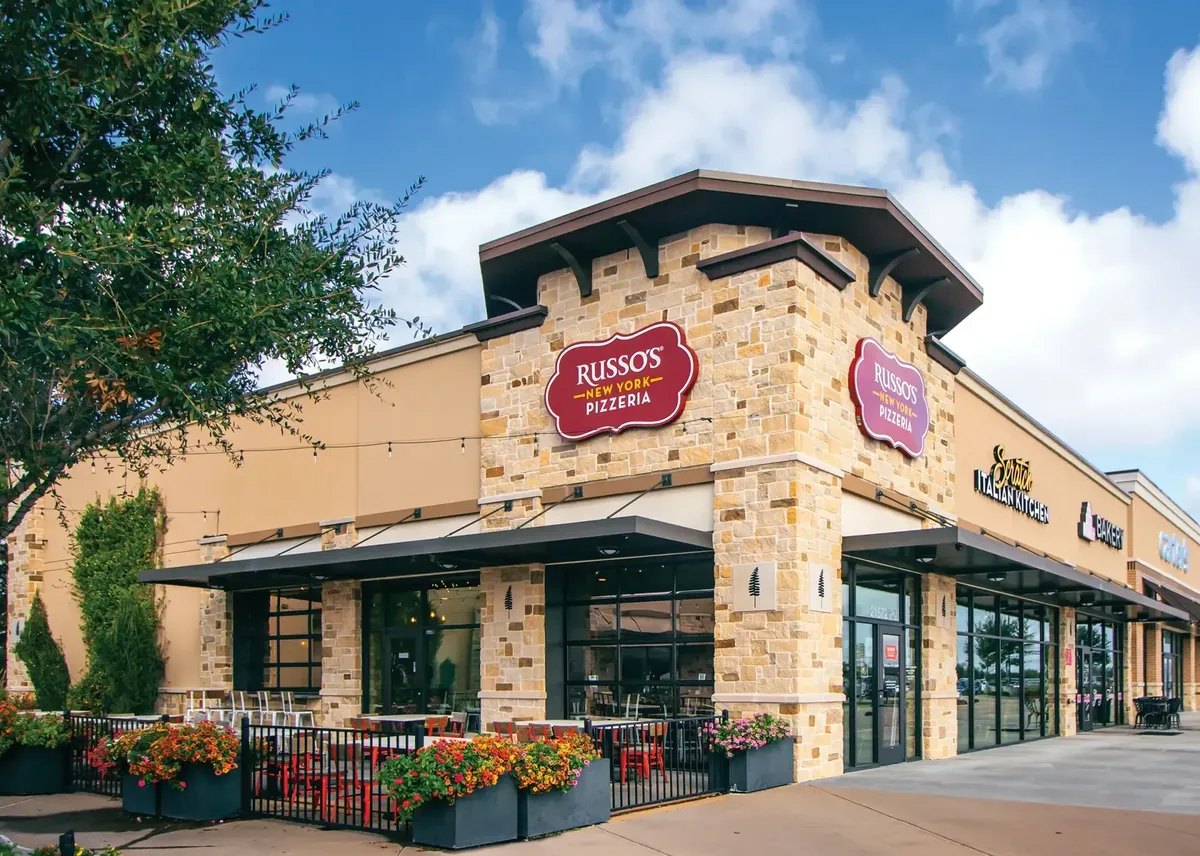
Russo's New York Pizzeria & Italian Kitchen is a chef-founded restaurant franchise built around New York-style pizza and a full Italian kitchen. Chef Anthony Russo developed the brand from family recipes and restaurant experience. The model serves guests through dine-in, takeout, delivery and catering.
For a franchise candidate, the distinction is important. Russo's is not presented as a generic slice shop. The concept combines pizza with fresh-to-order Italian food, brand standards, training, site review, opening preparation and ongoing operational support. Candidates should review how that model aligns with their experience, capital, market and ownership goals.
What do Russo's current FDD figures show?
Russo's currently lists a $35,000 initial franchise fee, a total initial investment range of $439,350 to $1,490,000, a $250,000 liquid capital requirement and a $550,000 net worth requirement. Review the current pizza franchise investment information and the applicable Franchise Disclosure Document before making a decision.
Item 19 statement: Top 25% of franchised stores averaged $1,368,586 and the top 50% averaged $1,042,444 in 2025 net sales (Item 19). These are historical Net Sales figures, not profit, owner income or a projection of future results. Individual results may vary. Review the full Item 19 definitions, notes and qualifications in the current FDD.
A practical due-diligence checklist
Industry trends can help frame the opportunity, but a franchise decision should be based on verified brand information and a market-specific plan. Before moving forward:
- Read the current FDD, including Item 7, Item 19, fees, territory provisions and renewal terms.
- Compare the investment range with your available capital and financing plan.
- Review the proposed market, competition, real estate and expected service channels.
- Understand the required training, staffing and owner responsibilities.
- Speak with existing franchisees using the contacts provided in the FDD.
- Have qualified legal and financial advisers review the documents and assumptions.
Russo's provides information about franchise training and support, Item 19 and financial performance, and current U.S. growth markets. International candidates can review the separate international franchise opportunity.
Frequently asked questions
Is the pizza industry still growing in 2026?
The picture is mixed. The projected number of U.S. pizzerias increased in 2025, while estimated pizza restaurant revenue was slightly lower. Prospective owners should compare store counts, sales, traffic, costs and local demand instead of relying on one headline number.
Does industry growth guarantee that a pizza franchise will succeed?
No. Industry data describes a category, not the results of a specific restaurant. Location, occupancy cost, labor, food cost, financing, execution and local competition can all affect performance.
What should a buyer review before investing in a pizza franchise?
Review the current FDD, investment range, financial performance representation, fees, territory terms, training, support and a site-specific business plan with qualified legal and financial advisers.
What are Russo's current financial qualification figures?
Russo's currently lists a $35,000 initial franchise fee, a total initial investment range of $439,350 to $1,490,000, $250,000 in liquid capital and $550,000 in net worth. Candidates should confirm all figures in the current FDD.
Is Russo's a fit for your market?
Share the city, state or country you are evaluating. Franchise Development will confirm the current process and next steps.
Check territory availability