One restaurant
Propose a specific Vermont trade area and explain who will lead day-to-day operations. Review the investment and training before making a site commitment.
State development · United States
Explore Vermont through Burlington, Rutland, Barre–Montpelier. Evaluate household density, daytime employment and family dining at the trade-area level before selecting a restaurant site.
Russo’s Franchise Disclosure Document is active in Vermont. Qualified candidates can request the FDD and discuss territories now.
$1.369M average net sales for the top 25% of franchised stores, FY2025 Item 19. Historical sales, not profit or a forecast. Some outlets have sold these amounts; there is no assurance you will sell as much. See the current FDD.
Market and site availability are subject to review.
Start with your market
Share your preferred Vermont trade area, ownership interest and capital range. Franchise Development can help you review the concept and the right next step.
Prefer to speak first?
(832) 849-0724anthony@nypizzeria.comBook a 15-minute franchise consultationItem 19 performance information
*Based on Item 19 of the Russo's Franchise Disclosure Document, fiscal year 2025. Some outlets have sold these amounts. There is no assurance you will sell as much. These are historical net sales figures, not profit, owner income, cash flow or forecasts. Individual results may vary. See the current FDD for complete details.
Read the complete Item 19 explanationBefore evaluating Vermont, understand the Russo's restaurant concept, review investment requirements and explore training and support. Then use the local research below to prepare your market questions.
Your local market plan
Compare Burlington, Rutland, Barre–Montpelier as distinct trade areas. Check nearby homes, jobs, schools and shops. Review parking, rent, staffing and delivery access for each proposed site.
The places below are research starting points, not approved sites, existing restaurant locations or available territories.
Burlington: South Burlington along Shelburne Road and the University of Vermont district offer different family and campus dining settings; compare year-round residents with summer lake visitors.
Rutland: U.S. 7 along South Main Street provides a retail and neighborhood search corridor; test repeat Rutland family meals separately from ski-season traffic heading toward Killington.
Barre–Montpelier: Berlin's retail areas offer a family-dining comparison to Montpelier's state offices and Barre's downtown; assess how those three distinct trip patterns affect lunch catering and evening pickup.
The right ownership conversation
A Vermont operator should bring local real estate and development experience, reliable restaurant systems, and knowledge of staffing, permits, sourcing, and weather operations. Explain who leads each city or store. Build quality oversight and a measured rollout plan before pursuing broader area development.
Propose a specific Vermont trade area and explain who will lead day-to-day operations. Review the investment and training before making a site commitment.
Show how your management team, capital and opening schedule could support more than one restaurant. Each proposed location requires review.
Qualified groups can discuss developing a defined area in Vermont. Territory boundaries, schedule, obligations and fees belong in approved agreements, not assumptions.
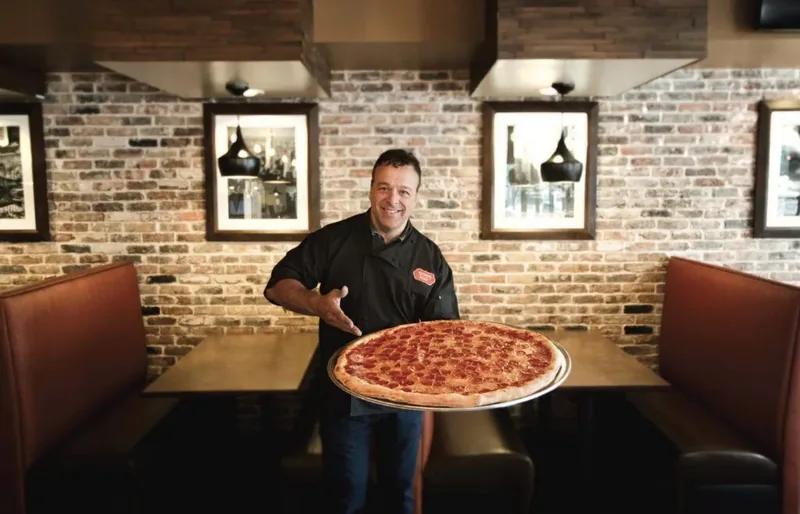
Chef-founded. More than pizza.
New York-style pizza brings people in. Pasta, Italian entrees, salads and desserts give guests more ways to order and return. Russo’s pairs a chef-created menu with dine-in, takeout, delivery and catering.
Your Vermont forecast should test each channel separately, including labor, food costs, delivery fees and local competition. More channels do not guarantee more profit.
Explore the menu and ingredientsKnow the commitment
A Vermont pizza franchise budget starts with the published U.S. range, then requires a site-specific estimate. The current Franchise Disclosure Document governs the investment table, fees, assumptions and obligations.
Do not treat historical Net Sales as profit or personal income. Review operating costs, working capital and the disclosure documents with your own advisers.
Review U.S. investment detailsTraining takes place in Houston, with opening support in-market and Sysco distribution statewide in Vermont.
Review the current Franchise Disclosure Document for the scope of training, opening assistance and supplier obligations.
Review training and supportBefore you inquire
This page starts a franchise development conversation about Vermont; it does not confirm an open territory. Russo's must review the proposed area, candidate and development plan before confirming availability.
The published U.S. investment range is $439,350 to $1,490,000, including the $35,000 franchise fee. Your Vermont budget depends on the site and restaurant plan. Review the current FDD for the full investment table, assumptions, fees and obligations.
Yes. Qualified operators may discuss multi-unit ownership and area development agreements. Propose the cities or trade areas, management team, capital plan and development schedule. Any area, exclusivity, timing and commercial terms require approval and the applicable agreements.
Start with your contact details and preferred market. Include your ownership goals and capital range. Your experience, proposed trade areas, management plan and timeline help the team decide what to review with you next.
Compare the menu, investment, training, operating responsibilities and sales channels. For Vermont, investigate the named research areas on this page and build a site-level plan for access, staffing, delivery economics and competition. Historical sales are not profit or a guarantee.
Compare the complete investment, your role as an operator, training, supplier obligations and the proposed territory. Ask how the menu and sales channels fit your specific trade area. Review disclosures and agreements before committing capital or signing a lease.
Your next research step
Use the Vermont market examples on this page to prepare a neighborhood-level proposal. These questions help you identify what to verify before choosing a site.
For Burlington and Rutland, compare household meals with university, lake and ski-related occasions. Evaluate a quieter-period scenario before using seasonal traffic to support a restaurant forecast.
For Barre, Berlin and Montpelier, record retail pickup, neighborhood dinner and state-office catering trips separately. Check whether the proposed staff and kitchen could serve those occasions within practical travel times.
Read the Tempe and Mesa owner profiles to prepare questions about ownership and opening. These Arizona examples do not establish results or territory availability in this state.
Review investment requirements · Explore training and support
Bring your preferred neighborhood, operating experience and capital range to the franchise team. Ask about territory availability and the training commitment before negotiating a lease.
Discuss your market plan