
One restaurant
Propose a specific California trade area and explain who will lead day-to-day operations. Review the investment and training before making a site commitment.
State development · United States
California contains many distinct restaurant markets, each with its own customer routines, delivery patterns, food preferences and operating conditions to investigate. Russo’s serves New York-style pizza with a full Italian kitchen, giving franchise candidates a concept to assess across city and suburban settings.
Russo’s Franchise Disclosure Document is active in California. Qualified candidates can request the FDD and discuss territories now. Offers in California are subject to state-specific conditions set out in the current Franchise Disclosure Document.
Open Russo’s restaurants in California: Windmill (Clovis); Belterra (Fresno).
Russo’s has 3 restaurants in Fresno and 3 in Sacramento under signed area development agreements.
Market and site availability are subject to review.

Quick answer
Yes. Tell Russo's which city or trade area interests you. Share your role, team, budget and target date.
The franchise team will review your market and plan. You can then discuss pizza franchise costs, training and support, and next steps.
Start with one trade area and compare sites with local data. This guide does not promise that a site or territory is open. Russo's must approve the candidate, market and proposed site.
Russo's will review your request and reply with next steps.
Before evaluating California, understand the Russo's restaurant concept, review investment requirements and explore training and support. Then use the local research below to prepare your market questions.
Your local market plan
Compare Los Angeles and Orange County with Irvine, Anaheim, San Diego and Riverside as separate city-selection opportunities. Map local dining occasions, delivery reach, nearby competition, labor access, rent, parking and permitting in each market. Do not assume findings from one city apply elsewhere. Research California franchise and employment requirements alongside property conditions, then identify specific trade areas for customer and site due diligence before discussing area development.
The places below are research starting points, not approved sites, existing restaurant locations or available territories.
Los Angeles: Compare Pasadena and the San Gabriel Valley with Burbank's studio and office districts, keeping lunch catering routes separate from the households needed to support evening dining.
San Francisco Bay Area: Walnut Creek and Pleasanton offer East Bay family-dining settings distinct from Peninsula office markets; test each side of the bay separately instead of assuming cross-bay delivery.
San Diego: Mira Mesa and Sorrento Valley bring different residential and workplace meal occasions; compare them with Chula Vista's family-dining trade areas before narrowing a site search.
Sacramento: Research Roseville and Elk Grove as separate suburban markets, while checking the signed Sacramento development agreement before discussing any proposed territory.
Fresno: Compare north Fresno's Herndon corridor with Clovis family-dining areas, accounting for the existing Belterra and Windmill restaurants and the signed Fresno development agreement.
Item 19 performance information
*Based on Item 19 of the Russo's Franchise Disclosure Document, fiscal year 2025. Some outlets have sold these amounts. There is no assurance you will sell as much. These are historical net sales figures, not profit, owner income, cash flow or forecasts. Individual results may vary. See the current FDD for complete details.
Read the complete Item 19 explanationThe right ownership conversation
Candidates should bring California experience in real estate, staffing, compliance, permits and multi-unit restaurant systems. Evaluate labor and delivery costs by city, and identify leaders and operational processes capable of supporting consistent franchise execution.
Propose a specific California trade area and explain who will lead day-to-day operations. Review the investment and training before making a site commitment.
Show how your management team, capital and opening schedule could support more than one restaurant. Each proposed location requires review.
Qualified groups can discuss developing a defined area in California. Territory boundaries, schedule, obligations and fees belong in approved agreements, not assumptions.
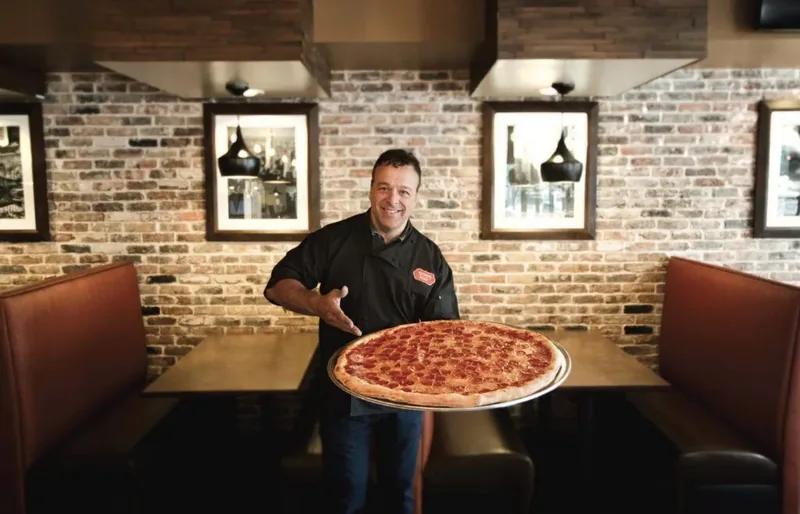
Chef-founded. More than pizza.
New York-style pizza brings people in. Pasta, Italian entrees, salads and desserts give guests more ways to order and return. Russo’s pairs a chef-created menu with dine-in, takeout, delivery and catering.
Your California forecast should test each channel separately, including labor, food costs, delivery fees and local competition. More channels do not guarantee more profit.
Explore the menu and ingredientsKnow the commitment
A California pizza franchise budget starts with the published U.S. range, then requires a site-specific estimate. The current Franchise Disclosure Document governs the investment table, fees, assumptions and obligations.
Do not treat historical Net Sales as profit or personal income. Review operating costs, working capital and the disclosure documents with your own advisers.
Review U.S. investment details
Prepare to operate
Ask how site review, training, opening preparation, approved suppliers and operating systems fit your ownership plan. The applicable franchise documents define the full support program.
For California, identify your restaurant leader early and map hiring, training, permitting and the proposed opening schedule together.
Review franchise training and supportStart with your market
Share your preferred California trade area, ownership interest and capital range. Franchise Development can help you review the concept and the right next step.
Prefer to speak first?
(832) 849-0724anthony@nypizzeria.comBook a 15-minute franchise consultationBefore you inquire
This page starts a franchise development conversation about California; it does not confirm an open territory. Russo's must review the proposed area, candidate and development plan before confirming availability.
The published U.S. investment range is $439,350 to $1,490,000, including the $35,000 franchise fee. Your California budget depends on the site and restaurant plan. Review the current FDD for the full investment table, assumptions, fees and obligations.
Yes. Qualified operators may discuss plans for more than one restaurant. Tell us which cities or trade areas interest you. Share your team, capital plan and schedule. All rights and terms require approval and signed agreements.
Send your contact details and preferred market. Add your ownership goals and capital range. Your experience, local plan and timeline will help the team prepare the next review.
Compare the menu, investment, training, operating responsibilities and sales channels. For California, investigate the named research areas on this page and build a site-level plan for access, staffing, delivery economics and competition. Historical sales are not profit or a guarantee.
Compare the full investment, your role, training, suppliers and territory. Ask how the menu and service options fit your trade area. Read all disclosures and agreements before you invest or sign a lease.
Your next research step
Use the California market examples on this page to prepare a neighborhood-level proposal. These questions help you identify what to verify before choosing a site.
Ask the franchise team to review existing restaurants and the Sacramento and Fresno development agreements before you shortlist sites. A nearby city name does not establish that territory is available.
For Los Angeles, the Bay Area and San Diego, choose a neighborhood and record meal-period pickup and catering routes. Compare parking, customer access and staffing needs within that area rather than applying a statewide demand assumption.
Read the Tempe and Mesa owner profiles to prepare questions about ownership and opening. These Arizona examples do not establish results or territory availability in this state.
Review investment requirements · Explore training and support
Bring your preferred neighborhood, operating experience and capital range to the franchise team. Ask about territory availability and the training commitment before negotiating a lease.
Discuss your market planCompare these local guides before proposing a trade area. Availability requires review by Franchise Development.