Would you hand over your life savings to a partner who keeps their best secrets hidden behind five hundred pages of legal jargon? For many aspiring business owners in 2026, the dream of building a family legacy often starts with a signature, yet it can quickly turn into a financial burden if the foundation isn't solid. Understanding the common mistakes to avoid when buying a franchise is the difference between true entrepreneurial freedom and a costly lesson in oversight. You likely feel the weight of this decision, balancing the thrill of growth with the very real fear of hidden fees or a saturated local market.
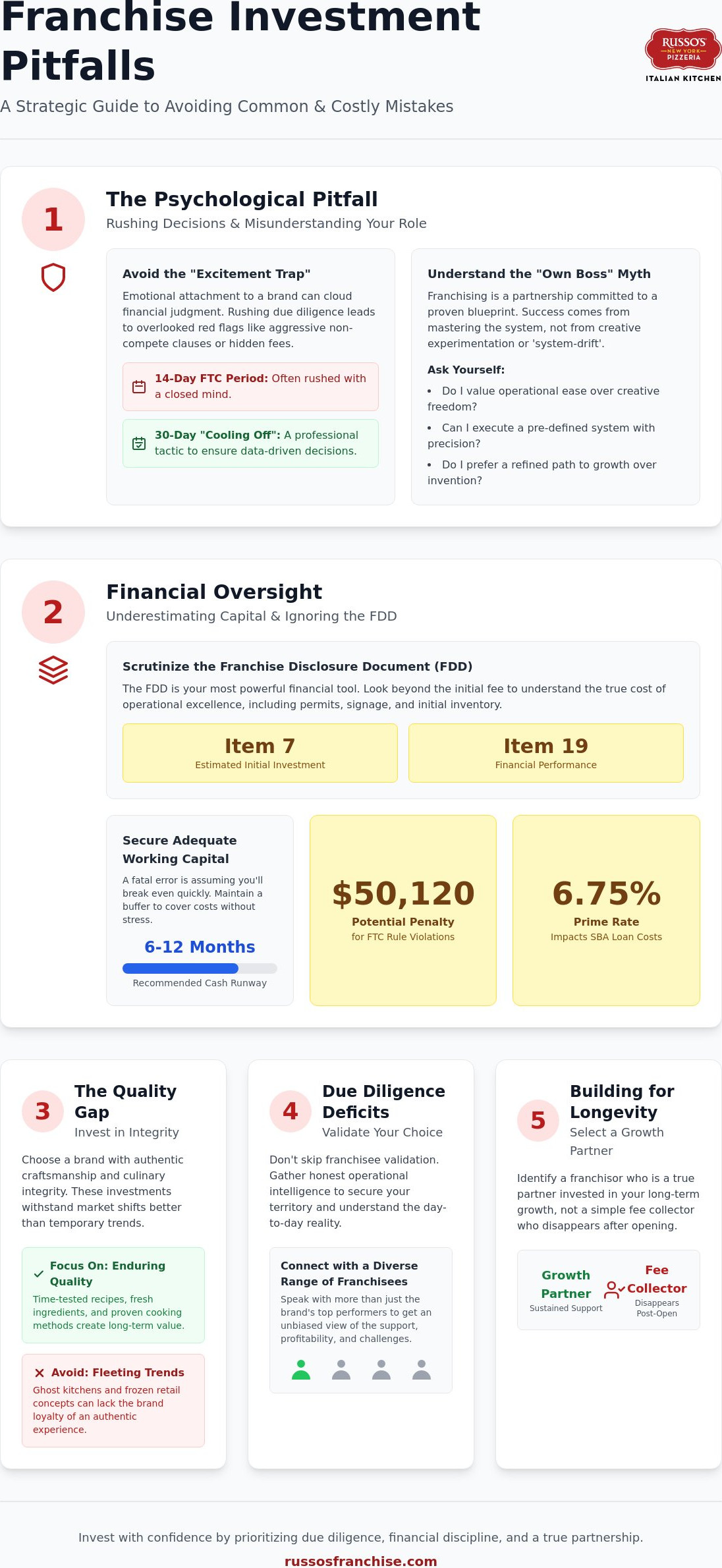
We believe that success is a natural outcome of following a refined, time-tested path. This guide promises to clarify the complexities of modern franchising by identifying the ten pitfalls that drain capital and derail dreams. We will explore the reality of the current 6.75% prime rate for SBA loans and the importance of scrutinizing Item 19 disclosures. From avoiding the $50,120 penalties of FTC rule violations to identifying brands with genuine heritage, you'll gain the clarity needed to invest with confidence and poise.
Key Takeaways
- Master the emotional discipline required to avoid the "Excitement Trap" and ensure a thorough due diligence process that identifies subtle contract red flags.
- Protect your capital by mastering the financial landscape; learn why Item 7 of the FDD is your most powerful tool for identifying common mistakes to avoid when buying a franchise.
- Choose a brand with culinary integrity and authentic craftsmanship to ensure your investment withstands market shifts better than temporary ghost kitchen or frozen retail trends.
- Secure your territory through honest operational intelligence gathered from a diverse range of existing franchisees, not just the brand's top performers.
- Identify a true growth partner who provides sustained operational support rather than a mere fee collector who disappears after your grand opening.
The Psychological Pitfall: Rushing the Decision and Misunderstanding the Franchisee Role
Success in business is rarely built on impulse. While the prospect of owning a legacy brand is exhilarating, one of the most common mistakes to avoid when buying a franchise is falling into the 'Excitement Trap.' This psychological phenomenon occurs when emotional attachment to a brand’s aesthetic or heritage clouds your financial judgment. You see a vibrant, bustling storefront and imagine yourself as the successful owner; however, you haven't yet verified the unit-level economics. Rushing the due diligence process to satisfy this emotional urge often leads to overlooked contract red flags. These might include aggressive non-compete clauses or hidden fees for technology upgrades. By moving too fast, you risk bypassing the 14-day disclosure period required by the FTC with a closed mind rather than a critical eye.
The Danger of 'Falling in Love' with the Concept Too Fast
Glossy brochures and polished sales presentations are masterfully crafted to inspire. They create a sense of belonging and immediate success that can be intoxicating. However, you must separate your personal taste from the market's actual demand. Just because you love a specific style of artisanal pizza doesn't mean your local demographic will support a premium-priced model. Professional investors use a 'cooling off' period of at least 30 days to let the initial excitement fade. This discipline ensures that your decision is rooted in data rather than the temporary high of a Discovery Day presentation. It allows you to return to the Franchise Disclosure Document (FDD) with the cold, hard-nosed professionalism required for a high-level investment.
The 'Own Boss' Myth: Recognizing the Need for Proven Systems
The phrase "be your own boss" is often misunderstood. In this industry, you are a business owner, but you are also a partner in a larger legacy. To grasp the fundamental structure of this relationship, it helps to review what franchising is at its core: a disciplined commitment to a proven blueprint. A significant mistake is 'system-drift.' This happens when new owners try to change the menu, alter the craftsmanship, or experiment with unapproved marketing tactics. Such deviations dilute the brand’s prestige and often lead to operational chaos. Test your readiness by asking yourself these questions:
- Do I value operational ease over creative experimentation?
- Am I comfortable implementing a curriculum I didn't write?
- Can I find satisfaction in perfect execution rather than constant invention?
If you crave total autonomy, you are likely a startup founder. If you value stability and a refined path to growth, you are a franchisee. True growth comes from mastering a disciplined system that has already navigated the industry's complexities.
Financial Oversight: Underestimating Capital Requirements and Ignoring the FDD
Financial discipline is the cornerstone of a lasting legacy. One of the primary common mistakes to avoid when buying a franchise is viewing the initial franchise fee as the total cost of entry. In reality, Item 7 of the Franchise Disclosure Document (FDD) provides a range for the initial investment, yet these figures can sometimes be conservative. You must account for the granular expenses that often drain liquidity before the doors even open. These include local health permits, specific municipal signage ordinances, and the initial inventory of premium ingredients required to meet exacting brand standards. A sophisticated investor looks beyond the sticker price to the true cost of operational excellence.
Beyond the Franchise Fee: Accounting for Working Capital
Working capital is your business's lifeblood during the early months of operation. While some fast-casual models might ramp up quickly, a full-service kitchen often requires a deeper cash runway to find its rhythm. It's a fatal error to assume your location will break even within the first quarter. A prudent entrepreneur maintains a 6 to 12 month buffer to cover labor costs and supply chain fluctuations without stress. Over-leveraging with high-interest debt is a dangerous path that can derail even the most promising concept. With the July 2026 prime rate holding at 6.75%, securing a structured SBA 7(a) loan is a much more sustainable strategy than seeking quick, high-interest alternative financing. If you are seeking a partner that prioritizes financial transparency and operational ease, exploring a proven pizza franchise opportunity can provide the clarity you need to build with confidence.
Decoding the Franchise Disclosure Document (FDD)
The FDD is a legal map, not a mere formality. The Federal Trade Commission provides A Consumer's Guide to Buying a Franchise to help you navigate these 23 critical items. You should pay close attention to Item 20, which details franchisee turnover and closure rates. High numbers here are a silent warning of systemic issues. Additionally, skipping a professional audit of the franchisor's financial statements is a risk you cannot afford. You want to ensure your partner is as stable and disciplined as the heritage they represent. Understanding how royalty structures and technology fees impact your net profit margins is essential for ensuring your growth remains profitable for years to come.
The Quality Gap: Investing in a Brand Without Culinary Integrity
A brand’s visual identity might attract a customer once, but only the integrity of the product ensures they return. One of the most overlooked common pitfalls when buying a franchise is failing to taste the commitment behind the menu. In a market increasingly flooded with 'ghost kitchens' and 'frozen retail' models, entrepreneurs often mistake operational convenience for long-term viability. Choosing a concept that relies on pre-packaged, frozen components is a significant entry on the list of common mistakes to avoid when buying a franchise because it strips away the unique heritage that builds local loyalty. Marketing can sustain a brand for a season, but only quality sustains a legacy.
The Hidden Cost of Low-Quality Ingredients
Cheap ingredients create a revolving door of customers. While low food costs look attractive on a spreadsheet, they often necessitate an aggressive, expensive marketing budget to constantly "buy" new leads. Authentic craftsmanship, such as scratch-made dough and slow-simmered sauces, creates a sensory experience that marketing cannot replicate. When evaluating a potential partner, demand transparency in their supply chain. High-quality standards for flour, tomatoes, and cheese aren't just culinary preferences; they are the bedrock of your return on investment. Customer retention is driven by the consistency of a premium experience, not just a catchy slogan.
Evaluating Brand Heritage vs. Flashy Marketing
Trendy concepts often burn bright and fade fast. Legacy brands, particularly those that are founder-led, offer a level of culinary support and passion that corporate conglomerates cannot match. These organizations prioritize the perfection of a traditional craft over the mere collection of royalty fees. A brand’s history, rooted in time-honored recipes, serves as a powerful defense against local competitors who lack a story to tell. By investing in a brand with deep cultural roots, you aren't just buying a business; you're becoming a steward of a family legacy. This authenticity is what allows a business to command a premium price and withstand shifts in consumer trends.
Due Diligence Deficits: Skipping Franchisee Validation and Territory Analysis
Vetting a business model on paper is merely the first step toward secure ownership. One of the most common mistakes to avoid when buying a franchise is neglecting the "validation" phase, where you speak directly with those already operating the business. While the franchisor will provide a list of successful owners, relying solely on these hand-picked references creates a skewed perspective. You need a holistic view of the organization's health. This requires speaking with a diverse cross-section of owners, including those who have faced recent market challenges or operational hurdles. These conversations reveal the true nature of the brand’s support system when the initial grand opening excitement fades.
Why You Must Speak to Existing Franchise Owners
Existing owners are your most honest source of operational intelligence. When you call them, don't just ask about their revenue. Ask how the franchisor responded during the supply chain fluctuations of early 2026 or how they handle local marketing support. You should also visit locations unannounced. Observing a kitchen during a Friday night rush tells you more about the brand’s craftsmanship and operational ease than any sales deck ever could. If multiple owners report the same struggle with labor costs or software glitches, you've detected a systemic brand problem rather than an isolated management issue. A disciplined investor looks for consistency across the entire network, not just the outliers.
Navigating Territory Rights and Encroachment Clauses
Territory encroachment is a silent profit killer. Many entrepreneurs fail to understand the difference between 'exclusive' and 'non-exclusive' rights until it's too late. An exclusive territory prevents the franchisor from opening another physical location within a certain radius, yet it might not protect you from 'ghost kitchens' or digital sales from a neighboring unit. In the 2026 landscape, where delivery remains a dominant force, you must negotiate for a radius that protects your specific pizza franchise opportunities from cannibalization. Without these protections, the brand's growth could come at the direct expense of your store’s net margins. Researching local demographics is equally vital. A premium Italian concept requires a specific income bracket to thrive; opening in a market that doesn't value authenticity is a risk that data can help you avoid. If you are ready to partner with a brand that respects your market and provides a protected path to success, explore our premium franchise partnership to see how we prioritize our partners' longevity.
Building for Longevity: Selecting a Partner That Prioritizes Your Growth
Longevity is the ultimate metric of entrepreneurial success. While previous sections focused on the technicalities of the FDD and due diligence, the final common mistakes to avoid when buying a franchise involve misjudging the long-term character of the franchisor. Many investors mistakenly partner with "fee collectors" rather than "growth partners." A fee collector is an organization that prioritizes the initial franchise fee and then offers little more than a brand manual and a hands-off approach once the grand opening is over. In contrast, a growth partner remains deeply invested in your unit-level profitability, recognizing that their legacy is tied directly to your daily performance.
Scaling a business in 2026 also requires a partner who understands evolving global demographics. One significant error is choosing a brand with a rigid, one-size-fits-all model that ignores specialized market needs. For instance, the ability to operate a Halal pizza franchise provides a distinct competitive advantage in both international markets and diverse domestic urban centers. This level of foresight allows you to capture a broader customer base and build a more resilient business. If you intend to pursue a multi-unit strategy, you'll need a franchisor whose commitment scales alongside your ambitions, providing the sophisticated infrastructure required to manage a portfolio rather than just a single storefront.
Assessing the Training and Support Ecosystem
Quality training is the bridge between a good concept and a great business. You should look for a support ecosystem that offers hands-on culinary training rooted in actual craftsmanship, not just simple assembly line instructions. If a franchisor cannot teach you the "why" behind their methods, they aren't passing on a legacy; they're just selling a temporary job. Evaluate the field support team by asking about their specific response times and their background in the industry. You want mentors who have navigated the complexities of the kitchen themselves. Ongoing marketing support should also be proactive, leveraging national brand awareness while allowing for the local nuances that make a neighborhood pizzeria feel like a community staple.
The Advantage of a Founder-Led, Heritage-Driven Model
There is an undeniable power in a brand where the founder’s name is still on the door. Russo's New York Pizzeria, for example, leverages family recipes and time-honored methods to ensure that every slice maintains the same integrity as the original kitchen. This heritage-driven approach provides a level of consistency that corporate conglomerates often struggle to replicate. For those looking beyond domestic borders, international master franchise models offer a sophisticated path to scaling authentic heritage globally. My closing advice for any 2026 entrepreneur is simple: choose a franchise where the founder’s heart is still in the kitchen. When you align yourself with a partner who values excellence over convenience, success isn't just a goal; it's a natural outcome of your shared dedication.
Securing Your Future with Professional Precision
Building a business that lasts for generations requires more than just capital; it demands a disciplined approach to selection. By mastering the common mistakes to avoid when buying a franchise, you move from a place of uncertainty to a position of professional strength. You now understand that true success lies in the details: the transparency of the FDD, the authenticity of the ingredients, and the dedication of a founder who treats your growth as their own legacy. Don't settle for a commoditized concept that prioritizes convenience over craftsmanship. Instead, choose a partner with a proven blueprint for excellence.
Founder-led by Anthony Russo since 1992, our organization offers a sophisticated path to ownership through authentic family recipes and a commitment to never using frozen retail products. We provide global opportunities, including specialized Halal franchise models, to ensure your business resonates with diverse markets. Start your journey with a brand built on heritage; explore Russo's franchise opportunities today. Your ambition deserves a foundation as solid as our time-honored traditions.
Frequently Asked Questions
What is the single biggest mistake people make when buying a franchise?
The single biggest mistake is underestimating the total capital required while rushing the due diligence process. Many entrepreneurs focus solely on the initial franchise fee and neglect the cash runway needed for the first year. This lack of financial discipline leads to over-leveraging and unnecessary stress. Taking several months to investigate ensures you don't overlook critical red flags in the Franchise Disclosure Document.
How much liquid capital do I really need to start a pizza franchise?
You generally need enough liquid capital to cover the initial investment range plus a six to twelve month operational buffer. While home-based models might start under $20,000, full-service restaurants often require significantly more for real estate and equipment. You must account for grand opening marketing and local permits. Consult Item 7 of the FDD for a realistic range of the total investment required for your specific location.
Is it a mistake to buy a franchise in a saturated market like pizza?
It isn't a mistake to enter a mature market like pizza if you select a brand with a unique heritage and culinary integrity. Saturated markets prove there is consistent demand for the product. The risk lies in choosing a commoditized concept that lacks a unique story. A brand built on authentic craftsmanship and family recipes will naturally stand out against generic competitors in any territory.
Should I use a franchise consultant or an attorney to review my FDD?
You should prioritize a qualified franchise attorney to conduct a professional audit of your legal documents. While consultants provide helpful business insights, an attorney is essential for identifying common mistakes to avoid when buying a franchise within the contract legalese. They protect you from unfavorable royalty structures or vague support clauses. Their expertise ensures that your investment is legally sound and your territory rights are clearly defined.
What are the red flags to look for when visiting an existing franchise location?
Key red flags include poor facility maintenance, inconsistent food quality, and low staff engagement. If you notice a lack of adherence to brand standards during an unannounced visit, it often signals a systemic lack of franchisor support. Pay close attention to how the kitchen handles a dinner rush. A chaotic environment suggests that the training program or operational blueprint may be insufficient for real-world success.
Can I negotiate the terms of a franchise agreement to avoid common pitfalls?
Negotiation is often possible regarding territory radius, initial fees for multi-unit developers, or certain grand opening requirements. While franchisors prioritize system-wide consistency, they may be flexible to secure a high-quality partner. You should focus your efforts on securing exclusive territory rights that protect you from encroachment. Always have your attorney present these requests professionally to ensure they are rooted in mutual growth rather than mere convenience.
How do I know if a franchisor's training program is actually effective?
A truly effective training program prioritizes hands-on craftsmanship and the philosophical why behind the business model. You can verify this by interviewing existing owners about their transition from training to daily operations. Look for a curriculum that includes ongoing field support and national marketing guidance. If the training feels like a brief assembly line tutorial, it likely lacks the depth required for long-term entrepreneurial success.
What happens if I make a mistake and need to exit the franchise early?
Exiting early usually requires finding a qualified buyer who meets the franchisor's standards or settling remaining contract obligations. This process is strictly governed by the termination clauses in your agreement. Understanding these exit strategies is one of the common mistakes to avoid when buying a franchise because it impacts your long-term financial security. Always consult with your legal counsel before making any decisions that could lead to a breach of contract.