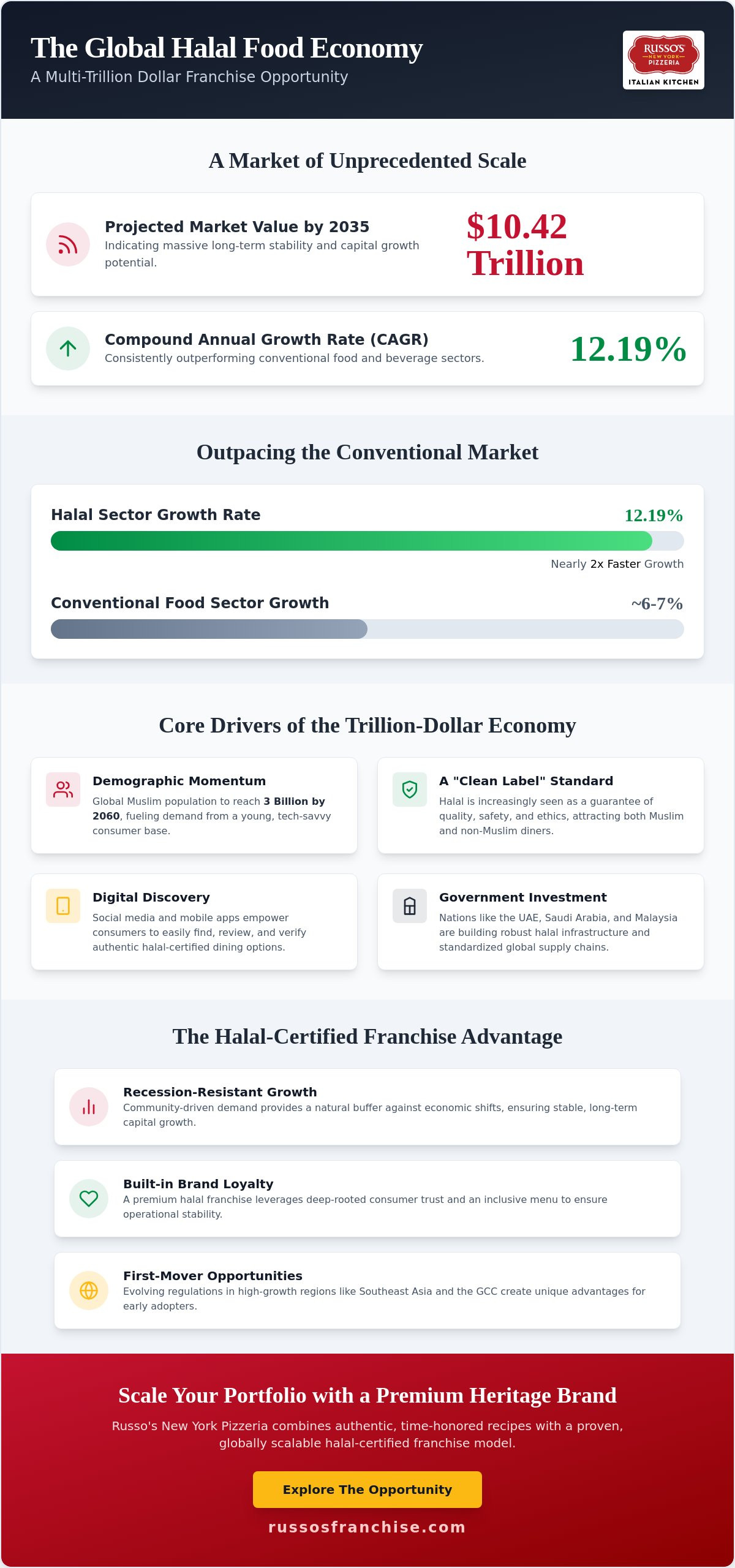
The global halal food market is projected to reach a staggering $10.42 trillion by 2035. This isn't just a niche segment; it's a powerful economic engine growing at a rate of 12.19% annually. You've likely noticed that traditional dining markets feel increasingly crowded, leaving you to search for a scalable halal restaurant franchise opportunity that offers both prestige and proven results. It's often difficult to find a partner that respects deep-rooted heritage while delivering the meticulous operational standards required for global expansion.
We understand that serious investors seek more than just a transaction; they seek a legacy. This analysis promises to show you exactly where the highest growth is happening and how the halal sector maintains its remarkable economic stability. We'll explore the impact of new mandatory certifications in Indonesia and Vietnam, the rising demand for ethical dining among non-Muslim consumers, and the specific criteria for identifying a premium investment partner. By the end, you'll have a clear roadmap for navigating this multi-trillion dollar economy with confidence and precision.
Key Takeaways
- The global halal food market is projected to reach $10.42 trillion by 2035, providing a robust and recession-resistant landscape for long-term capital growth.
- Discover why the youngest and fastest-growing consumer segment is prioritizing quality-certified dining, fueled by digital discovery and social media influence.
- Navigate the evolving regulatory environments in Southeast Asia and the GCC to secure first-mover advantages in newly standardized markets.
- Learn how to identify a premium halal restaurant franchise opportunity that leverages built-in brand loyalty and a diverse, inclusive menu to ensure operational stability.
- Explore the proven blueprint for scaling a heritage-driven brand globally while maintaining the meticulous standards and authentic flavors that discerning diners demand.
Quantifying the Global Halal Food Market Size in 2026
The global halal food market is no longer a niche segment defined solely by dietary restrictions. It has evolved into a powerhouse of the global Halal industry , representing a sophisticated standard of quality, ethics, and transparency that resonates with billions of consumers. In 2025, the market reached a staggering valuation of $3.30 trillion according to data from Precedence Research. As we move through 2026, this figure continues to climb, sustained by a projected compound annual growth rate (CAGR) of 12.19% through 2035. For the savvy investor, this trajectory signals a massive opening to secure a halal restaurant franchise opportunity in a sector that is consistently outperforming conventional food and beverage categories.
The shift in consumer behavior is palpable. We are witnessing a transition from basic household consumption toward premium, out-of-home dining experiences. This evolution is fueled by a growing Muslim middle class with increasing discretionary income and a deep desire for authentic culinary experiences. They aren't just looking for food that is permissible; they are looking for excellence, heritage, and a brand they can trust.
The Economic Scale of Halal Consumption
Spending in the halal sector is diversifying with remarkable speed. While raw ingredients remain a foundation, the hospitality and prepared food sectors are seeing the most aggressive capital infusion. This growth is underpinned by several core factors:
- Quality Proxy: Halal standards are increasingly viewed as a "clean label" alternative, emphasizing food safety, hygiene, and ethical animal welfare.
- Demographic Momentum: With the global Muslim population expected to reach 3 billion by 2060, the demand for sophisticated dining environments is skyrocketing.
- Discretionary Spend: Premium halal concepts are reporting higher average ticket prices as families seek out holistic dining experiences rather than simple convenience.
Halal vs. Conventional Food Market Growth
When you compare the 12.19% CAGR of the halal sector to the more modest growth rates of traditional F&B segments, the investment case becomes undeniable. The halal market is expanding nearly twice as fast as many conventional global food sectors. This resilience is rooted in the community-driven nature of the consumer base. Dining is a central, non-negotiable part of social and family life, providing a natural buffer against global economic shifts.
Furthermore, market penetration in non-OIC (Organisation of Islamic Cooperation) countries is rising sharply. Non-Muslim consumers are increasingly drawn to the transparency associated with halal certification, seeing it as a mark of superior craftsmanship and safety. This broad, cross-cultural appeal makes a halal restaurant franchise opportunity an attractive prospect for those looking to diversify their portfolios with a model that offers both cultural resonance and operational stability. Success in this space requires a partner who understands the delicate balance between time-honored heritage and modern, scalable systems.
Core Drivers Propelling the Trillion-Dollar Halal Economy
The momentum behind the Global Halal Market Size isn't merely a byproduct of population growth. It's the result of a profound cultural and technological shift. Currently, the industry is fueled by a sophisticated consumer base that demands transparency and excellence. This evolution has created a massive opening for a halal restaurant franchise opportunity that can bridge the gap between traditional values and modern dining expectations. Investors are no longer looking at a niche segment; they're looking at a global standard for quality.
Digital transformation acts as a powerful catalyst in this discovery process. Mobile apps and social media platforms have revolutionized how diners find and vet their meals. Real-time reviews and certification tracking have empowered a new generation to seek out authentic experiences with confidence. Also, institutional support from governments in the UAE, Saudi Arabia, and Malaysia has provided a stable regulatory framework. These nations are investing heavily in halal infrastructure, ensuring that the supply chain remains resilient and standardized across borders.
Demographic Momentum and Youthful Demand
Generation M, the tech-savvy and brand-conscious Muslim youth, is the primary engine of this economy. These consumers aren't satisfied with basic fast food. They possess significant purchasing power and a strong desire for premium, sit-down dining that reflects their heritage. They value brand loyalty, yet they're quick to switch to concepts that offer better craftsmanship and authenticity. This demographic shift has turned emerging markets into high-growth zones where the demand for a proven, scalable halal restaurant franchise opportunity far outpaces the current supply.
Ethical and Quality-Driven Consumerism
The modern halal diner often prioritizes "Farm-to-Table" philosophies, seeing a natural overlap between religious requirements and ethical food sourcing. This alignment makes halal food business opportunities incredibly attractive to non-Muslim diners who associate halal with superior hygiene and animal welfare. The Halal-Plus movement represents a sophisticated convergence where strict adherence to dietary law meets the elevated expectations of gourmet, organic, and heritage-focused culinary standards. By focusing on these shared values, a brand can build a truly inclusive community. If you're ready to lead in this space, you can explore our vision for global growth and see how heritage meets modern investment stability.
Regional Market Analysis: Beyond Traditional Borders
The global map of halal consumption is undergoing a radical reorganization. While the Middle East and Southeast Asia remain the historical heartlands, the demand for sophisticated, sit-down dining is creating a massive vacuum in markets traditionally dominated by quick-service fast food. This shift represents a unique halal restaurant franchise opportunity for investors who prioritize quality over convenience. We are seeing a move away from the "fast and cheap" mentality toward a preference for authentic, heritage-driven culinary experiences that respect both tradition and modern gourmet standards.
Southeast Asia continues to offer a mature, stable foundation for growth. Indonesia and Malaysia are no longer just emerging markets; they are massive economies with highly evolved consumer tastes. However, the complexity of certification is increasing. Starting October 17, 2026, Indonesia will enforce mandatory halal certification for all food and beverage products. Similarly, Vietnam released Decree No. 127/2026/NĐ-CP in April 2026 to establish stricter management of halal quality. These regulatory shifts favor established brands with the discipline to maintain meticulous standards across every location.
Premium Opportunities in Western Markets
The Western Frontier is currently the most underserved area for premium halal dining. In metropolitan hubs across the US, UK, and France, there is a glaring absence of authentic, halal-certified Italian heritage brands. For years, halal consumers in North America have been limited to a narrow selection of cuisines, often relegated to casual street food. Now, they're demanding the same upscale experiences as their neighbors. Finding an islamic compliant franchise that doesn't compromise on the craft of New York-style pizza or authentic pasta is the new priority for ethical entrepreneurs. The market is ready for a sophisticated alternative to the status quo.
The GCC Luxury and Casual Dining Boom
In the GCC, the hospitality sector is expanding at a breakneck pace, particularly within the framework of Saudi Arabia’s Vision 2030. Cities like Riyadh and Dubai have become global stages for international master franchise developers who seek to bring authentic, heritage-based brands to a discerning local population. This isn't just about food; it's about the stable, family-oriented environment that a premium brand provides. Investors in this region are looking for a scalable halal restaurant franchise opportunity that offers a proven blueprint for success while honoring the deep-rooted values of the community. Success here requires a partner who has already navigated these complexities and emerged with a refined, time-tested model.
Strategic Advantages of the Halal-Certified Franchise Model
Investing in a halal restaurant franchise opportunity offers more than just a slice of a growing market; it provides a structural advantage rooted in community trust. Conventional dining models often struggle with customer retention in volatile economies. In contrast, halal-certified brands benefit from a built-in loyalty base that prioritizes reliability and ethical sourcing. This community-driven demand creates a resilient revenue stream that remains stable even when broader market trends fluctuate. By aligning your capital with a brand that respects these values, you're not just buying a business; you're entering a partnership based on shared principles and long-term stability.
Operational resilience is further strengthened through inclusive menu offerings. By choosing a halal pizza franchise , investors can appeal to both the specific needs of halal diners and the universal popularity of authentic Italian cuisine. This dual-market appeal maximizes foot traffic and reduces the risk associated with niche-only concepts. A proven, certified system lowers the failure barrier by providing a ready-made blueprint for success, allowing partners to focus on excellence rather than trial and error. This methodical approach ensures that every location maintains the high standards that define a premium brand.
Capturing the Underserved Premium Segment
Most existing halal options are relegated to the fast-food category, leaving a significant gap in the casual dining sector. Discerning diners are looking for a place to sit, celebrate, and enjoy a meal that reflects their values without sacrificing the quality of the experience. Premium halal pizza and authentic Italian dishes offer significantly higher profit margins than generic fast-food counterparts. Leveraging the heritage of Chef Anthony Russo provides immediate credibility, as his family recipes have been perfected over decades. This authentic connection to tradition transforms a simple meal into a premium experience that customers are willing to pay for repeatedly.
Risk Mitigation via Certification
Transparency is the currency of the modern halal economy. Centralizing supply chains for halal ingredients reduces operational friction and ensures that every location maintains 100% compliance without the need for constant local vetting. This level of oversight builds an unbreakable bond of trust with the consumer. Rigorous halal certification protocols serve as a secondary food safety audit, verifying stringent hygiene and cross-contamination standards that often exceed local municipal requirements. This meticulous attention to detail protects the brand's reputation and ensures operational consistency across global borders. If you're ready to secure a future in this prestigious sector, explore our franchise opportunities today.
Russo's New York Pizzeria: Scaling Premium Halal Heritage
The transition from a cherished family kitchen to a global powerhouse requires more than just ambition; it demands a meticulous commitment to authenticity. Russo's New York Pizzeria has spent decades refining a model that honors its deep-rooted Italian heritage while embracing the rigorous requirements of the global halal economy. We've bridged the gap between traditional New York craftsmanship and the sophisticated needs of modern diners. This unique positioning creates a halal restaurant franchise opportunity that stands apart in a market often saturated with generic fast-food options. Our partners don't just open a restaurant; they inherit a legacy of excellence that has already been tested and proven across diverse international markets.
Scaling this heritage involves a disciplined approach to master franchise agreements. We provide a comprehensive blueprint that allows international master developers to replicate our success while maintaining the soul of our brand. Our support systems are designed for the complexities of 2026, offering robust frameworks for supply chain management, localized marketing, and operational consistency. As we expand our global footprint, our focus remains on finding partners who value stability and quality as much as we do. It's about building a sustainable future where premium dining and cultural respect go hand in hand.
Authentic Recipes, Global Standards
Chef Anthony Russo’s family recipes are the heartbeat of our organization. We've successfully adapted these time-honored methods to meet strict halal certification without losing the iconic New York flavor that our customers crave. Our commitment to quality is evident in every ingredient we select. We use only premium extra virgin olive oil, hand-tossed dough made fresh daily, and the highest grade of fresh mozzarella. This transition from a single unit to a regional master development is supported by a sophisticated supply chain that ensures every slice served in Riyadh or Dubai tastes exactly like the ones served in our original Houston locations. We don't compromise on the craft because we know our diners can taste the difference.
Join the Russo’s Legacy
We're currently seeking visionary partners for multi-unit and master franchise opportunities in high-growth regions. Our commitment to your success is absolute, providing professional training and expert site selection support to ensure your investment is positioned for maximum impact. We act as a seasoned mentor, guiding you through the complexities of the industry with a proven operational model. This is your chance to lead a prestigious brand that values excellence over convenience. If you're ready to redefine the premium dining landscape, Explore Russo’s Halal Restaurant Franchise Opportunities Today and start your journey toward building a lasting, heritage-driven business.
Building Your Legacy in a Trillion-Dollar Market
The global halal food market has moved far beyond a niche segment; it's now a $10.42 trillion economic force. Investors who recognize this trajectory are shifting their focus toward premium, heritage-driven dining experiences that resonate with a sophisticated global audience. You've seen how regulatory shifts in Southeast Asia and the underserved demand in Western hubs have created a landscape ripe for professional expansion. Success in this sector requires more than just capital. It requires a partner with a proven blueprint and an uncompromising commitment to quality.
Founded in 1992 by Chef Anthony Russo, our brand has spent decades perfecting the balance between authentic New York flavor and strict halal standards. With dozens of global locations across the US and the Middle East, we offer a proprietary halal-certified supply chain for premium Italian ingredients. Finding the right halal restaurant franchise opportunity means choosing a partner that eliminates operational friction while protecting your investment. If you're ready to lead this movement, Apply for a Russo’s Halal Pizza Master Franchise Opportunity and join a legacy built on discipline and pride. The future of global dining is inclusive, ethical, and waiting for your leadership.
Frequently Asked Questions
How big is the global halal food market in 2026?
The global halal food market is currently valued at over $3.30 trillion, following a trajectory that is projected to reach $10.42 trillion by 2035. This expansion is sustained by a compound annual growth rate of 12.19% according to data from Precedence Research. This massive scale reflects a shift where halal standards are no longer just religious requirements but are viewed as a global benchmark for food safety and quality.
Why is the halal food market growing so quickly in Western countries?
Rapid growth in the West is fueled by the rising purchasing power of "Generation M" and a growing non-Muslim consumer base that associates halal with ethical sourcing and superior hygiene. Metropolitan hubs in the US, UK, and France face a significant shortage of premium, sit-down dining options. This gap allows a sophisticated halal restaurant franchise opportunity to capture a loyal audience that is tired of limited fast-food choices.
What are the main drivers of the halal food industry growth?
Key drivers include significant demographic shifts, digital transformation through social media discovery, and new mandatory certification laws in countries like Indonesia and Vietnam. Additionally, the "Halal-Plus" movement is merging religious compliance with organic and gourmet standards. These factors create a stable, regulated environment that encourages long-term capital investment and international brand scaling across diverse regions.
Is a halal restaurant franchise more profitable than a conventional one?
While profitability depends on management and location, halal models often benefit from intense community loyalty and a resilient customer base that remains stable during economic shifts. By targeting the underserved premium segment, a franchise can command higher average ticket prices than generic competitors. This built-in demand often leads to lower customer acquisition costs and a more predictable revenue stream for disciplined operators.
How does halal certification affect a restaurant franchise operation?
Certification requires meticulous supply chain oversight but ultimately functions as a secondary food safety audit that enhances consumer trust. It streamlines operations by centralizing sourcing and ensuring that every ingredient meets 100% transparency requirements. This level of discipline protects the brand's reputation and ensures that the franchise maintains a consistent, high-quality experience that meets rigorous global standards.
Can a traditional Italian restaurant really be 100% halal certified?
Yes, authentic Italian cuisine can be fully halal certified by utilizing premium, approved beef and chicken alternatives for traditional pork-based toppings. By using beef pepperoni and sausage alongside time-honored methods like hand-tossed dough and extra virgin olive oil, a brand can maintain its heritage. This allows families to enjoy the soul of New York-style pizza while strictly adhering to their dietary values.
What regions offer the best ROI for a master franchise investment?
The GCC region offers exceptional potential, particularly with the hospitality expansion driven by Saudi Arabia’s Vision 2030. Southeast Asia remains a stable powerhouse with mature markets in Indonesia and Malaysia. However, Western metropolitan areas currently provide a unique halal restaurant franchise opportunity due to the severe lack of authentic, premium dining options for the growing local Muslim middle class.
How do I find a reputable halal food business opportunity?
Reputable opportunities are characterized by a long history of culinary excellence, a proven global footprint, and transparent support systems for partners. You should look for brands founded by seasoned experts who offer a clear, scalable blueprint for international development. A strong partner will provide comprehensive training and site selection support to ensure your business is rooted in a legacy of reliability and prestige.