Pizza Franchise Comparison 2026: Evaluating ROI, Quality, and Heritage
The most profitable investment for 2026 isn't found in the fastest kitchen; it's found in the one with the deepest roots. You likely recognize that high royalty fees and oversaturated territories make it harder than ever to secure a meaningful return on investment. This pizza franchise comparison explores how to cut through the noise of generic brands to find a model that balances heritage with high-volume efficiency. We've designed this guide to help you identify a sustainable business that offers more than just a menu, providing the operational support and unique market positioning you need to thrive.
Finding a proven business model requires looking beyond the surface of a franchise disclosure document. It requires a partner that values excellence and meticulous standards over mere convenience. We've analyzed the 2026 FDD data for industry leaders and emerging powerhouses to help you evaluate which brands offer the best balance of premium positioning and long-term financial returns. This guide examines the critical intersection of ROI, quality, and heritage to ensure your next venture is built on a foundation of stability, pride, and unwavering consistency.
Key Takeaways
- Understand the 2026 consumer pivot away from processed delivery toward the quality and tradition of full-service Italian kitchens.
- Conduct a detailed pizza franchise comparison to see how menu diversity and premium positioning drive higher average transaction sizes.
- Recognize why comprehensive, founder-led training is the most reliable blueprint for managing high-volume kitchen operations without prior experience.
- Learn the economic benefits of scratch-made dough and authentic ingredient sourcing for building a sustainable, high-margin business.
- Evaluate growth opportunities in underserved global markets, including the strategic advantages of the halal pizza franchise model.
Table of Contents
The Landscape of Pizza Franchising in 2026
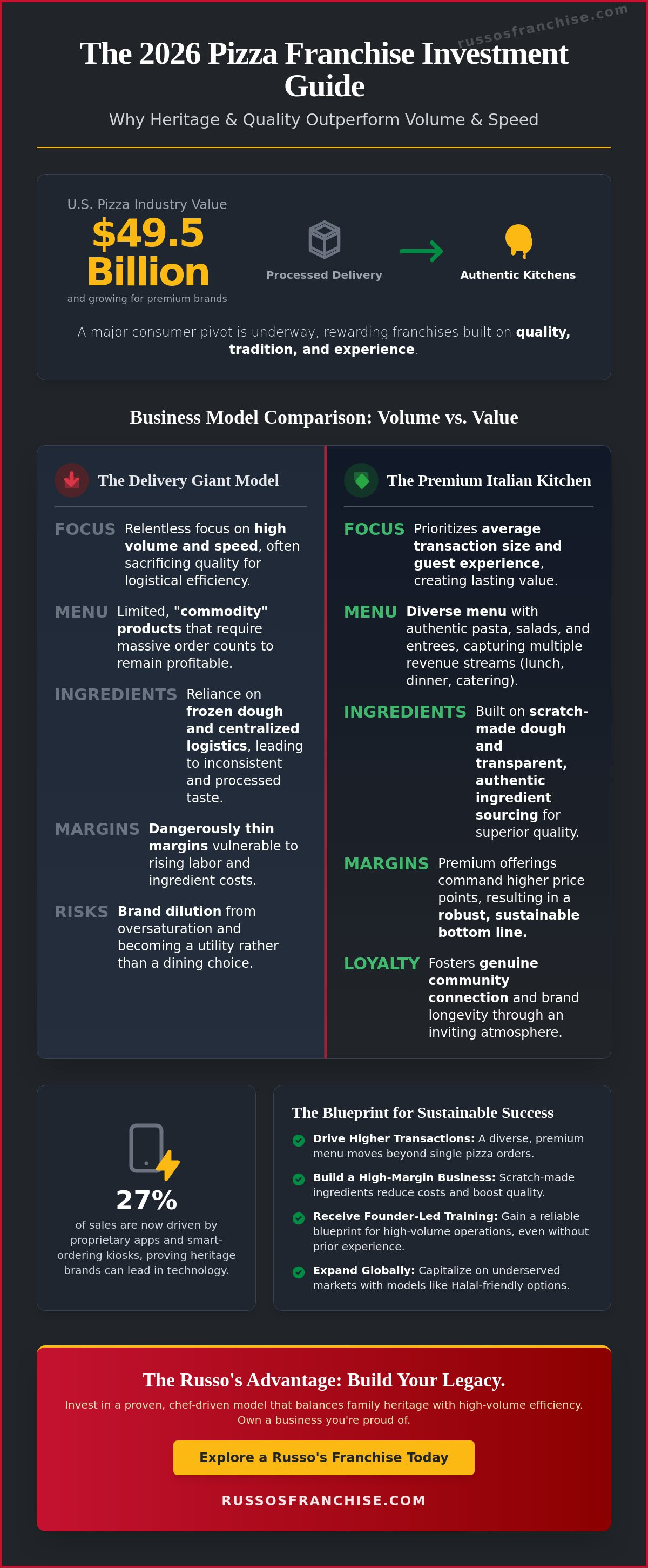
The pizza industry has reached a critical turning point. In 2026, the market is no longer satisfied with the "commodity" pizza that dominated the last decade. Consumers are actively moving away from processed, frozen delivery options in favor of authentic experiences. This shift has created a clear divide in any pizza franchise comparison , separating brands that prioritize logistics from those that prioritize the craft. While the U.S. pizza restaurant industry is valued at $49.5 billion this year, the growth isn't uniform across all models. Success now requires a blend of high-level professionalism and the emotional resonance of a deep-rooted family legacy.
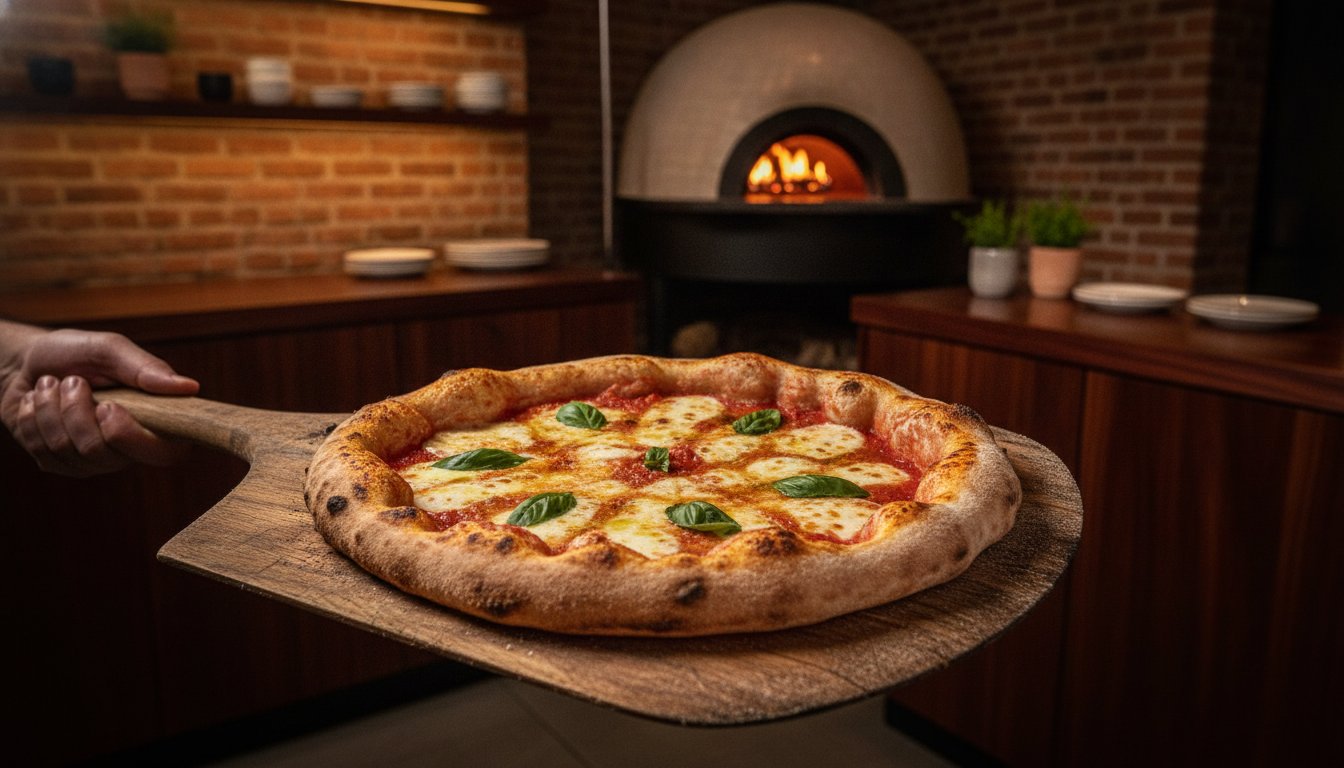
We can define the current landscape through three primary tiers. First, the Delivery Giants focus on volume and speed, often at the expense of ingredient integrity. Second, Fast-Casual models offer speed and some customization but frequently lack the atmosphere of a true dining destination. Finally, Full-Service Italian Kitchens provide a comprehensive experience, combining premium pizza with authentic entrees. Interestingly, brick-and-mortar stability is significantly outperforming third-party ghost kitchen experiments. Guests want to see the dough being tossed; they want to smell the wood-fired oven. They're looking for a connection to the history of pizza, not a cardboard box from a windowless warehouse.
Market Trends and Consumer Expectations
The "foodie" franchisee has emerged as a dominant force in 2026. These investors aren't just looking for a balance sheet; they want to own a business they're proud to represent. Transparency in ingredient sourcing has become a non-negotiable requirement for capturing local market share. Modern guests track the origin of their toppings, from the specific region of Italy where the tomatoes are grown to the quality of the flour. While the soul of the business remains traditional, the operations are powered by 2026 technology. Proprietary apps and smart-ordering kiosks now account for nearly 27% of sales, ensuring that heritage-driven brands remain competitive in a digital-first world.
The Risks of 'Commodity' Pizza Models
Investing in a low-price leader is increasingly dangerous. These "commodity" models struggle with rising labor and ingredient costs because their thin margins don't allow for flexibility. When your brand is built solely on being the cheapest option, you're constantly at risk of being undercut. Massive national chains also face the peril of brand dilution. When a brand is on every corner, it loses its prestige and becomes a utility rather than a choice. Many find that "cheap" entry fees are a deceptive lure. They often lead to higher long-term operational headaches and a lack of the founder-led vision necessary to navigate a complex, evolving market.
Comparing Business Models: Delivery Giants vs. Premium Italian Kitchens
Choosing the right investment requires looking beyond the initial franchise fee. A thorough pizza franchise comparison reveals a stark contrast in how different models generate revenue and maintain customer loyalty. While delivery giants focus on high-speed logistics and volume, premium Italian kitchens prioritize the average transaction size and the guest experience. The core difference lies in the strategy of volume versus value. National chains often rely on low-margin "commodity" products that require massive order counts to remain profitable. In contrast, a chef-driven model leverages higher-quality offerings to command a premium price point, resulting in a more robust bottom line with fewer operational headaches.
Menu diversity is a primary driver of this increased value. By incorporating authentic pasta dishes, fresh salads, and Italian entrees, a restaurant transforms from a simple pizza shop into a comprehensive dining destination. This expansion of the menu directly impacts revenue streams. It allows a single location to capture lunch crowds, family dinners, and high-ticket catering orders simultaneously. Site selection also differs significantly between these models. While delivery-only units seek small, high-traffic "holes-in-the-wall" primarily for logistics, a full-service kitchen requires a space that invites guests to stay, fostering the brand longevity that only comes through genuine community connection and customer loyalty.
The Delivery Giant Model
Success in the delivery-heavy segment depends on a relentless focus on speed and cost reduction. These brands often rely on centralized distribution centers and frozen dough to maintain consistency across thousands of locations. This model demands high volume to offset thin individual profit margins. Franchisees frequently find themselves caught in intense price wars, where national corporate promotions squeeze local profitability. While the technology is often impressive, the reliance on a "fast-food" identity can make it difficult to differentiate your business from the competitor across the street.
The Russo's New York Pizzeria Model
Authenticity serves as a powerful competitive moat. The Russo's model is built on a foundation of scratch-made quality, utilizing family recipes that have been refined over generations. This approach creates a unique market differentiator that cannot be easily replicated by massive national chains. One of the primary benefits of buying a franchise with this level of heritage is the immediate trust established with the consumer. With an average store volume of approximately $1.165 million as reported in the 2026 Franchise Disclosure Document, the financial potential is clear. This model supports multiple revenue streams, including dine-in, take-out, delivery, and professional catering. If you're looking for a partner that provides a seasoned blueprint for success, exploring a heritage-led model is the logical next step for your entrepreneurial journey.
Financial and Operational Metrics: ROI, Costs, and Support
A sophisticated pizza franchise comparison must look past the initial excitement of brand aesthetics to the cold, hard reality of the balance sheet. While the "soul" of your business lives in the kitchen, its survival depends on a disciplined understanding of financial metrics and operational support. High-level business investments require more than just a passion for food; they demand a partner that offers a stable, refined path to profitability. Evaluating the true cost of entry means looking far beyond the initial franchise fee to understand the total capital required to bring a premium Italian kitchen to life.
The path to true wealth creation in this industry rarely stops at a single location. Most successful partners view their first unit as a proving ground for a multi-unit empire. This scaling process is only possible when the underlying business model is built on unwavering consistency and prestige. You aren't just buying a job; you're investing in a system designed to be replicated. To achieve this, you must scrutinize the royalty structure to ensure your percentage is buying more than just a logo. It should secure your place in a robust supply chain, provide ongoing research and development, and offer the authoritative expertise of a seasoned mentor who has already navigated the industry's complexities.
Analyzing the Total Investment
Understanding the full build-out costs is essential for maintaining entrepreneurial confidence. A premium brick-oven environment requires specialized ventilation, high-grade masonry, and professional-grade kitchen equipment that far exceeds the requirements of a standard delivery shop. Beyond the physical structure, you must account for working capital. It's standard practice to secure enough liquid capital to cover at least the first six months of operation. This buffer provides the security needed to focus on quality and service while your local market share grows. When reviewing a franchisor's Item 19 Earnings Claim, look for transparency and historical depth rather than just high-energy projections.
Support Systems and Training
The most significant "hidden" factor in your first-year success is the quality of the operational transfer. You don't need to be a professional chef to own a successful Italian kitchen, but you do need a pizza franchise training program that provides a meticulous blueprint for excellence. This support should extend from the initial site selection to the sensory details of the guest experience.
- Ongoing Marketing: A balance of national brand prestige and localized digital strategies to drive immediate foot traffic.
- Operational Audits: Regular field support and standards reviews to ensure your kitchen maintains the brand's heritage-driven pride.
- Supply Chain Stability: Access to authentic, scratch-made ingredients at a scale that protects your margins from market volatility.
The Quality Factor: Scratch-Made Ingredients vs. Frozen Logistics
Quality is the ultimate differentiator in any pizza franchise comparison . While many national chains prioritize "frozen logistics" to simplify operations, true market leaders understand that excellence is found in the details. Making dough in-house isn't just a nod to tradition; it's a savvy economic decision. Shipping frozen dough is expensive and inefficient because you're paying to transport weight that could be handled on-site. By preparing dough fresh daily, you reduce shipping costs and provide a product that is fundamentally superior in texture and flavor. This commitment to craftsmanship creates a sensory experience that frozen alternatives simply cannot replicate.
Sourcing premium ingredients like Pecorino Romano and extra virgin olive oil does more than enhance the menu. It justifies a higher price point and builds a moat around your business. Guests in 2026 are increasingly skeptical of "ghost kitchens" and windowless delivery hubs. They want to see the fire in the brick oven and the hand-tossed dough. A physical presence builds a level of trust that digital-only brands lack. Maintaining a consistent "New York Style" standard across multiple locations requires a disciplined adherence to family recipes, ensuring that every guest receives the same high-quality experience regardless of the zip code.
The Myth of Convenience
The perceived convenience of frozen dough is a trap for the inexperienced franchisee. It increases reliance on centralized distribution and leaves your product quality at the mercy of a delivery truck. An open kitchen serves as your most powerful marketing tool, transforming your space into a destination rather than a mere utility. When guests can see the fresh ingredients and smell the scratch-made sauce, they form an emotional connection to your brand. This hospitality is what turns a one-time customer into a loyal advocate for your business.
Menu Engineering for Profit
Sophisticated menu engineering allows you to leverage traditional Italian recipes to maximize your margins. By using versatile, high-quality ingredients across multiple dishes, you can significantly reduce food waste while maintaining a diverse offering. This strategic planning is essential for anyone exploring pizza franchise opportunities that promise both sustainability and prestige. Authentic flavors allow you to dominate your local market by offering a premium experience that "commodity" pizza brands can't match. If you're ready to invest in a brand that values craftsmanship as much as you do, learn more about our heritage-driven investment models.
The Russo’s Advantage: A Blueprint for Global Expansion
Scaling a business requires more than just a local reputation; it requires a systematic approach to growth that preserves the brand's soul. A thorough pizza franchise comparison often reveals that while many brands can manage a handful of units, few possess the structural integrity to scale globally without losing their essence. This is where the Russo's model excels. By combining a refined, time-tested path with the ambitious, growth-oriented mindset of a seasoned mentor, the brand provides a clear blueprint for partners ready to dominate their regions. It's a sophisticated blend of entrepreneurial confidence and heritage-driven pride that turns a single location into a regional empire.
The direct influence of Chef Anthony Russo ensures that every expansion remains firmly rooted in the brand's origins. This isn't a corporate-driven machine; it's a founder-led mission to share a family legacy with the world. As you begin your due diligence for a 2026 opening, focus on the reliability and stability of the provided systems. Review the FDD, speak with current partners, and experience the craft firsthand. Success is a natural outcome when you follow a proven blueprint that values excellence over mere convenience. It's time to invest in a future that honors the past while aggressively pursuing the growth of tomorrow.
International Master Franchising
For the high-level investor, the international master franchise offers a unique opportunity to secure regional territory rights and development schedules. This model isn't about opening a single kitchen; it's about building a legacy across entire cultural landscapes. Adapting the New York Pizzeria model for diverse markets requires a delicate balance of maintaining authentic heritage while respecting local nuances. Master franchisees benefit from a structured organization that provides the professional momentum needed to scale quickly and efficiently. It's a bold opportunity for those who recognize that a pizza franchise comparison should prioritize long-term territory control and brand prestige.
Halal-Certified Opportunities
One of the most significant underserved demographics in the global market is the demand for premium Halal Italian dining. Russo's has pioneered this segment, offering a strategic advantage that few competitors can match. Meeting the operational requirements for Halal certification isn't just a regulatory hurdle; it's a competitive advantage in major metropolitan hubs.
- Demographic Growth: Tapping into a loyal, growing global demographic that values quality and transparency.
- Operational Excellence: Maintaining meticulous standards for ingredient sourcing and handling to ensure certification integrity.
- Market Differentiation: Offering a specialized menu that feels like an exciting creative opportunity rather than a compromise.
Securing Your Legacy in the 2026 Pizza Market
Your search for a stable investment ends where authentic tradition begins. This pizza franchise comparison has demonstrated a clear market shift; consumers now prioritize the craftsmanship of a scratch-made kitchen over the convenience of a processed delivery box. By choosing a model that emphasizes menu diversity and high-quality ingredients, you aren't just opening a restaurant. You're building a destination that commands customer loyalty and resists the pressures of an oversaturated market. You've seen how the right support system transforms operational complexity into a disciplined blueprint for long-term growth.
Founded in 1992 by Chef Anthony Russo, our brand offers over 30 years of operational excellence and a global presence that includes specialized Halal models. You're partnering with a founder-led organization that values your success as much as our heritage. It's time to transition from an observer to a bold innovator in the premium Italian culinary space. Start your journey with a Russo's New York Pizzeria franchise today. We look forward to helping you build a profitable future rooted in the values of family, quality, and excellence.
Frequently Asked Questions
Is owning a pizza franchise profitable in 2026?
Profitability in 2026 is driven by value rather than just volume. While the U.S. industry is valued at $49.5 billion, the most successful operators are those who pivot away from commodity pricing. Premium models often see higher average transaction sizes because they offer a full dining experience. Success depends on following a proven blueprint that balances high standards with operational efficiency and authentic quality.
What is the difference between a master franchise and a single-unit franchise?
A single-unit agreement allows you to operate one specific location. In contrast, an international master franchise grants you the rights to develop and oversee an entire territory or region. This larger scale allows you to build a regional empire and act as a mentor to other operators in your area. It's an ambitious path designed for investors looking to maximize their global footprint and long-term stability.
How much experience do I need to open a Russo's New York Pizzeria?
You don't need a background as a professional chef to succeed with our model. We've perfected a traditional craft into a repeatable system that any disciplined entrepreneur can follow. Our founder-led team provides the authoritative expertise needed to navigate the complexities of the industry. We offer a seasoned blueprint that ensures your kitchen operates with unwavering consistency and the prestige of a family-oriented guide.
Why does Russo's focus on brick-and-mortar instead of ghost kitchens?
We prioritize brick-and-mortar environments because they create a sensory and cultural experience that digital-only models lack. An open kitchen with a brick oven serves as a powerful marketing tool, fostering immediate trust with your guests. While ghost kitchens focus on logistics, our physical locations become community destinations. This hospitality-driven approach ensures your business remains a holistic experience rather than just a financial transaction.
What are the typical royalty fees for a premium pizza franchise?
When conducting a pizza franchise comparison , you'll find that royalty fees typically range from 5% to 6% of gross sales. For instance, brands like Blaze Pizza and Papa John's maintain a 5% rate, while premium models like Russo's are established at 6%. These fees secure your access to a robust supply chain, ongoing research and development, and the established prestige of a national brand.
Can I open a Halal-certified pizza franchise with Russo's?
Absolutely. We are a bold innovator in the Halal pizza franchise segment, providing a specialized menu that meets the growing demand for premium Halal Italian dining. This certification provides a significant competitive advantage in major metropolitan hubs and underserved global markets. We provide the operational standards and sourcing requirements needed to maintain certification integrity while delivering the same authentic, scratch-made quality our brand is known for.
How long does it take to open a new pizza franchise location?
The opening process typically requires six to nine months, depending on the complexity of the site selection and local permitting. This period involves meticulous standards for build-out to ensure your brick-oven environment meets our premium requirements. We move methodically through the design and construction phases to ensure your grand opening is a natural outcome of a well-organized and highly structured plan.
What kind of training does Russo's provide to new franchisees?
We provide an intensive training program that covers every aspect of the business, from hand-tossing dough to sophisticated menu engineering. This training is designed to inspire trust and security in our partners, regardless of their prior experience. You'll receive direct guidance on maintaining our heritage-driven pride and meticulous standards. This ensures you can manage a high-volume kitchen with the confidence of a seasoned industry expert.