How to Evaluate a Franchise Opportunity: Pro Investment Tips
Most investors treat a franchise like a simple financial transaction, yet the most successful owners know it is actually an investment in a founder’s legacy and a product’s integrity. You want more than just a business; you want a stable foundation that provides security for your family. It's natural to feel anxious about complex legal documents like the Franchise Disclosure Document or the fear of hidden costs that could erode your margins. Learning How to Evaluate a Franchise Opportunity Before You Invest is the difference between chasing a fleeting market trend and securing a high-performance heritage brand.
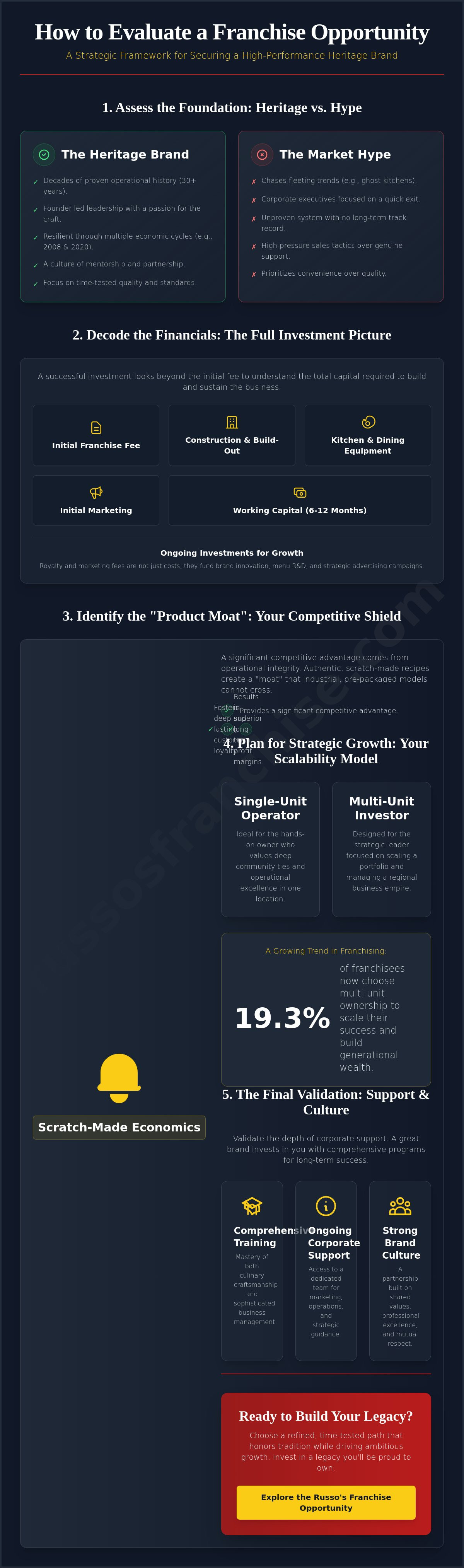
We've designed this guide to help you master the art of franchise due diligence with a comprehensive framework. You'll gain the confidence to identify a brand with a "product moat" that stands the test of time. We'll walk through a clear checklist, including how to handle SBA 7(a) loan rates that currently sit between 9% and 11.5% as of June 2026. You'll also learn why 19.3% of franchisees now choose multi-unit ownership to scale their success. By the end, you'll have the professional clarity to choose a refined, time-tested path that honors tradition while driving ambitious growth.
Key Takeaways
- Distinguish between fleeting market trends and high-performance heritage brands by prioritizing concepts with decades of proven operational history and founder-led leadership.
- Learn How to Evaluate a Franchise Opportunity Before You Invest by looking beyond the initial fee to account for total construction costs and essential working capital.
- Identify a sustainable "product moat" by choosing authentic, scratch-made recipes that provide a significant competitive advantage over industrial, pre-packaged models.
- Master territory rights and scalability models to decide whether a hands-on single-unit or a strategic multi-unit approach aligns with your vision for growth.
- Validate the depth of corporate support through comprehensive training programs that cover both culinary craftsmanship and sophisticated business management standards.
Table of Contents
Assessing the Foundation: Brand Heritage vs. Market Hype
Success in the service industry isn't accidental. It's the result of a stable blueprint. When you look at How to Evaluate a Franchise Opportunity Before You Invest , the first step is distinguishing between a brand with deep roots and one chasing a fleeting trend. Brand heritage isn't just an old logo. It's a combination of time-tested recipes and founder-led leadership that provides a reliable path for new partners. This foundation ensures that the brand's core values remain steady even as consumer habits shift.
Legacy brands, built on brick-and-mortar foundations and traditional methods, offer a security that "hype brands" like ghost kitchens or trendy ingredient concepts simply cannot match. A brand with over 30 years of operational history, such as Russo’s, has already solved the problems that sink newer concepts. Understanding What is Franchising? involves recognizing that you're buying into a system. If that system hasn't been tested through multiple economic cycles, you're taking a gamble on an unproven theory rather than investing in a proven reality. You want a partner that has navigated the complexities of the industry and emerged stronger.
Evaluating Brand Longevity and Leadership
Consistency starts at the top. The "Founder Factor" is a critical metric for any high-level investment. You should research the founder’s background to see if they are a chef with a passion for the craft or merely a corporate executive looking for a quick exit. Brands that survived the 2008 financial crisis and the 2020 global shifts without compromising their quality demonstrate a rare resilience. These organizations usually foster a culture of mentorship rather than high-pressure sales, treating you like a family partner instead of just another unit on a map. They prioritize meticulous standards over mere convenience.
Defining Your Entrepreneurial Alignment
Your personal pride is just as important as the profit margins. Ask yourself if you're a "formula follower" who appreciates the discipline of a refined system. If you value fresh ingredients and traditional service, you'll find fulfillment in a brand that shares those standards. Choosing a Pizza & Italian Kitchen Franchise means committing to a lifestyle of hospitality. Whether you want to be a hands-on operator or a multi-unit investor, your chosen brand must align with your long-term vision for scalability and professional excellence. When you master How to Evaluate a Franchise Opportunity Before You Invest , you ensure that your capital supports a legacy you're proud to own.
Decoding the Financials: Beyond the Initial Franchise Fee
Financial transparency is the cornerstone of a trusting partnership. While the initial franchise fee serves as your entry point, a sophisticated investor looks at the full scope of the capital required to build a lasting legacy. This comprehensive view includes the tangible costs of construction, state of the art kitchen equipment, and the initial marketing push that introduces your store to the community. Understanding How to Evaluate a Franchise Opportunity Before You Invest requires a deep dive into your fuel reserves, specifically the working capital needed to sustain operations for the first 6 to 12 months as you build your local presence.
Royalty fees and marketing fund contributions are often viewed as simple expenses, yet in a high performance system, they are vital investments in ongoing brand innovation. These funds support the research and development of new menu items and the strategic advertising campaigns that keep the brand at the forefront of the industry. Additionally, scratch made economics provide a unique profitability moat. By utilizing authentic, high quality ingredients instead of industrial alternatives, you foster a level of customer loyalty that frozen models cannot achieve. This dedication to craftsmanship often results in superior long term margins because quality is a value that customers are willing to pay for consistently.
Analyzing the Franchise Disclosure Document (FDD)
The Franchise Disclosure Document is your primary tool for financial due diligence. You must pay close attention to Item 19, which provides the financial performance representations of existing units. This data helps you understand the actual earning potential rather than relying on vague estimates. Simultaneously, Item 20 reveals the system's health by tracking unit openings versus closures. A stable system shows consistent, disciplined growth. You should also seek clarity on any litigation history to ensure the franchisor's obligations align with your professional standards for reliability and stability.
Calculating ROI and Profitability Moats
A resilient business model offers multiple streams of revenue to protect your investment. Beyond the traditional dine-in experience, you should evaluate the brand's strength in delivery and catering. The Pizza Advantage is well documented in the food industry; it consistently offers some of the highest margins due to the efficiency of raw ingredients paired with high consumer demand. When you look at Franchise ROI: The Financials of Pizza Success, it becomes clear that a proven model maximizes these advantages. For those ready to explore a refined investment, reviewing our current franchise opportunity details is the next logical step in your journey toward business ownership.
The Product Moat: Evaluating Operational Integrity and Quality
Authenticity is the most resilient form of competition. While a rival can mirror your color palette or mimic your social media presence, they cannot replicate the soul of a kitchen that relies on hand-crushed tomatoes and extra virgin olive oil. This is the "Product Moat." It's a proprietary defense built on unique, family recipes that have been refined over generations. When you learn How to Evaluate a Franchise Opportunity Before You Invest , you must look past the branding to the back-of-house operations. A brand that prioritizes culinary integrity ensures that your business isn't just a commodity; it's a destination for quality that competitors can't easily duplicate.
The contrast between scratch-made and industrial models is stark. Many "concept" brands rely on frozen, pre-packaged ingredients to ensure standardization, but this often leads to a hollow, processed experience. In contrast, a model that utilizes fresh dough and aged cheeses creates a sensory experience that builds deep customer loyalty. You should evaluate the kitchen model carefully. It must be designed for maximum efficiency to handle high-volume periods, yet it shouldn't sacrifice the gourmet standards that define the brand. A well-organized kitchen is a disciplined environment where craftsmanship and speed coexist, providing a stable foundation for long-term growth.
Authentic Recipes vs. Industrial Standardization
Scratch-made dough is the ultimate business defense because its superior texture and flavor profile simply cannot be replicated by machine-heavy, industrial alternatives. You should ask if the franchisor provides genuine training on the craft of cooking or if they just teach you how to operate a microwave. A commitment to a premium supply chain, featuring ingredients like Extra Virgin Olive Oil and hand-selected cheeses, signals a brand that values excellence over mere convenience. This dedication to quality is what separates a high-performance heritage brand from a fleeting trend.
Evaluating Specialized Market Opportunities
Specialized certifications, such as a Halal pizza franchise , open doors to significant, untapped global demographics. As of June 2026, the Halal food market continues to show robust growth, making it a strategic entry point for international investors who value inclusivity and cultural respect. You must verify if the franchisor has a proven, Islamic-compliant operational model already in place. For those looking to expand beyond domestic borders, an International Master Franchise offers a way to scale this authentic heritage globally. Mastering How to Evaluate a Franchise Opportunity Before You Invest means identifying these niche moats that provide a clear path to international scalability.
Strategic Growth: Territory Rights and Scalability Models
Scaling a business requires a clear vision for the horizon. When you learn How to Evaluate a Franchise Opportunity Before You Invest , you must scrutinize how the franchisor defines your "Protected Territory." Is it a simple radius, or a sophisticated map based on population density and zip codes? A precise definition prevents internal competition and secures your market dominance. You aren't just buying a store; you're securing a piece of a proven heritage. Success depends on having the space to grow without interference.
Mastering How to Evaluate a Franchise Opportunity Before You Invest means understanding that scalability is built into the contract from day one. You should follow a methodical approach to assessing growth potential:
- Step 1: Evaluate the "Protected Territory" definition to ensure it offers genuine market insulation.
- Step 2: Decide between a Single-Unit approach for hands-on hospitality or a Multi-Unit model to become a manager of managers.
- Step 3: Analyze the International Master Franchise opportunity if you seek regional or international dominance.
- Step 4: Review site selection support to see if the brand uses data-driven analytics to find "A+" locations.
- Step 5: Assess conversion potential by checking if the brand can turn existing independent restaurants into a Pizza & Italian Kitchen Franchise .
Single-Unit vs. International Master Developer
Operating one store requires a focus on daily excellence. Developing an entire country or region requires a focus on strategic infrastructure. Multi-unit owners benefit from significant economies of scale, particularly in regional marketing and centralized staffing. The master developer model carries a level of prestige and ROI potential that appeals to the most ambitious investors. It allows you to replicate a time-tested blueprint across a vast landscape, building a legacy that transcends a single neighborhood. This path is for those who view hospitality as a vehicle for broad economic impact.
Site Selection and Real Estate Support
Real estate is the physical manifestation of your investment. You should evaluate the franchisor’s involvement in lease negotiations and tenant improvements. In a post-ghost-kitchen era, traditional brick-and-mortar visibility remains a vital asset for building community trust. A brand’s flexibility in footprint, whether in strip centers or urban hubs, ensures your store can thrive in diverse environments. If you are ready to secure your territory and begin your expansion, exploring our franchise opportunity is the first step toward building your regional presence.
The Final Validation: Training, Support, and Culture
The transition from a signed contract to a flourishing storefront depends entirely on the quality of the systems behind the brand. While the legal and financial reviews provide the foundation, the final stage of How to Evaluate a Franchise Opportunity Before You Invest focuses on the human element. You must determine if the franchisor offers a sophisticated training program that masters both the "Back of House" culinary craft and the "Front of House" management systems. A premium brand doesn't just hand you a recipe book; it provides a comprehensive education in the discipline of hospitality.
Support should be visible and hands-on during your most critical moments. When you launch, the corporate team should spend multiple days on-site, ensuring your staff embodies the brand's meticulous standards from the very first guest. This commitment continues long after the grand opening. Ongoing field support should include regular visits from business consultants who analyze your P&L statements to help you optimize margins and refine operations. Additionally, a robust marketing infrastructure is essential. You need localized digital assets and a proven grand opening blueprint that cuts through the noise of the modern market, ensuring your investment captures immediate attention.
Validating Through Existing Franchisees
Success leaves a trail of evidence in the form of satisfied partners. Performing a "Validation Call" is a vital step in How to Evaluate a Franchise Opportunity Before You Invest . You should ask current owners if they feel like respected partners in a family-oriented guide or simply sources of royalty checks. A healthy system is easy to spot; look for "Multi-Unit Growth" among existing franchisees. When current owners are opening their second or third stores, it's a clear signal that the model is scalable, profitable, and supported by a culture of excellence. These conversations reveal the true character of the organization beyond the formal disclosure documents.
The Russo’s Advantage: A Blueprint for Excellence
A founder-led, heritage-rich brand like Russo’s New York Pizzeria meets every criteria for rigorous due diligence. It combines decades of operational history with a sophisticated support network designed for ambitious entrepreneurs. By choosing a partner that values traditional craftsmanship as much as modern business efficiency, you secure a path that leads to both professional pride and financial stability. If you're ready to move beyond the research phase and start your own legacy, we invite you to Explore Russo’s New York Pizzeria Franchise Opportunities and take the first step in your entrepreneurial journey.
Securing Your Legacy Through Proven Systems
You've explored the critical frameworks for due diligence, from decoding the FDD to identifying a sustainable product moat. Mastering How to Evaluate a Franchise Opportunity Before You Invest is about finding a partner that values tradition as much as your personal growth. You now have the clarity to distinguish between a passing trend and a stable heritage brand. Choosing a business with a time-tested blueprint ensures that your capital supports a legacy of quality and consistency.
Russo’s New York Pizzeria offers a unique opportunity for those who demand excellence. Founder-led by Chef Anthony Russo since 1992, our system relies on authentic family recipes with zero frozen products. We provide a global presence with specialized Halal-certified models; this ensures your business is both inclusive and scalable in any market. It's time to move from analysis to action and build a future you can be proud of. Request Your Russo’s Franchise Information Kit today to begin your entrepreneurial journey with confidence.
Frequently Asked Questions
What is the most important document to review before investing in a franchise?
The Franchise Disclosure Document (FDD) is the most vital legal resource you'll encounter during your research. It provides 23 detailed sections covering the franchisor's history, litigation, and financial performance representations. Reviewing this document thoroughly with a professional advisor is the first step in learning How to Evaluate a Franchise Opportunity Before You Invest . It ensures you're entering a partnership with a transparent and stable organization.
How much liquid capital do I really need to start a pizza franchise in 2026?
You must have enough liquid capital to cover the initial fee, build-out costs, and a safety net of working capital for the first year. In 2026, initial franchise fees average around $25,000, though premium brands may require more. Your total liquid requirement depends on the store's footprint and location. It's essential to have a "fuel" reserve of working capital to sustain operations while you build your local legacy.
Can I own a restaurant franchise if I have no previous culinary experience?
Previous culinary experience isn't a requirement for success with a brand that has a refined, time-tested path. Professional training programs bridge the gap for entrepreneurs who possess strong management skills but lack a kitchen background. These systems are designed to teach you the craft of cooking and the discipline of management simultaneously. Success comes from being a disciplined formula follower who values quality and tradition.
What is the difference between a master franchise and a multi-unit franchise?
A multi-unit owner operates several individual stores, while a master franchisee owns the rights to develop an entire region or country. Master franchising often involves sub-franchising and building a large-scale regional infrastructure to support other owners. Multi-unit ownership is ideal for those who want to be a "manager of managers" within a specific territory. Both models offer significant economies of scale in marketing and staffing.
How do I verify the financial claims made in a Franchise Disclosure Document?
You verify financial claims by scrutinizing Item 19 of the FDD and conducting validation calls with current owners. Speaking with franchisees provides real-world context for the numbers on the page and helps you understand the actual earning potential. This process is essential to understanding How to Evaluate a Franchise Opportunity Before You Invest . It lets you see if the brand's financial performance aligns with your personal goals.
What are the red flags to look for when evaluating a franchisor?
High closure rates in Item 20 and a lack of transparency regarding supply chain costs are significant red flags. You should also be cautious of brands that prioritize aggressive sales over the quality of their "product moat." A franchisor that doesn't offer robust on-site support during your opening is another warning sign. Reliable partners focus on long-term stability rather than just collecting initial fees.
How long does the typical franchise evaluation and onboarding process take?
The journey from initial inquiry to your grand opening typically spans three to nine months. This timeline includes due diligence, site selection, lease negotiations, and comprehensive training at the corporate headquarters. It's a methodical process designed to ensure you're fully prepared to uphold the brand's standards. Each stage is an opportunity to build trust and security with your new corporate family.
Is a pizza franchise a recession-proof investment?
Pizza is widely regarded as recession-resilient due to its high profit margins and status as an affordable luxury for families. While no business is entirely recession-proof, the pizza industry’s stability makes it a safe harbor during economic cycles. Consumers often shift toward reliable, high-quality comfort food when they tighten their budgets. A brand with a deep-rooted heritage provides an even stronger foundation during periods of market volatility.