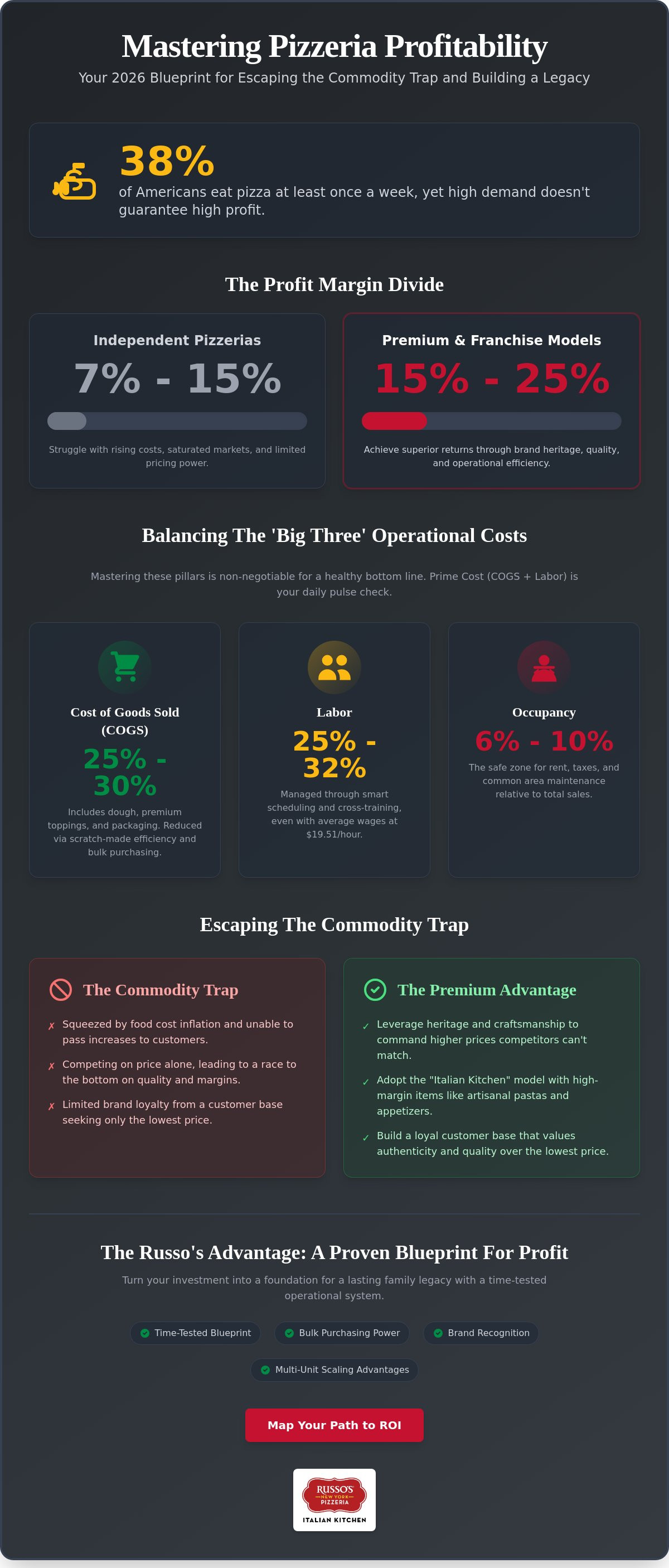
While 38% of Americans eat pizza at least once a week, many owners find that high demand doesn't always translate to a healthy bottom line. In 2026, the average pizza shop profit margin for independent pizzerias often hovers between a lean 7% and 15%. You've likely felt the sting of average hourly wages for pizza workers reaching $19.51 and the weight of new regulatory mandates like the California Allergen Disclosure Law. It's a challenging era where rising food cost inflation and saturated markets make traditional commodity pizza a difficult path to sustainable wealth.
We understand that you're looking for more than just survival; you want a legacy built on stability and prestige. This guide promises to help you master the financial dynamics of the industry by providing a detailed breakdown of 2026 benchmarks and operational costs. You'll discover a clear framework to differentiate between low-margin commodity shops and the premium models that maintain 15% to 25% net margins through heritage and quality. From navigating third-party delivery fees to understanding the ROI of a proven franchise system, we provide the blueprint for your entrepreneurial growth.
Key Takeaways
- Identify the 2026 benchmarks for the average pizza shop profit margin and learn how to distinguish between lean independent returns and premium franchise performance.
- Master the "Big Three" operational costs—COGS, labor, and occupancy—to maintain a sophisticated balance between high-quality ingredients and sustainable profitability.
- Escape the commodity trap by leveraging heritage and craftsmanship to command higher ticket prices that your competitors simply cannot match.
- Map your path to ROI by understanding the break-even timeline and the significant overhead advantages that come with multi-unit scaling.
- Evaluate how a time-tested operational blueprint simplifies the complexities of the industry, turning your initial investment into a foundation for a lasting family legacy.
Understanding the Average Pizza Shop Profit Margin in 2026
Entering the restaurant industry requires a clear-eyed perspective on financial health. Success isn't just about the number of pies leaving the oven; it's about the precision of your math. While many food categories struggle with razor-thin returns, the average pizza shop profit margin remains remarkably resilient. In 2026, top-tier performers are achieving net margins between 15% and 25%, significantly outperforming the broader casual dining sector. This profitability stems from a simple truth: pizza is a high-margin product built on relatively low-cost ingredients like flour and water, transformed by craftsmanship into a premium experience.
To master these numbers, you must first understand Gross Margin , which is your revenue minus the cost of goods sold (COGS). For a pizzeria, COGS includes your dough, premium toppings, and packaging. However, your gross margin is only the beginning of the story. The true test of a business is its net margin, which is what remains after you've paid for labor, rent, utilities, and royalties. It's the difference between a hobby and a scalable legacy.
Gross vs. Net Profit: The Critical Distinction
A common pitfall for new operators is celebrating a 70% gross margin while ignoring the operational weight beneath it. You can have a high-performing menu and still face a 5% net loss if labor and occupancy costs aren't disciplined. Savvy owners focus on "Prime Cost," the combination of COGS and labor, as their daily pulse check. Net profit margin is the ultimate health metric for a pizzeria because it accounts for every single dollar spent to keep the lights on and the ovens hot.
The 2026 Pizza Market Landscape
Inflation continues to reshape the industry, with 2026 seeing volatility in the prices of high-quality flour, cheese, and proteins. Budget chains often find themselves trapped, unable to raise prices without alienating their value-seeking customers. In contrast, premium brands possess the pricing power to pass these cost increases to consumers who value authenticity over the lowest price point. We see a strategic shift toward the "Italian Kitchen" model. By incorporating higher-margin items like artisanal pastas and specialty appetizers, these businesses boost their overall profitability and offer a more holistic dining experience that justifies a higher guest check.
The Big Three: Analyzing COGS, Labor, and Occupancy
Achieving a superior average pizza shop profit margin requires a disciplined focus on the three pillars of restaurant finance: Cost of Goods Sold (COGS), labor, and occupancy. These variables determine whether your business thrives as a premium destination or struggles in the commodity trap. For a high-performing Italian kitchen, COGS should ideally target a range of 25% to 30%. While budget-focused shops might cut corners on quality, premium models rely on superior ingredients to justify higher menu prices. Labor costs, currently averaging $19.51 per hour for many workers in 2026, must be managed within a 25% to 32% range. Finally, occupancy costs, including your rent, taxes, and common area maintenance, should remain in the 6% to 10% safe zone relative to your total sales.
Beyond these primary pillars, owners must account for expenses like marketing, insurance, and franchise royalties. While these represent additional outlays, they often pay for themselves through brand recognition and professional operational support. For instance, a strategic marketing fund can drive thousands in new revenue that an independent shop would spend years trying to generate alone. Balancing these costs is the secret to protecting a healthy average pizza shop profit margin .
Mastering COGS with Scratch-Made Efficiency
Traditional craftsmanship isn't just about flavor; it's a financial strategy. Using scratch-made dough and sauces significantly reduces costs compared to purchasing pre-made frozen products. Modern inventory management technology also plays a vital role, helping owners notably reduce waste through precise tracking. Investors looking for a competitive edge often explore pizza franchise opportunities to leverage massive bulk purchasing power that independent startups simply can't access.
Labor Optimization in the Modern Pizzeria
Labor optimization doesn't mean cutting staff; it means working smarter. Cross-training employees to handle both artisanal pizza prep and Italian kitchen duties ensures your team is productive during every shift. Brick oven technology further enhances this efficiency by reducing cook times and increasing table turnover without sacrificing the authentic char customers crave. This professional structure allows you to maintain a warm, family-led atmosphere while operating with the precision of a global brand. Exploring a proven business model can help you navigate these financial complexities with confidence.
Premium vs. Commodity: Why Heritage Brands Win on Margins
Competing on price is a dangerous race to the bottom that inevitably erodes the average pizza shop profit margin . Many independent operators fall into what we call the "Commodity Trap," attempting to match the deep discounts and aggressive coupons of national delivery chains. This strategy is a recipe for financial exhaustion. You simply cannot win a price war against industrial-scale competitors who sacrifice quality for sheer volume. Instead, sophisticated investors look toward heritage-driven brands that command pricing power through authenticity. By utilizing family recipes and premium ingredients, Russo’s New York Pizzeria justifies an average guest check that is often 20% to 30% higher than budget-focused competitors. Customers aren't just buying a meal; they're investing in a culinary tradition that industrial kitchens cannot replicate.
Loyalty in the premium segment isn't built on a low price point; it's built on trust. When a guest tastes the difference between a hand-stretched dough and a frozen, factory-made crust, the value proposition shifts. Authentic family recipes create an emotional connection that results in higher customer lifetime value. This brand equity acts as a protective barrier around your margins, allowing you to maintain profitability even when ingredient costs fluctuate.
The Economics of the New York Style Slice
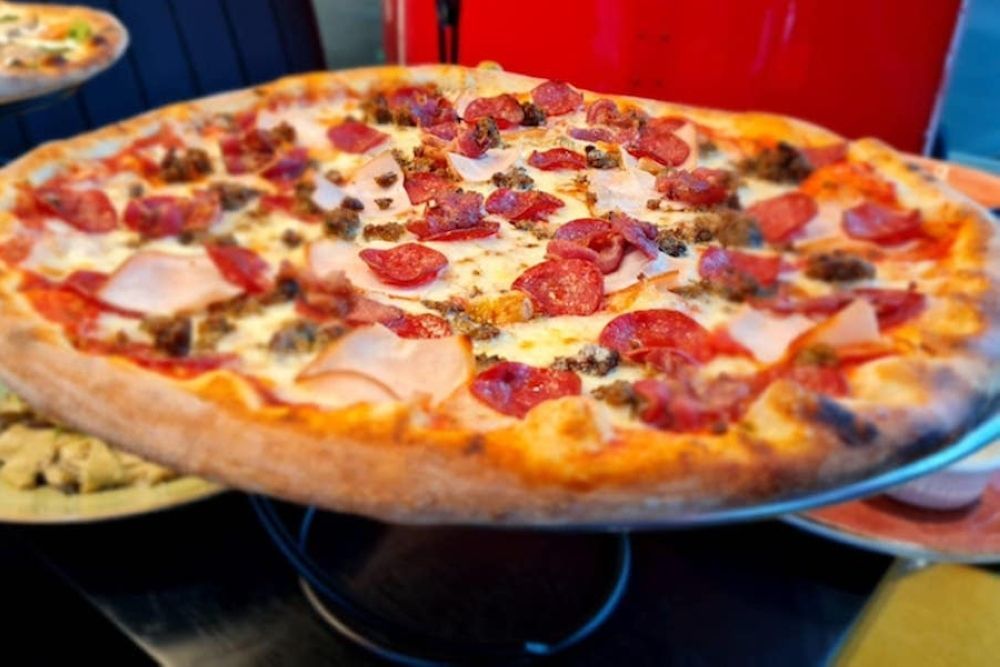
The large, thin-crust New York-style slice offers a unique volume-versus-margin advantage. While the slice itself is a high-traffic entry point, a premium Italian kitchen model diversifies revenue by surrounding that core product with artisanal pastas, fresh salads, and specialty appetizers. This "full-menu" approach significantly boosts the guest check compared to a standalone pizzeria. Heritage and founder-led stories increase the perceived value of every dish, transforming a simple lunch into a destination experience. It's a proven method for maximizing the yield of every square foot of your restaurant.
Halal Pizza: A High-Margin Opportunity
Global cities are seeing an unprecedented surge in demand for specialized dining options that align with cultural values. Investing in a halal pizza franchise model allows owners to tap into a high-growth, underserved niche with remarkably high customer retention rates. In many markets, the Halal-certified consumer is looking for premium quality that matches their dietary requirements, yet they are often met with limited, low-quality choices. Russo’s adapts the traditional Italian menu for Halal compliance without sacrificing the sophisticated flavor profiles or the average pizza shop profit margin . This strategic adaptation opens doors to a loyal, diverse audience and provides a distinct competitive advantage in crowded urban landscapes.
Maximizing ROI: Beyond the Daily Profit Margin
True entrepreneurial success isn't measured solely by the daily register tape. It's measured by the long-term appreciation of your asset. While the average pizza shop profit margin provides a vital snapshot of operational health, the ultimate objective is a robust Return on Investment (ROI). For most well-structured pizzerias, the break-even point typically occurs within the first 18 months of operation. This timeline is significantly more predictable within a franchise system than with an independent startup, where trial and error can drain capital before the brand ever finds its footing.
Scaling is where the math truly shifts in your favor. As you move toward multi-unit ownership, specifically opening three or more locations, your relative overhead costs begin to drop. Centralized management and shared marketing resources allow you to squeeze more efficiency out of every dollar. The exit strategy for a franchise is also inherently more lucrative. Professional buyers and private equity firms value a proven, replicable system far higher than a one-off independent shop. To maintain the liquidity needed for this growth, savvy investors often utilize restaurant franchise financing to preserve their cash flow for strategic expansion rather than tying it all up in equipment.
The Path to 24-Month Profitability
Success follows a methodical three-phase evolution. The first six months focus on launch and local awareness, where the goal is capturing the 38% of Americans who eat pizza weekly. Between months 7 and 12, the focus shifts to operational refinement and waste reduction, tightening your average pizza shop profit margin through disciplined inventory management. By months 13 to 24, your location enters the maturity phase. Here, community dominance is established, and your margins stabilize as labor and food costs become predictable routines.
International and Master Franchise Scalability
For those with global ambitions, the international master franchise model offers a unique margin multiplier. This level of investment allows you to participate in revenue sharing and sub-franchising across entire regions or countries. It transforms your role from a single-store operator to a regional developer, leveraging global brand recognition to drive local bottom-line results. Each new sub-franchise added to your network increases your stability and influence. If you are ready to build a multi-generational legacy, explore our franchise opportunities and see how our heritage can fuel your future.
The Russo’s Advantage: A Proven Blueprint for Profit
Mastering the complexities of the restaurant world requires more than passion; it demands a battle-tested strategy. While the average pizza shop profit margin for many independent owners remains a struggle of trial and error, Chef Anthony Russo has spent over 30 years refining a model that prioritizes both culinary excellence and financial efficiency. This isn't just about making great food. It’s about a disciplined operational framework that has been polished across decades of market shifts. By joining a system with such deep-rooted heritage, you gain access to a blueprint that transforms the typical challenges of the industry into manageable, predictable growth.
The initial franchise fee is far more than an entry cost; it’s an investment in a "ready-to-run" margin model. This upfront commitment secures your place within a supply chain that provides premium Italian ingredients at a scale independent startups simply cannot reach. You won't spend years hunting for the right vendors or overpaying for specialty items. Instead, you'll leverage our collective purchasing power to protect your average pizza shop profit margin from the volatility of food cost inflation. This professional advantage allows you to focus on what matters: delivering an authentic experience to your community.
Operational Support and Training
Our comprehensive training programs are designed to turn ambitious entrepreneurs into elite restaurant operators. We target the "Big Three" expenses—COGS, labor, and occupancy—from day one, providing you with the tools to monitor and optimize every dollar. Through ongoing site visits and detailed financial audits, we ensure your location maintains peak margin health. The peace of mind that comes from joining a legacy founded in 1992 is invaluable for any new business owner. You're never alone in the kitchen; you're backed by a family that has already navigated the path to success.
Joining the Russo’s Family
Owning a Russo’s franchise offers both the emotional reward of sharing a family legacy and the financial stability of a high-performance business model. We invite you to begin your due diligence today and discover why our heritage brands consistently win on quality and profitability. If you're ready to move beyond the commodity market and build something lasting, we are ready to guide you. Speak with our franchise development team about your profit goals.
Secure Your Culinary Legacy
Transitioning from a price-sensitive startup to a premium, heritage-driven brand is the most effective way to protect and grow your average pizza shop profit margin . We have explored how mastering the "Big Three" costs and embracing authentic Italian kitchen values creates a sustainable financial advantage that budget delivery chains cannot replicate. By choosing a system that balances artisanal craftsmanship with professional scalability, you move beyond the daily grind of the commodity trap and toward a future of stability and prestige.
Russo’s has been founder-led since 1992, providing a stable foundation for investors ready to scale through proven multi-unit and international master franchise models. Whether you're targeting high-growth global cities or tapping into underserved markets with our Halal-certified franchise options, our blueprint is designed for your success. It's time to transform your entrepreneurial ambition into a prestigious reality that honors tradition while maximizing return. Download the Russo’s Franchise Executive Summary today and take the first step toward a sophisticated partnership. We look forward to building this legacy with you.
Frequently Asked Questions
What is a realistic net profit margin for a new pizza shop?
A realistic net profit margin for a new pizzeria typically ranges from 7% to 15% for independent startups, while premium models can achieve 15% to 25%. These figures depend on your ability to control prime costs and maintain a high guest check through artisanal offerings. Achieving the higher end of this range requires disciplined management of labor and a focus on high-quality ingredients that justify premium pricing.
How do franchise royalties affect my overall profit margin?
Franchise royalties are a recurring operational expense that typically accounts for a small percentage of your gross sales. While they appear to reduce your margin on paper, they're often offset by significant savings in other areas. The trade-off includes lower ingredient costs through bulk purchasing power and reduced marketing overhead, which often results in a higher net average pizza shop profit margin than a standalone venture.
Is a pizza franchise more profitable than an independent pizzeria?
A franchise is often more profitable because it eliminates the costly trial-and-error phase associated with independent startups. By utilizing a proven operational blueprint, franchisees can optimize labor and food waste from day one. This systematic approach allows you to capture higher margins immediately, leveraging a brand that has already spent decades perfecting its supply chain and customer acquisition strategies.
What are the biggest "profit killers" in the pizza business?
The most significant profit killers are unmanaged food waste, high employee turnover, and excessive third-party delivery commissions. In 2026, delivery platforms often charge between 15% and 35% of an order total, which can quickly erase your gains. Successful operators combat this by driving direct orders through loyalty programs and using technology to track inventory with precision, ensuring every ingredient is accounted for.
How much revenue does an average Russo’s New York Pizzeria generate?
While specific revenue figures vary based on location and market size, our premium Italian kitchen model is engineered to maximize the guest check. By offering a diverse menu of pizza, pasta, and appetizers, our operators generate higher volume per square foot than standard pizzerias. This multi-category approach ensures that your business isn't reliant on a single product, providing multiple revenue streams across various dayparts.
Can I improve my margins by offering Halal-certified menu items?
Offering Halal-certified menu items can improve your margins by opening your doors to a loyal and underserved demographic. This niche market often experiences higher customer retention and lower price sensitivity, as guests value authentic Italian flavors that meet their dietary requirements. It’s a strategic way to differentiate your business in a crowded market while maintaining a strong average pizza shop profit margin .
How long does it take to see a return on investment in a pizza franchise?
Most well-managed pizza franchises aim to see a full return on investment within 18 to 24 months. This timeline is supported by a structured launch phase that focuses on rapid local awareness and operational refinement. By following a proven system, you can bypass the common pitfalls that delay profitability for independent owners, allowing you to reach your financial goals with greater predictability.
What percentage of sales should I spend on marketing to maintain margins?
Successful pizzerias typically reinvest 3% to 6% of their gross sales into marketing to maintain healthy margins and consistent foot traffic. This investment ensures a steady flow of new customers while reinforcing loyalty among your regulars. It's far more cost-effective to invest in brand-building than to constantly rely on deep discounts, which can train customers to only visit when prices are at their lowest.