Chasing high-volume sales in a crowded market is often a race to the bottom that leaves margins razor-thin. You understand that the difference between a thriving legacy and a struggling storefront isn't just the number of boxes out the door. It's the precision of your financial model. Calculating potential revenue for a new pizzeria requires more than just guesswork; it demands an understanding of how labor costs averaging 36.5% and rising food inflation impact your bottom line. You need a strategy that protects your capital while honoring the craft.
This guide provides the sophisticated framework you need to master these variables, moving beyond commodity pricing to leverage the higher margins of an authentic Italian kitchen. We'll explore the financial pillars that define a premium investment, from managing unpredictable ingredient costs to understanding how heritage-driven quality translates to customer loyalty. You'll gain a clear roadmap to scalability, transforming traditional family recipes into a disciplined, growth-oriented business model that stands apart from low-cost chains.
Key Takeaways
- Understand why the shift toward premiumization in the 2026 fast-casual market offers greater stability than volatile, delivery-only models.
- Master a data-driven framework for calculating potential revenue for a new pizzeria by evaluating catchment area demographics and peak-hour throughput.
- Discover how integrating a full Italian kitchen menu drives higher average check sizes than traditional, pizza-only establishments.
- Learn to mitigate financial uncertainty by leveraging standardized operations and proven business models over the risks of independent ownership.
- Identify the roadmap for scaling your investment from a single storefront to a high-yield multi-unit or international master franchise.
The Financial Landscape of the 2026 Pizza Industry
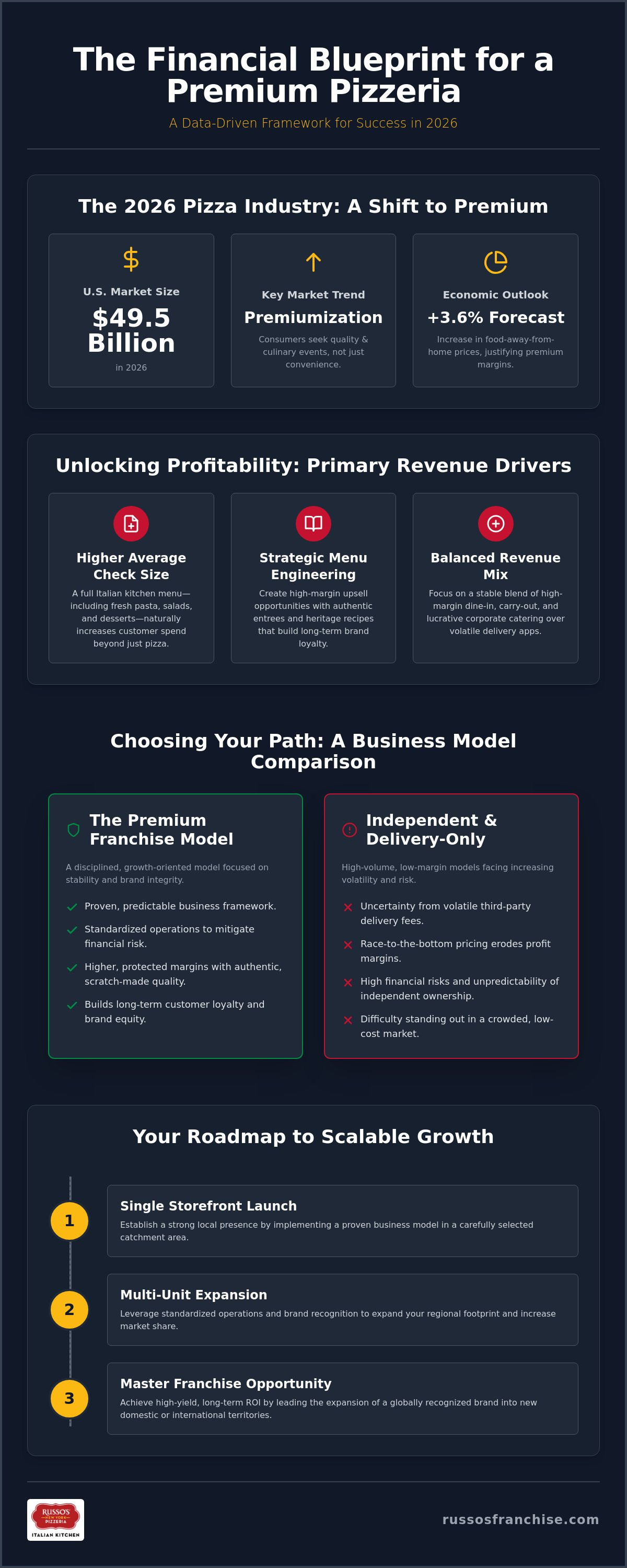
Precision defines the 2026 pizza market. The industry has shifted away from the race-to-the-bottom pricing that once characterized the sector, moving instead toward an era of premiumization. Investors are finding that consumers no longer view pizza as a mere convenience. They see it as a culinary event. When calculating potential revenue for a new pizzeria , you must account for this demand for higher-tier experiences. The U.S. pizza industry has reached a market size of $49.5 billion in 2026, yet the most sustainable growth isn't found in low-cost commodity chains. It's found in concepts that offer a sense of place and purpose.
Stability is the hallmark of a successful investment. While third-party delivery services offer reach, their volatile fee structures and impact on food quality can erode the bottom line. Smart operators are refocusing on traditional dine-in and carry-out models. These channels provide higher margins and allow for direct customer engagement. Creating a comprehensive business plan requires a realistic assessment of these shifting consumer behaviors. Destination dining has returned as a primary revenue driver. People are willing to travel for scratch-made heritage and authentic atmosphere, creating consistent foot traffic that delivery apps simply cannot replicate.
Market Demand for Authentic Italian Kitchens
Modern diners, particularly Millennial and Gen Z cohorts, prioritize quality over sheer convenience. They seek out brands with a story. By offering a diverse menu that includes fresh pasta, crisp salads, and handcrafted appetizers, a pizzeria expands its total addressable market beyond the standard dinner rush. This variety increases the average check size and encourages repeat visits throughout the week. Heritage-driven recipes aren't just about taste. They're a strategic asset that builds long-term brand loyalty in a way that frozen, mass-produced ingredients never will.
The 2026 Economic Outlook for Pizzeria Owners
The economic environment for 2026 shows signs of supply chain stabilization, which helps in managing the Cost of Goods Sold (COGS). While food-away-from-home prices are forecasted to increase by 3.6% this year, a model rooted in scratch-made quality allows for more flexible pricing power. Choosing a franchise opportunity that avoids frozen retail products protects your brand integrity and justifies premium margins. The pizza sector remains remarkably resilient during economic fluctuations. It's a reliable staple that offers a sense of comfort and value, provided the quality remains uncompromising. Success in calculating potential revenue for a new pizzeria depends on recognizing these macroeconomic shifts early.
Core Variables: Identifying Your Pizzeria’s Primary Revenue Drivers
Calculating potential revenue for a new pizzeria requires a deep dive into the specific levers that move the needle. It's not enough to simply count foot traffic. You must analyze the value of every guest who walks through your doors. A premium Italian kitchen model naturally creates a higher Average Check Size (ACS) than a standard pizza shop. While a basic pizzeria relies on high-volume, low-margin sales, a full-service menu allows for appetizers, fresh pasta, and traditional desserts to act as natural revenue multipliers. You aren't just selling a meal; you're providing a culinary experience that justifies a higher price point.
Your revenue mix should be a balanced ecosystem. Relying solely on third-party delivery is a significant risk to your margins in 2026. Instead, focus on a blend of dine-in hospitality, carry-out convenience, and high-ticket corporate catering. Catering orders for local businesses or family gatherings offer a substantial boost to your top line without the overhead of individual table service. For a more detailed look at structuring these numbers, the SBA guide to financial projections provides a professional framework for documenting these diverse income streams with precision.
The Impact of Menu Engineering on ACS
Menu engineering is the silent driver of long-term profitability. By offering authentic Italian entrees alongside New York-style pizza, you create opportunities for high-margin upsells. A guest coming in for a slice might stay for a handcrafted salad or a traditional cannoli. Additionally, offering specialized options like a premium franchise model that includes halal-certified ingredients expands your addressable market. This inclusivity invites a broader demographic into your kitchen and increases total transaction volume by serving global market needs.
Optimizing Operational Throughput
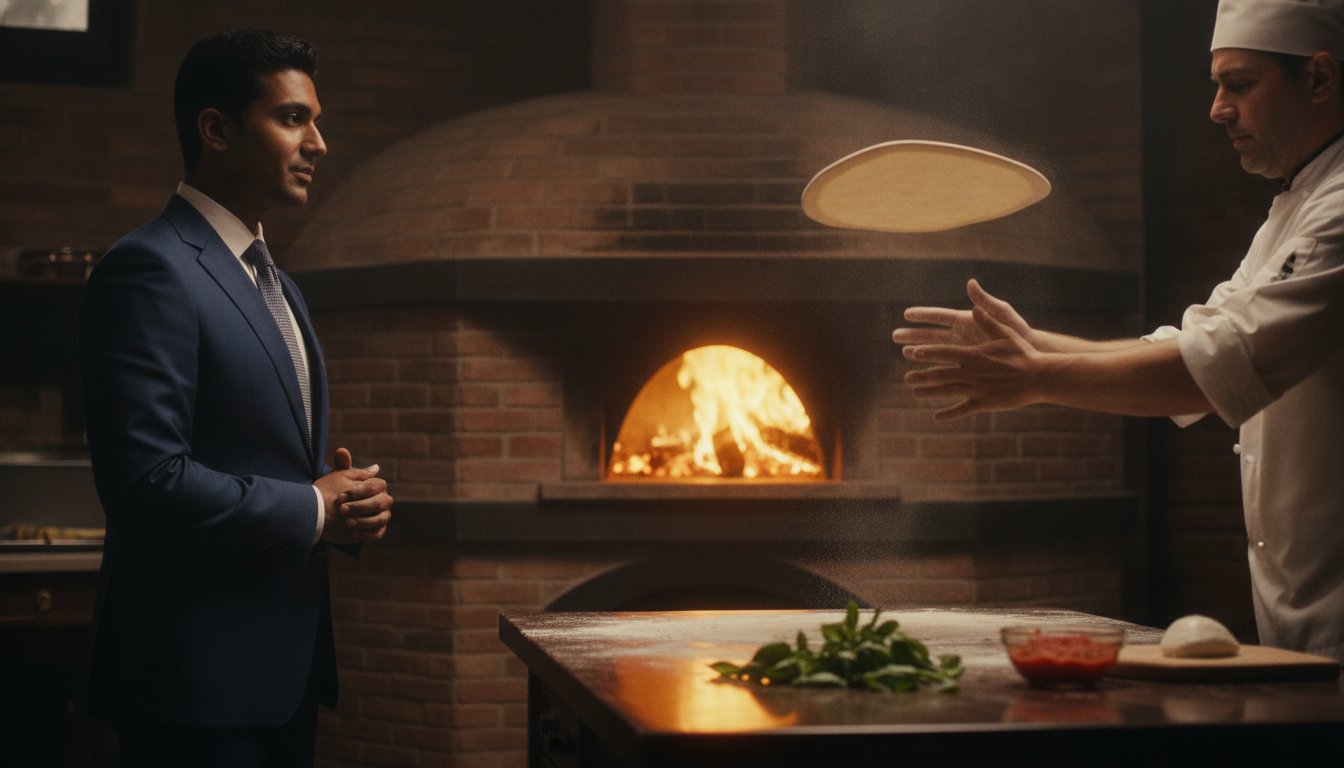
Throughput efficiency is the pulse of restaurant profitability. In a high-volume environment, your equipment and layout must keep pace with demand. The efficiency of a brick-oven model is unmatched, allowing for rapid cooking times that don't sacrifice the scratch-made quality customers expect. Reducing table turn time is a delicate balance. You want to maximize the number of parties served during peak hours while maintaining the warm, hospitable atmosphere that defines a heritage brand. A well-organized kitchen ensures that every order, whether for a walk-in slice or a full family meal, moves with disciplined precision.
Independent vs. Franchise Models: Standardizing Revenue Predictability
Choosing between an independent venture and an established system is a defining moment for any investor. While the allure of total creative freedom is tempting, it often comes with a steep "Guesswork Tax." Independent owners spend years refining recipes, vetting suppliers, and testing marketing strategies through expensive trial and error. This lack of a historical baseline makes calculating potential revenue for a new pizzeria an exercise in speculation rather than strategy. Without a roadmap, even the best intentions can succumb to the operational friction that plagues unrefined business models.
A proven franchise model acts as a stabilizer. It replaces financial fog with operational clarity. By stepping into a recognized name like Russo’s New York Pizzeria, you inherit decades of brand equity and customer trust. This immediate recognition drives revenue from day one, bypassing the long, uphill battle of building local awareness from scratch. Franchisors leverage collective buying power to secure better pricing on premium ingredients. In a 2026 economy where food costs remain a primary concern, this supply chain leverage is essential for protecting your margins and ensuring long-term profitability.
Predictability Through the Franchise Disclosure Document (FDD)
Data-driven decisions are the foundation of a successful investment. The Franchise Disclosure Document, specifically Item 19, provides a transparent look at actual performance data from existing units. This transparency allows you to build a realistic financial forecast when calculating potential revenue for a new pizzeria , basing your numbers on verified history rather than optimistic projections. Beyond the numbers, you benefit from the mentorship of industry veterans like Chef Anthony Russo. This guidance ensures your labor efficiency and kitchen operations are optimized from the start, preventing the costly turnover and service delays that often drain independent budgets.
Marketing Synergy and Local Revenue Growth
Opening day should be a celebration of success, not a search for customers. National brand awareness creates a "halo effect" that translates into immediate local traffic. You also gain access to professional marketing materials designed to capture high-ticket corporate catering contracts. These lucrative revenue streams are often out of reach for independent shops that lack the polished presentation and scale required by corporate clients. For a deeper look into how these systems integrate with your goals, consult the Italian kitchen franchise guide to see how heritage and discipline drive sustainable growth.
A Step-by-Step Framework for Projecting Your Pizzeria’s Annual Income
Precision is the hallmark of a successful 2026 investment. Moving from a broad vision to a granular financial forecast requires a disciplined, step-by-step approach. When you begin calculating potential revenue for a new pizzeria , you must first look outward at the local environment. A catchment area is the 3-5 mile radius around your location that determines 80% of your total revenue. Analyzing this zone involves more than a simple head count; it requires understanding local competition density and demographic purchasing power to ensure your premium offering aligns with the neighborhood's expectations.
Once the area is defined, you can estimate daily transaction counts with greater accuracy. It's essential to differentiate between the high-velocity weekday lunch rush and the more expansive weekend dinner service. A weighted average check size must then be calculated, factoring in not just the core pizza sales but also high-margin Italian kitchen entrees, sides, and beverages. For example, while the national average for a large cheese pizza in 2026 is $16.92, a premium Italian kitchen model often achieves a significantly higher check size by encouraging a complete dining experience. Don't forget to apply seasonality adjustments to account for holiday surges and local community events that can shift monthly earnings.
The final step in your framework is arriving at a realistic EBITDA. This requires subtracting both variable and fixed costs from your gross projections. In the current market, labor costs are expected to average around 36.5% of gross sales, while ideal food costs typically range between 20% and 35%. Factoring in credit card processing fees, which average between 2.2% and 2.8% for quick-service environments, ensures your final number is grounded in reality. Ready to move from theory to execution? Learn more about our franchise opportunity and how we provide the tools for accurate financial forecasting.
Demographic Analysis and Revenue Potential
Identifying your "Pizza Persona" is critical for long-term scalability. High-frequency customers in 2026 prioritize authenticity and scratch-made quality over the lowest price. Whether you're targeting an urban center with high foot traffic or a suburban neighborhood focused on family dining, your location type dictates your revenue mix. Urban sites may see a higher volume of individual slices, whereas suburban kitchens often see larger, multi-item orders that drive up the average transaction value.
Calculating the Break-Even Point
Understanding the relationship between your initial investment and monthly revenue requirements is the key to financial security. Most premium pizzerias aim to reach "steady-state" revenue within the first 12 to 18 months of operation. Maintaining sufficient working capital during the first six months is vital to navigate the initial growth phase without compromising on service speed or ingredient quality. This disciplined approach to capital ensures that your business remains stable as you build a loyal local following.
From Single Unit to Global Scale: Maximizing Long-Term ROI
Scaling a premium brand requires a decisive shift from operational management to strategic leadership. While calculating potential revenue for a new pizzeria is a vital first step, true wealth is generated through the compounding effects of scale. By moving beyond the first unit, you transition from a restaurant operator into a portfolio developer. This shift allows you to consolidate overhead costs, such as administrative salaries and marketing spends, across multiple locations. In a 2026 market where efficiency is paramount, this multi-unit approach provides a significant competitive edge over independent rivals who lack the same resource depth.
Standardization is the key to this expansion. A proven system ensures that the quality and heritage of your brand remain consistent, whether you're operating in a local suburb or a metropolitan center. This consistency not only protects your brand's integrity but also enhances the long-term resale value of your investment. When the time comes for an exit, a standardized franchise unit is far more attractive to buyers than an independent shop that relies on the owner's personal involvement. It represents a turn-key asset with predictable cash flows and a clear operational blueprint that is ready for the next level of growth.
Scaling with Multi-Unit Agreements
Dominating a local territory is about more than just visibility. It's about operational synergy. Owning multiple units within a single region allows you to share labor pools and inventory, reducing the impact of supply chain disruptions. This structure increases your local market dominance and provides a more stable foundation for long-term growth. To understand how these variables impact your bottom line, reviewing a pizza franchise comparison can help you evaluate the ROI potential of different investment tiers and help you decide where to allocate your capital for maximum impact.
International Expansion and Halal Markets
Global demand for authentic New York-style pizza continues to rise, particularly in markets that prioritize high-quality, specialized offerings. Tapping into the halal pizza franchise model unlocks massive revenue potential in high-growth regions where premium Italian dining is in high demand. An international master franchise developer plays a crucial role here, adapting the core concept for diverse global palates while maintaining the scratch-made quality that defines the brand. By focusing on localized revenue optimization, you can capture significant market share in territories that remain underserved by traditional Western chains. This global perspective ensures that your process for calculating potential revenue for a new pizzeria accounts for the limitless possibilities of international scale.
Secure Your Legacy in the Premium Pizza Market
Precision in calculating potential revenue for a new pizzeria is the foundation of a stable and ambitious investment. You've seen how integrating a diverse Italian kitchen menu drives higher average checks and how a disciplined catchment area analysis protects your bottom line. Success in the 2026 landscape isn't about volume alone. It's about the synergy of heritage and operational excellence that creates a destination, not just a storefront. When you move beyond the guesswork of independent models, you embrace a path defined by reliability and growth.
We invite you to Explore Russo’s New York Pizzeria Franchise Opportunities. You'll gain access to proprietary family recipes and a 30+ year proven business model designed for consistency. From comprehensive training and site selection support to flexible formats like our Halal-certified and International Master Franchise options, we provide the framework needed for maximum revenue potential. Your journey from a single unit to a global portfolio starts with a partner who values tradition as much as you value growth. Let's build something enduring together.
Frequently Asked Questions
What is the average annual revenue for a premium pizza franchise in 2026?
Average annual revenue varies based on location and model, but the U.S. pizza industry has reached a market size of $49.5 billion in 2026. Premium concepts typically outperform low-cost commodity chains because they combine high-volume pizza sales with the higher margins of a full Italian kitchen. Your specific earnings will depend on your ability to manage throughput and leverage a recognized brand name in a high-density catchment area.
How much does the average check size differ between a pizza-only shop and a full Italian kitchen?
A full Italian kitchen significantly increases the average check size by offering high-margin appetizers, fresh pasta, and traditional desserts. While the national average for a large cheese pizza in 2026 is $16.92, a premium kitchen model encourages multi-item orders and family-style dining. This menu diversity allows for natural upsells that can boost the total transaction value by 20% to 30% compared to limited-menu competitors.
What are the biggest factors that can negatively impact a pizzeria’s revenue?
Rising labor costs and food price inflation are the primary factors that can negatively impact your bottom line. In 2026, restaurant labor costs are expected to average 36.5% of gross sales, while food-away-from-home prices are forecasted to increase by 3.6%. Additionally, heavy reliance on third-party delivery services can erode margins through high commission fees and potential damage to food quality during transit.
Is a halal pizza franchise more profitable than a traditional one?
A halal pizza franchise provides access to a rapidly expanding global market, which often leads to higher total transaction volume. By serving a broader demographic with specialized dietary requirements, you eliminate barriers to entry for millions of potential customers. This inclusivity often translates to higher customer retention and brand loyalty, especially in international markets where premium, authentic halal options remain relatively scarce.
How does a brick-oven model affect the speed of service and revenue?
The brick-oven model accelerates cooking times and increases customer throughput without sacrificing the scratch-made quality consumers expect. Faster service speed allows for more table turns during peak weekend dinner hours, which is essential when calculating potential revenue for a new pizzeria . This efficiency ensures that high demand translates directly into realized sales rather than long wait times that might turn hungry customers away.
What percentage of revenue should a pizzeria owner expect to spend on labor and ingredients?
Pizzeria owners should expect to allocate approximately 36.5% of revenue to labor and between 20% and 35% to food costs. Managing these variables is critical for maintaining a healthy EBITDA and ensuring the long-term stability of the business. Standardized operations and disciplined portion control help keep these percentages within the ideal range, even as supply chain fluctuations impact the cost of premium, authentic ingredients.
Can I project my revenue based on a single-unit vs. a multi-unit investment?
Yes, you can project revenue based on your investment tier, though multi-unit models offer distinct advantages in overhead consolidation. Single-unit projections focus on local demographics and catchment area density, while multi-unit agreements allow you to share labor and inventory costs across several territories. This scalability often leads to a higher return on investment by maximizing your local market dominance and streamlining regional operations.
How does the Russo’s New York Pizzeria brand specifically help with revenue projections?
Russo’s New York Pizzeria provides over 30 years of historical performance data to assist in calculating potential revenue for a new pizzeria . Through the Franchise Disclosure Document (FDD), specifically Item 19, you gain transparency into the financial realities of our proven business model. Our team also offers comprehensive site selection support and training to ensure your location is optimized for maximum revenue potential from your opening day.