Did you know that restaurants in 2026 pay a premium of 1.32 times the median retail rent for specialized infrastructure like grease traps and ventilation? It's a staggering figure that underscores why choosing the wrong canvas for your culinary vision can be a million-dollar mistake. You've likely felt the weight of this decision. The anxiety of balancing $45 per square foot rents against projected foot traffic is a heavy burden for any serious investor. You want a location that respects your brand's heritage while securing your share of the projected $1.55 trillion in industry sales. This is why a meticulous restaurant site selection criteria checklist is your most valuable asset before you ever pick up a pen to sign a lease.
We'll help you master the art and science of choosing a high-performance location with our comprehensive 2026 site selection framework. You'll gain the confidence to navigate complex zoning laws and negotiate lease terms that protect your long-term margins. This guide explores the technical requirements, the demographic data, and the intuitive alignment needed to ensure your pizza & Italian kitchen franchise thrives in its new home. We've distilled decades of heritage into a repeatable process that turns a potential site into a vibrant community hub.
Key Takeaways
- Understand why a premium location acts as a silent engine for your pizza franchise's ROI; it's often more cost-effective than a "cheap" site with high marketing demands.
- Master the 3-5-7 mile radius rule and use our restaurant site selection criteria checklist to identify high-density areas populated by your ideal premium customer base.
- Learn to apply the "10-second rule" to evaluate site visibility and navigate the increasingly strict 2026 municipal signage codes that impact brand presence.
- Gain clarity on modern lease structures, specifically the nuances between Triple Net (NNN) and Gross leases, to protect your operational margins in a high-rent environment.
- Discover how Russo’s New York Pizzeria leverages proprietary data and expert real estate support to validate your chosen site and ensure it aligns with our time-honored brand heritage.
The Strategic Importance of Restaurant Site Selection in 2026
Choosing a location is the single most consequential decision an entrepreneur makes. It's the foundation of the pizza franchise opportunities ROI, dictating everything from your operational ease to your long term brand equity. A site isn't just a physical address; it's the canvas where Chef Anthony Russo’s recipes come to life. When you get this right, the location does the heavy lifting for you. When you get it wrong, even the finest hand-tossed dough can't save a business from poor visibility or inaccessible parking.
Many investors fall into the trap of selecting a "cheap" site to save on initial overhead. This is a strategic error. A low rent site often requires a massive marketing spend just to inform the community that you exist. Conversely, a premium site with high organic foot traffic acts as a silent partner. It provides a constant stream of new guests without an extra dime spent on digital ads. In the professional practice of new facility location, we prioritize sites that offer built-in brand-site synergy. For a brand rooted in authentic New York heritage, the physical space must feel established, inviting, and premium. It should reinforce the promise of quality before the guest even steps through the door.
The 2026 landscape has shifted the definition of visibility. It's no longer just about eyes on a physical sign. Modern visibility includes "digital visibility" and the logistical efficiency of your delivery radius. Your restaurant site selection criteria checklist must account for how easily a delivery driver can navigate the parking lot and how quickly your kitchen can serve the surrounding 3-5 mile radius. If the site is buried in a complex with one-way traffic, you've already lost the battle for convenience.
The Financial Impact of a Wrong Turn
High occupancy costs are often a badge of a high-performance site. Superior organic foot traffic justifies the premium because it lowers your customer acquisition cost. You must also consider the "sunk cost" of renovating a site with poor technical infrastructure. If a building lacks the proper grease traps or ventilation required for a high-volume Italian kitchen, the "savings" on the lease will vanish during the build-out phase. Accessibility is the heartbeat of repeat business; if it's hard to park, it's hard to build a legacy.
Aligning Concept with Community
A premium Italian kitchen requires a specific neighborhood "vibe" that appreciates craftsmanship over mere convenience. It's essential to match the price point of your menu to the local household income to ensure long-term stability. We look for "complementary" businesses, such as upscale boutiques or specialty grocers, rather than just avoiding direct competitors. These neighbors attract the same sophisticated demographic that values an authentic, family-oriented dining experience. Using a restaurant site selection criteria checklist helps you verify that the local community's lifestyle aligns perfectly with our premium brand heritage.
Demographics and Market Analysis: The Science of Selection
Data is the compass that prevents a beautiful restaurant from becoming a quiet one. While the "canvas" of the site determines the aesthetic potential, the people surrounding it determine the velocity of your return. A professional restaurant site selection criteria checklist must begin with a deep dive into the "Russo’s Profile." We target middle to high income families and urban professionals who prioritize quality ingredients over the speed of a drive-thru. These guests aren't just looking for a meal; they're seeking an experience that mirrors their own standards of excellence and appreciation for authentic craft.
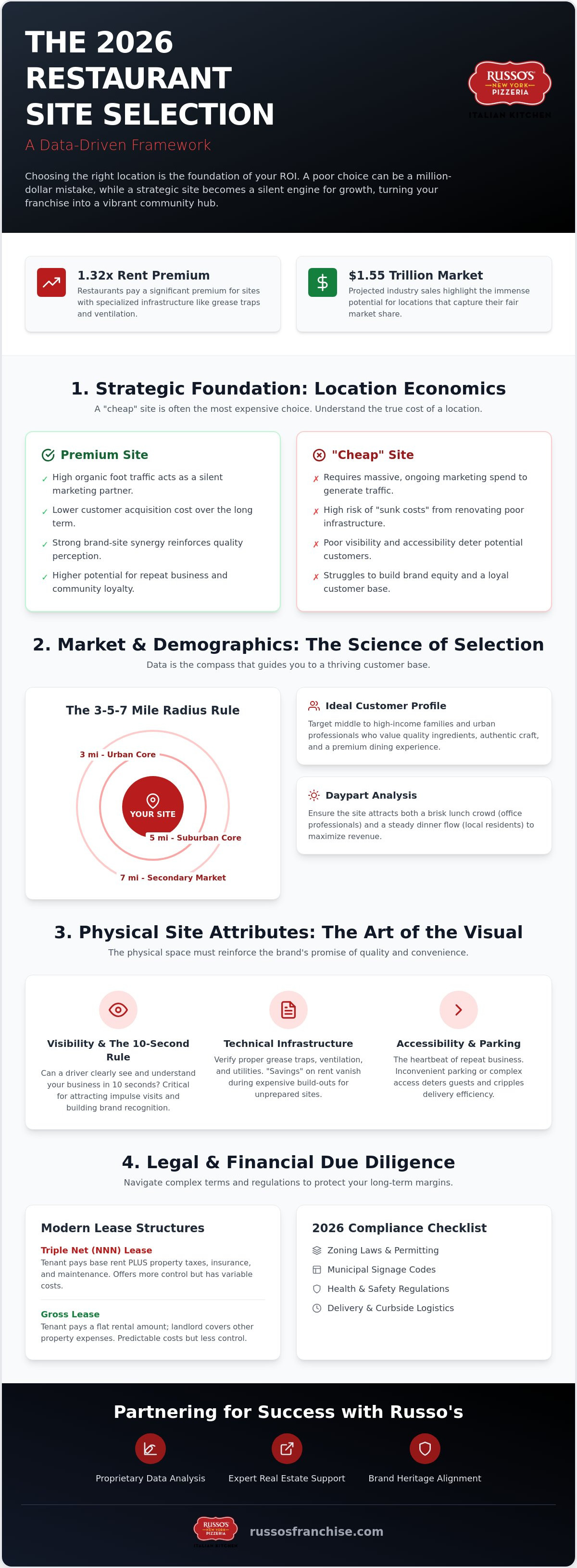
The 3-5-7 mile radius rule is our standard for measuring potential in any territory. In dense urban markets, your primary draw comes from within a 3 mile radius. In suburban settings, this expands to a 5 mile core and a 7 mile secondary market. We also perform a rigorous Daypart Analysis to ensure the site isn't a "one-hit wonder." A site must possess the gravitational pull to attract a brisk lunch crowd of office professionals and a steady dinner flow of local residents. If an area goes dark after 5:00 PM, your margins will suffer. In 2026, we also look closely at anchor tenants. The crowd-drawers have changed; we look for proximity to high-end wellness centers, boutique fitness studios, or specialty grocers that signal a community’s commitment to premium living.
Key Data Points for 2026 Investors
Success is rarely an accident; it's a result of disciplined due diligence. We focus on three primary metrics to validate a site's potential:
- Population Density: We prioritize areas with high "people per square mile" counts to ensure a robust delivery and carry-out volume that complements the dining room.
- Average Household Income (AHI): Our model thrives in neighborhoods where the AHI supports premium casual dining without hesitation, ensuring a consistent guest frequency.
- Psychographics: We identify communities that value "scratch-made" and "authentic" culinary traditions. This goes beyond simple demographics to understand local lifestyle choices and values.
Global Considerations for Master Developers
Scaling a brand across borders requires an even more refined lens. When adapting for an international master franchise, we analyze cultural hubs that act as natural gathering places. This is especially vital for a halal pizza franchise in diverse global markets, where the site must respect local traditions while maintaining our New York soul. If you're ready to see how your specific market aligns with our proven model, exploring our current opportunities is the first step toward securing your territory.
Physical Site Attributes: The Art of the Visual
Visibility is the silent salesperson of your brick-and-mortar investment. It doesn't matter how authentic your family recipes are if a hungry commuter can't find your front door. When evaluating a potential location, we apply the "10-second rule." A driver traveling at forty miles per hour must be able to identify your brand, process the message, and safely decide to turn into your lot within a ten-second window. If your signage is obscured by overgrown trees or poorly placed utility poles, you're losing guests before they even know you're there. In 2026, municipal codes regarding signage have become significantly more restrictive; you must ensure your lease specifically grants you the right to prominent, illuminated branding that meets modern standards.
Accessibility is the next critical pillar on your restaurant site selection criteria checklist . We utilize the "Left-Hand Turn" test to gauge a site's convenience. If a tired commuter has to cross three lanes of high-speed traffic without the protection of a dedicated turn lane or traffic light, they'll likely choose a more accessible competitor. Parking logistics are equally vital. Aim for a ratio of at least one parking spot for every three seats in your dining room. You also need dedicated, clearly marked stalls for delivery drivers and curbside pickup to ensure these high-volume channels don't frustrate your traditional dine-in guests.
Architecture and Curb Appeal
The "Brick Oven" aesthetic is central to the Russo’s experience, but it requires specific physical infrastructure. High-volume stone ovens demand superior venting systems and ceiling heights, typically twelve to fourteen feet, to manage heat and airflow effectively. When selecting a unit in a shopping center, end-cap units are vastly superior to in-line units. They offer three sides of visibility and provide the necessary footprint for outdoor seating. For an Italian kitchen franchise, an inviting patio isn't just an add-on; it's a non-negotiable feature that signals hospitality and community to every passerby.
Logistics and Back-of-House Infrastructure
A beautiful dining room is useless without a kitchen that can handle peak demand. Your restaurant site selection criteria checklist must verify that the site can support the heavy electrical and gas BTU loads required for professional stone ovens. We also look for dedicated ingress and egress points for third-party delivery drivers. By creating a separate traffic flow for couriers, you protect the warm, sophisticated ambiance of your dining room from the frantic pace of the delivery world. Finally, ensure that waste management and grease traps are easily accessible for service vehicles to avoid operational headaches during business hours.
The 2026 Legal and Financial Site Checklist
The physical allure of a premier location is merely the surface. A robust restaurant site selection criteria checklist must delve into the invisible legal and financial frameworks that protect your long term profitability. In the 2026 market, where the national median restaurant lease rent sits between $35 and $45 per square foot, you cannot afford a misunderstanding of your obligations. Triple Net (NNN) leases are the standard. This means you aren't just paying for the square footage; you're also responsible for real estate taxes, building insurance, and maintenance. Understanding these "pass-through" costs is essential for maintaining the healthy 14.91% margins analysts expect for our industry this year.
Exclusivity clauses act as the armor for your investment. You must ensure your lease prevents a competing pizzeria or Italian kitchen from opening in the same plaza. Without this protection, the landlord could dilute your market share by leasing the adjacent unit to a direct competitor. Equally important is the Tenant Improvement (TI) allowance. With ground-up restaurant construction costs ranging from $250 to over $450 per square foot in 2026, a generous TI allowance from the landlord is a critical component of your startup capital strategy. It's the difference between a strained launch and a poised, successful opening.
Zoning and Permitting Red Flags
Zoning can be a silent project killer. You must verify that the site is permitted for a full-service restaurant, particularly one that serves alcohol. Proximity restrictions are a common hurdle; many municipalities forbid liquor licenses for establishments within a specific distance of schools or churches. Beyond licensing, watch for high impact fees or utility hookup costs that can derail a budget before the first brick is laid. Your site must also meet 2026 ADA accessibility standards to ensure every member of the community feels welcome in your home.
Negotiating the Lease for Longevity
A successful restaurant is a multi-generational legacy. Secure your future by negotiating renewal options that extend your stay for 10 to 20 years. Review Common Area Maintenance (CAM) fees with a disciplined eye to ensure you aren't paying for "fluff" services that don't benefit your guests. Finally, insist on a "Kick-out Clause." This protects you if the shopping center's overall occupancy drops below a certain threshold, giving you the right to exit the lease if the center loses its gravitational pull. If you're ready to secure a site that reflects your ambition, explore our pizza franchise opportunities and let our experts help you navigate these complex negotiations.
Partnering for Success: How Russo’s Supports Site Selection
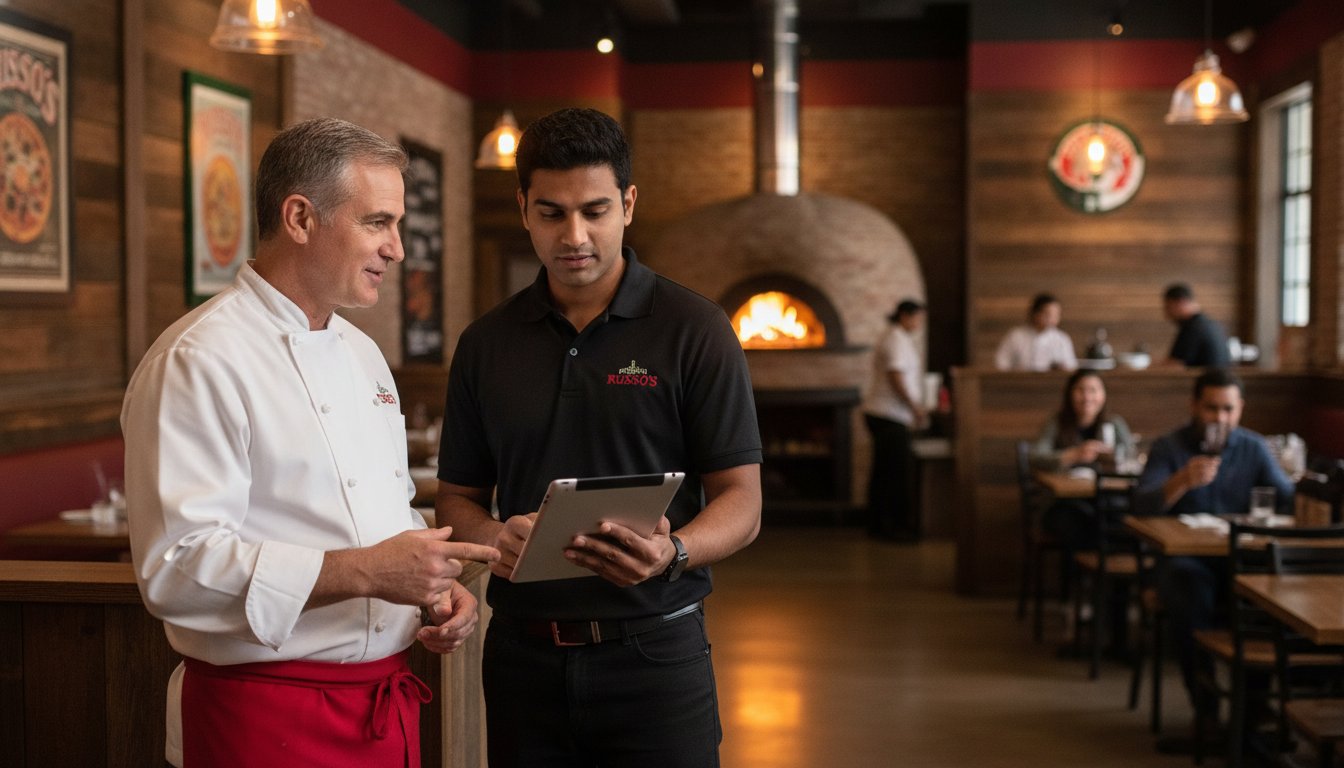
Success in the hospitality industry is rarely a solo endeavor. It's the result of a disciplined partnership between an ambitious entrepreneur and a brand with a proven, time-honored blueprint. At Russo’s New York Pizzeria, we don't just hand you a manual; we provide a comprehensive support system that begins long before the first stone oven is fired up. Our team acts as a seasoned mentor, offering the hard-nosed professionalism needed to secure a high-performance location while honoring our deep-rooted family legacy. You aren't just signing a lease; you're joining a tradition of excellence that has been refined since 1992.
Every pizza franchise partner gains access to our expert real estate assistance. We leverage proprietary data to validate your chosen site, ensuring it meets every requirement on our restaurant site selection criteria checklist . This isn't guesswork. We analyze traffic patterns, neighborhood psychographics, and competitor proximity to ensure your "canvas" is primed for growth. Our standardized layouts are engineered to fit various square footages, from intimate urban spaces to expansive suburban flagships, ensuring the authentic New York vibe remains consistent regardless of the physical footprint.
From Site Tour to Grand Opening
The journey from a vacant shell to a bustling Italian kitchen is a collaborative effort. We work closely with you and your local broker to conduct thorough site tours, evaluating every physical attribute through the lens of our heritage-driven design. We adapt our classic aesthetic to unique local architectures, ensuring the restaurant feels like a natural part of the community. This process culminates in a final "Go/No-Go" meeting. We review the data, the lease terms, and the physical potential one last time before you sign on the dotted line, providing the security you need to move forward with confidence.
The Master Franchise Advantage
For those looking to scale across entire regions or countries, our international master franchise model offers a sophisticated path to expansion. This model leverages local market expertise to identify "territory hubs" that can support multiple units efficiently. It streamlines the site acquisition process in new markets, allowing for rapid, disciplined growth that maintains the prestige of the Russo’s name. If you're ready to build a legacy with a brand that values excellence at every step, inquire about Russo’s franchise opportunities today and begin your journey toward a premium investment.
Securing Your Legacy in the Future of Authentic Hospitality
Mastering the complexities of the 2026 market requires moving beyond simple foot traffic metrics to embrace a holistic view of site performance. A rigorous restaurant site selection criteria checklist serves as your ultimate defense against the hidden pitfalls of modern leasing and zoning. By prioritizing brand-site synergy and technical infrastructure, you transform a physical address into a high-performance engine for long term growth. You've learned that the right location isn't just about visibility; it's about the seamless alignment of community, concept, and commercial viability.
Russo’s brings over 30 years of site selection expertise to your corner, with a global presence that spans the USA and the Middle East. Every location benefits from founder-led support, ensuring you have a seasoned mentor to validate every decision. You don't have to navigate these sophisticated financial and legal waters alone. It's time to turn your ambition into a stable, heritage-driven reality.
Begin Your Heritage Investment: Download the Russo’s Franchise Kit
The perfect canvas for your culinary vision is out there. Take the first step today and secure a future built on quality, tradition, and unwavering professional support.
Frequently Asked Questions
What is the most important factor in restaurant site selection?
The most critical factor is the balance between high visibility and ease of access for your target demographic. A site must pass the "10-second rule" for drivers while offering a frictionless entry point for commuters. Without these physical advantages, your marketing costs will escalate as you struggle to capture organic foot traffic and build local brand awareness.
How much foot traffic does a successful pizzeria need?
A successful pizzeria typically thrives in areas with high pedestrian density or significant vehicle counts, specifically targeting 20,000 to 30,000 cars per day for suburban locations. This consistent flow ensures a steady stream of impulse diners and strengthens your delivery radius. Your restaurant site selection criteria checklist should prioritize sites near major anchors like upscale grocers to capture existing traffic.
Should I choose a standalone building or a shopping center for my franchise?
Both options have distinct advantages, but we often recommend premium shopping center end-caps for their built-in traffic and lower initial construction hurdles. Standalone buildings provide maximum brand authority and control over the guest experience, yet they often come with higher development costs. The choice ultimately depends on your specific market's density and the availability of high-visibility retail corridors.
What are the typical square footage requirements for an Italian kitchen franchise?
Our traditional models typically range from 1,500 to 3,500 square feet, depending on whether you choose a delivery-focused pizzeria or a full-service Italian kitchen. This footprint allows for a high-performance kitchen equipped with our signature stone ovens while maintaining a warm, sophisticated dining room for guests. We provide standardized layouts that maximize every square foot for operational efficiency and guest comfort.
How do I analyze the competition in a potential trade area?
Analyze competition by mapping every direct and indirect competitor within a 3 to 5 mile radius. You aren't just looking to avoid other pizzerias; you're looking for a restaurant cluster that already draws your ideal demographic. If the area supports multiple successful premium casual dining concepts, it's a strong indicator that the local household income can support a Russo’s.
What is a Triple Net (NNN) lease, and is it standard for restaurants?
A Triple Net (NNN) lease is the industry standard for commercial restaurant real estate. In this structure, the tenant is responsible for the base rent plus their pro-rata share of real estate taxes, building insurance, and common area maintenance (CAM). It's vital to include these pass-through costs in your initial financial projections to ensure your operating margins remain healthy and predictable.
How does Russo’s help with the site selection process?
Russo’s provides comprehensive real estate support, including access to proprietary demographic data and expert site validation. Our corporate team assists with site tours and provides a disciplined analysis before you commit to a lease. This collaborative approach ensures that your chosen location aligns with our time-honored standards and is primed for long-term growth as part of your restaurant site selection criteria checklist .
Can I open a Halal-certified Russo’s in a non-Muslim majority market?
Yes, our Halal pizza franchise model is designed for success in diverse global markets, including non-Muslim majority areas. The demand for high-quality, Halal-certified Italian cuisine is a growing niche among health-conscious and culturally diverse urban professionals. By offering an inclusive, premium menu, you can capture a wider segment of the local community while maintaining our authentic New York soul.