Halal Franchise Investment: Maximizing ROI in the 2026 Premium Pizza Market
What if the most lucrative path into the $2.2 trillion halal market isn't another fast-food cart, but a sit-down Italian kitchen with deep New York roots? Many entrepreneurs feel the frustration of an oversaturated market filled with low-quality options that lack brand loyalty and high average ticket sizes. You've likely noticed that finding a partner who respects both old-world culinary heritage and rigorous religious compliance is surprisingly difficult. A strategic halal franchise investment should offer more than just a certificate; it needs to provide a scalable, premium experience that resonates with a global population projected to reach 2.9 billion by 2030.
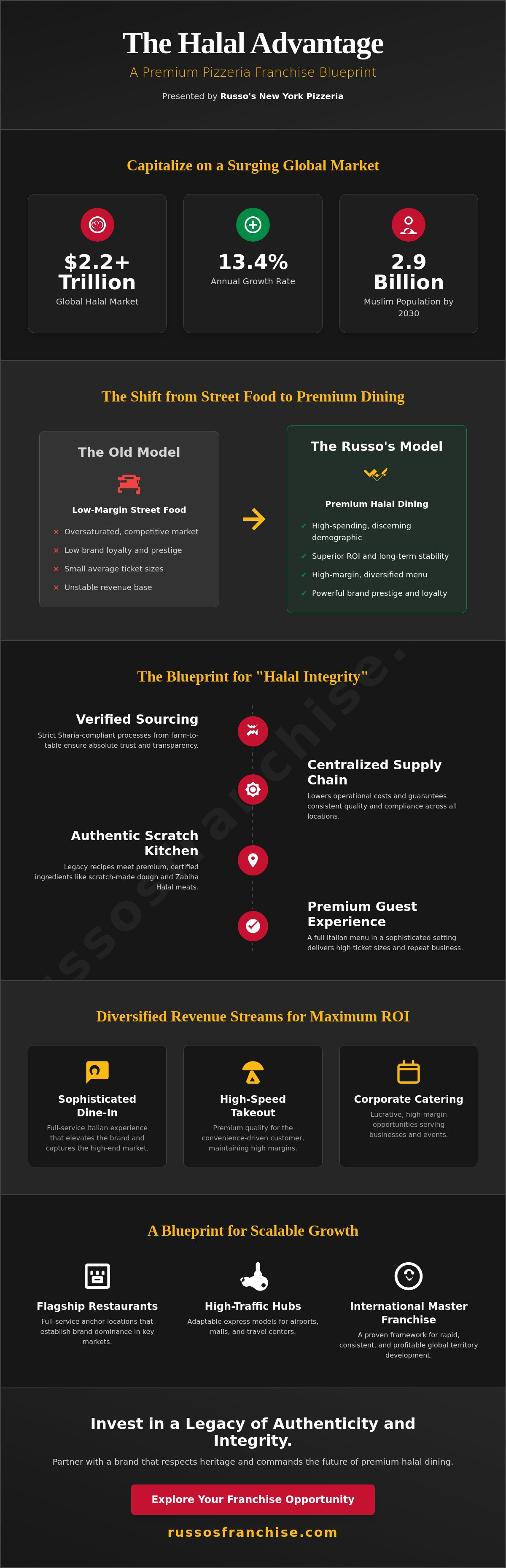
You're right to prioritize supply chain integrity and the stability of your margins in a competitive economy. This guide will show you how to capitalize on the 13.4% annual growth of the halal sector by merging strict certification with the proven success of an authentic New York pizzeria. We'll examine the operational blueprint for multi-unit expansion, the importance of verified sourcing, and the specific strategies required to maximize your ROI in the 2026 premium dining market.
Key Takeaways
- Capitalize on a global halal market exceeding $2.2 trillion by choosing a business model that prioritizes Sharia-compliant supply chains.
- Diversify your revenue streams beyond standard takeout with high-margin corporate catering and a sophisticated, sit-down Italian menu.
- Identify why a premium halal franchise investment offers superior ROI compared to low-cost competitors by focusing on long-term stability and brand prestige.
- Master the "Halal Integrity" process to ensure farm-to-table compliance while utilizing a centralized supply chain to lower operational costs.
- Evaluate a scalable blueprint for growth that adapts to diverse environments, from high-traffic airports to full-service flagship locations.
Table of Contents
The State of Halal Franchise Investment in 2026
A halal franchise investment represents much more than a simple business transaction. It's a disciplined commitment to a Sharia-compliant model that prioritizes integrity at every stage of the supply chain. In 2026, the global halal food market has reached a staggering valuation exceeding $2.2 trillion, signaling a massive shift in consumer priorities and spending power. This growth isn't limited to traditional markets; it's a worldwide phenomenon driven by a population that values transparency, quality, and religious adherence. For the savvy investor, understanding What is Halal and how it applies to modern commerce is the first step toward securing a piece of this expansive economic landscape.
Within the broader Italian food sector, the halal-certified pizzeria has emerged as a powerhouse niche. It bridges the gap between universal culinary appeal and specific dietary requirements, making it a versatile choice for diverse urban populations. Russo’s New York Pizzeria has spent decades refining this balance. By merging a deep-rooted family heritage with rigorous global religious standards, they've created a blueprint that doesn't just meet market demand but defines it. It's a sophisticated approach that treats the franchise partner as a custodian of both a family legacy and a sacred trust.
The Shift from Street Food to Premium Dining
Modern consumers are evolving beyond the era of simple street-side carts. While low-cost "chicken and rice" options once dominated the scene, the 2026 demographic craves sophisticated sit-down experiences. They seek environments that reflect their values without compromising on ambiance or service. This shift has led to a significant Heritage ROI, where the brand's story and authenticity drive high customer retention and organic word-of-mouth marketing. Premium positioning naturally attracts a higher-spending demographic, leading to larger average ticket sizes and a more stable revenue base than high-volume, low-margin fast food models.
Global Demand for Sharia-Compliant Hospitality
The demand for high-quality, halal-certified dining is surging across specific hot zones, including the Middle East, Southeast Asia, and major Western urban centers. Investors are increasingly looking toward an international master franchise model to facilitate rapid territory expansion and maintain operational consistency across borders. 2026 is widely regarded as the Golden Age for these concepts. The combination of a growing Muslim population, projected to reach 2.9 billion by 2030, and a rising interest from non-Muslim consumers in the hygiene standards of halal food creates a perfect environment for growth. It's a unique window where tradition and profitability align perfectly.
Analyzing the Halal Italian Kitchen Business Model
The "Halal Advantage" is a strategic edge that many global competitors overlook by focusing solely on limited street-food menus. While others compete in a race to the bottom with low-cost platters, a premium pizza franchise opportunity allows you to tap into a high-spending demographic seeking a complete dining experience. This business model is built on three robust revenue streams: traditional dine-in service, high-speed takeout, and high-margin corporate catering. By diversifying these channels, you ensure that your halal franchise investment remains resilient regardless of shifting consumer habits.
Managing the Cost of Goods Sold (COGS) is vital for long-term profitability in any kitchen. At Russo’s, we don't cut corners on quality. We utilize scratch-made dough, hand-crushed tomatoes, and premium cheeses as our baseline. A successful halal franchise investment requires a sophisticated supply chain that can provide these high-quality, certified ingredients at a sustainable price point. This commitment to excellence is reflected in The State of Halal Franchise Investment in 2026, which highlights how transparency and quality are the primary drivers of growth in the premium sector.
Beyond the Pizza Box: Menu Diversification
Check sizes grow significantly when customers have access to a full Italian menu rather than just a single product line. Pasta dishes, fresh salads, and halal-certified entrees provide a level of variety that standard pizzerias can't match. Specifically, the inclusion of "Zabiha Halal" premium meats allows you to offer authentic Italian flavors that meet the highest religious standards. Russo’s original family recipes are meticulously adapted to ensure every sauce and seasoning remains halal-compliant while preserving the bold, signature taste that has defined the brand for decades.
Operational Stability and Founder-Led Support
Success in the food industry isn't just about the food; it's about the systems behind it. Chef Anthony Russo’s 30 years of operational experience provide a refined blueprint for every franchise partner to follow. Our training programs are designed to ensure that a pizza served in Dubai tastes exactly like one served in Houston. In 2026, choosing "Quality over Convenience" isn't just a culinary preference, it's a financial strategy that builds lasting customer loyalty. If you're looking for a partner who understands the nuances of this market, you might find that a premium Italian franchise is the right fit for your goals.
ROI Comparison: Halal vs. Traditional Pizzeria Models
Choosing between a standard pizzeria and a specialized halal franchise investment requires a deep look at long-term profitability rather than just initial setup costs. Many independent operators fall into the "Race to the Bottom" trap, where they compete solely on price and sacrifice margins to stay relevant. This model relies on unsustainable volume and leaves the business vulnerable to even minor fluctuations in food costs. By contrast, a premium value model focuses on a demographic that prioritizes authenticity, religious compliance, and high-quality ingredients. Consumers in this sector aren't just looking for a meal; they're looking for a brand they can trust.
When you evaluate your entry into the market, remember that the initial franchise fee is a strategic investment in professional support and brand equity. It's the price of bypassing the years of trial and error that sink most independent startups. Industry reports suggest that Analyzing the Halal Italian Kitchen Business Model reveals a significant willingness among consumers to pay a premium for verified, certified Italian food. This "Halal Premium" allows for healthier margins and a more resilient bottom line, especially when compared to generic, uncertified competitors who struggle to build true customer loyalty.
Ticket Size and Customer Lifetime Value (CLV)
The financial impact of a premium menu is most visible in the average guest check. While a typical fast-casual halal outlet might see ticket prices between $12 and $15, a full-service Italian kitchen often commands $25 to $40 per guest. This increase is driven by a menu that encourages appetizers, specialty pastas, and desserts. Because the environment is designed for family-centric dining, it fosters repeat visits and a higher Customer Lifetime Value. Loyalty programs and consistent quality further protect your revenue, ensuring that your guests return for every celebration and family gathering.
The Scalability Factor
Scalability is where a proven halal franchise investment truly outshines independent ventures. Multi-unit development models allow you to leverage shared resources and marketing spends across high-density markets, accelerating your overall ROI. A proven system reduces the failure tax of independent startups by providing a documented path to success. Additionally, the exit value of a branded franchise is typically much higher than that of an independent shop. When it comes time to sell or pass on your legacy, a globally recognized name with certified supply chains represents a far more attractive asset to future investors.
Navigating Halal Certification and Supply Chain ROI
Halal integrity isn't a checkbox; it's a rigorous operational standard. In a Russo’s kitchen, this process ensures that every ingredient is tracked from the farm to the final table. A successful halal franchise investment relies on this transparency to build unbreakable trust with the community. Managing these complexities requires a sophisticated approach to sourcing that goes beyond simple certification. It involves a total commitment to purity, ensuring that no cross-contamination occurs at any stage of production or preparation. This level of detail is what separates a premium Italian kitchen from a standard fast-food outlet.
Maintaining healthy margins while adhering to strict religious standards is a common concern for new partners. The reality is that a centralized supply chain actually protects your profitability. By consolidating purchasing power, a franchisor secures competitive pricing on premium halal meats and specialty cheeses that independent shops cannot reach. Our fresh-food model also utilizes proprietary technology to track inventory in real-time. This precision minimizes waste and ensures that every dollar spent on high-quality ingredients contributes directly to your bottom line. Quality and compliance don't have to come at the expense of your EBITDA.
Supply Chain Efficiency
Franchisor purchasing power is your greatest tool for managing COGS. We leverage a global network to provide consistent access to certified ingredients at sustainable rates. Our foundation is built on scratch-made dough. By utilizing simple, high-quality ingredients like flour, water, and yeast, you create a product that is naturally halal-friendly and provides an exceptional margin. In a high-volume environment, we implement specific kitchen workflows designed to prevent cross-contamination. These disciplined systems ensure that your halal franchise investment remains compliant without slowing down your service speed.
Financing Your Halal Investment
Securing the right capital is a vital step in your entrepreneurial journey. You can explore various avenues by reading our restaurant franchise financing guide. For many investors, Sharia-compliant financing options offer a way to scale their business while remaining true to their values. It's essential to balance your initial build-out costs with a healthy reserve of working capital to support your growth through the first year. If you are ready to explore a partnership built on transparency and heritage, consider how our proven halal franchise model can help you achieve your financial goals.
The Russo’s Blueprint: A Scalable Halal Legacy
A legacy isn't built overnight; it requires a marriage of time-honored tradition and tactical foresight. Russo’s New York Pizzeria offers a unique halal franchise investment that stands apart by focusing on premium Italian heritage rather than the crowded street-food sector. This isn't just about opening a restaurant; it's about following a refined blueprint that has been perfected over three decades. Whether you envision a high-energy airport kiosk, a convenient fast-casual spot, or a flagship full-service dining room, the model adapts to your local market needs. Chef Anthony Russo remains personally involved in the success of international partners, ensuring that the brand’s soul translates across every border.
The transition from inquiry to ownership is a methodical journey designed to build confidence. We invite potential partners to participate in our Discovery Day process, where you can experience the operational rhythm of our kitchens firsthand. Choosing this halal pizza franchise means joining a global family that prioritizes your ROI through proven systems and unwavering brand standards. It’s a chance to secure your future in the 2026 market with a partner who understands that authenticity is the ultimate competitive advantage.
A Proven System for 2026 and Beyond
Stability is the cornerstone of our organization. With a 30-year track record of operational excellence, we provide a level of reliability that independent startups simply cannot match. Our "Family-First" culture isn't just a slogan; it's a practical business strategy that drives staff retention and creates a welcoming atmosphere for guests. To protect your brand equity, Russo’s explicitly excludes ghost kitchen licensing. We believe that the sensory experience of a real Italian kitchen, with its open ovens and fresh aromas, is essential to maintaining the premium value of your halal franchise investment .
Joining the Global Russo’s Family
For those with an ambitious, growth-oriented mindset, the path to becoming a Master Developer offers a way to scale rapidly across entire regions. This model provides the structure needed to dominate high-density markets while maintaining the "Russo’s Way" of quality control. You’ll receive comprehensive training and ongoing support that covers everything from site selection to local marketing strategies. If you're ready to build a scalable business that honors your values and your heritage, we invite you to download the investment kit and begin your journey with us today.
Securing Your Future in the Premium Halal Market
Capitalizing on the global shift toward high-quality, Sharia-compliant dining requires more than just a menu change. It demands a partnership with a brand that respects the intersection of authentic heritage and modern religious standards. You've seen how the $2.2 trillion market is moving away from basic street food toward sophisticated, sit-down experiences that command higher ticket sizes and foster deep customer loyalty. By choosing a halal franchise investment with over 30 years of proven heritage and success, you gain access to a specialized, certified supply chain and the expert guidance of Chef Anthony Russo himself.
This isn't just a business opportunity; it's a chance to build a scalable legacy that resonates with a growing global population. Your path to multi-unit success starts with a proven blueprint that balances operational stability with culinary excellence. The time to claim your territory in this underserved niche is now. Download the Russo’s Halal Franchise Investment Report and start your legacy today. We look forward to helping you bring a world-class Italian experience to your community.
Frequently Asked Questions
What is the average ROI for a halal pizza franchise?
Return on investment depends on location and management, yet high-performing halal franchises often report average unit sales exceeding $1.1 million. The global halal market’s projected 13.4% annual growth rate suggests a significantly more resilient revenue path than the standard pizza segment. By focusing on a premium model, you avoid the low-margin competition that plagues generic pizzerias.
How much liquid capital do I need for a premium halal restaurant investment?
A typical premium investment requires a minimum of $250,000 in liquid capital to ensure operational stability. This liquidity covers the initial build-out costs and provides a necessary buffer for working capital during your first year of growth. Maintaining a disciplined financial reserve is essential for a successful halal franchise investment in high-traffic urban centers.
Is halal pizza more profitable than standard pizza?
Halal models often achieve higher profitability because they serve an underserved demographic that prioritizes certified quality over the lowest price. This "Halal Premium" leads to greater brand loyalty and reduces the need for aggressive discounting. When you combine this loyalty with an Italian kitchen’s high average ticket size, the profit potential per guest increases substantially.
How does Russo’s handle halal certification for its international locations?
Russo’s maintains strict integrity by partnering with recognized certifying bodies to audit every step of the supply chain. From farm to table, each ingredient is verified to meet rigorous religious standards. Our kitchen workflows are specifically designed to prevent cross-contamination, ensuring that every meal served in our global units remains 100% compliant and authentic.
Do I need prior restaurant experience to invest in a halal franchise?
While a background in hospitality is beneficial, it's not a requirement if you follow a proven operational blueprint. Russo’s provides extensive training that distills 30 years of industry expertise into a manageable system for new owners. We act as a seasoned mentor, guiding you through site selection, staff training, and daily management to ensure your success.
What is the difference between a single-unit and a master franchise investment?
A single-unit investment involves owning and operating one specific location in a protected territory. In contrast, a master franchise grants you the rights to develop and oversee an entire region or country. Master developers benefit from faster scaling opportunities and the ability to build a massive regional legacy through multi-unit expansion.
How does an Italian kitchen model outperform a fast-casual halal cart?
The Italian kitchen model captures a much higher average ticket size by offering a full dining experience rather than a single meal. While carts rely on high-volume street traffic for low-margin sales, a full-service kitchen generates revenue from dine-in, takeout, and high-margin corporate catering. This diversification creates a more stable and scalable halal franchise investment .
Are there specific financing options for Sharia-compliant franchise investments?
Yes, many investors utilize Islamic financing structures such as Murabaha or Musharaka to fund their business ventures. These models allow you to secure the necessary capital for growth without traditional interest-based loans. We recommend consulting with a financial advisor who specializes in Sharia-compliant products to tailor a plan that fits your specific investment goals.