
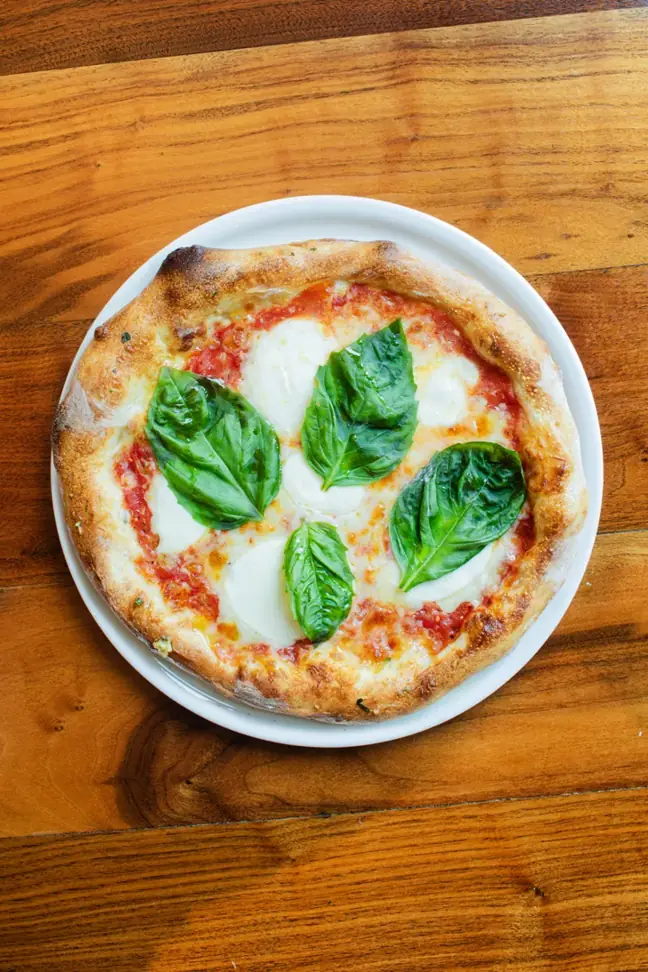
Short answer: A New York style pizza franchise is defined by a product standard, not a map. The crust is thin, hand-stretched and foldable with a crisp bottom and a chewy rim, which comes from a lean dough, the right flour, disciplined fermentation and a hot deck-oven bake. Sauce, cheese and topping standards, whole-pie and slice service, and the systems that keep every location consistent complete the definition. A candidate should verify each of those elements, then look at how the pizza sits inside the full menu and the restaurant's channels.
Dough, flour and fermentation set the crust
New York-style dough is simple on paper: flour, water, salt, yeast, a little oil and sugar. The result depends on the choices behind each ingredient. High-protein flour builds the gluten that lets a cook stretch a large pie thin without tearing and gives the crust its chew. Hydration determines how open the crumb is and how the dough handles. A cold fermentation measured in days, not hours, develops flavor and the blistering that marks a good crust.
Ask a franchisor how dough is made and managed in its restaurants: whether it is mixed fresh in-house, how long and at what temperature it ferments, how dough balls are portioned and tracked by age, and what happens to dough that is too young or too old. A concept that cannot answer these questions precisely does not have a dough standard; it has a recipe someone can change.
- Flour specification and approved supplier.
- Hydration, mixing and bulk fermentation procedure.
- Dough-ball portioning, dating and rotation rules.
- What the restaurant does with dough outside its window.
Hand stretching, bake and the foldable slice
The signature of the style is a large pie stretched by hand until the center is thin enough to fold and the rim keeps a little height. Rolling pins and presses produce a different, denser crust. Stretching is a trained skill, so the system should include a documented technique, practice time in training and a way for managers to check consistency on the line.
The bake finishes the definition. Deck ovens with stone or steel surfaces bring heat to the base quickly, producing the crisp bottom and the leopard-spotted underside guests expect. Bake time and oven temperature should be written standards, with a procedure for rotating pies and for managing oven recovery during a rush. A pie that comes out pale or soggy is a process failure that a standard would have caught.
Sauce, cheese and topping standards
Sauce on a New York pie is applied thin and tastes of tomato first: bright, lightly seasoned, not cooked down into a paste. Cheese is low-moisture mozzarella spread to the rim, with the ratio of cheese to sauce specified so the slice holds together when folded. Toppings are placed in defined amounts so a pepperoni pie in one restaurant looks and costs the same as a pepperoni pie in another.
Russo's describes its own standards publicly: fresh dough made in-house, traditional sauce made with California-grown tomatoes, 100% mozzarella from a Wisconsin dairy farm, and cooking with extra virgin olive oil instead of seed oils, with the stated caveat that the oil statement does not certify every purchased ingredient. The menu and ingredient page shows how those standards appear across the pizza and Italian menu. A candidate evaluating any brand should ask for the equivalent list and for the supplier approval process behind it.
- Sauce recipe, seasoning and application weight.
- Cheese type, source and coverage specification.
- Portion standards for every topping.
- Supplier approval and substitution rules.
Slice service, whole pies and consistency across locations
New York-style restaurants often sell by the slice at lunch and by the whole pie at dinner and for delivery. Slice service requires its own rules: how many pies to hold, how long a slice can sit, how it is reheated and when it is discarded. Whole-pie service for takeout and delivery requires boxes that vent steam so the crust stays crisp across town. Both should be written down and trained.
Consistency across many restaurants is a systems question. Documented recipes and procedures, hands-on training before opening, approved suppliers, line checks each shift and periodic quality visits are the tools that keep the hundredth pizza like the first. Ask how training is delivered, who checks quality after opening and how recipe changes are controlled. Russo's training at its Houston flagship covers culinary standards along with operations, food safety and guest service, and the support page notes that recipes, ingredient standards and supplier guidance are provided for consistency across restaurants.
The pizza inside a broader menu and four channels
A New York-style pizza standard is the center of the concept, not the whole business. Some concepts stop at pizza; others pair it with a full Italian kitchen. The broader menu changes the restaurant: fresh pasta cooked to order, scratch sauces, meatballs and entrees bring families to the dining room in the evening and raise the ticket on delivery and catering orders, while adding stations, prep and training.
Candidates should evaluate how the pizza and the rest of the menu share the kitchen across dine-in, takeout, delivery and catering, and what that means for staffing and footprint. Russo's explains its combination of gourmet pizza and fresh pasta on the pizza franchise opportunity page, with current U.S. investment figures and candidate qualifications on the investment page; the FDD controls the exact restaurant plan offered in a given market.
How this connects to Russo's
Russo's New York Pizzeria & Italian Kitchen was built around New York-style pizza and the family recipes Chef Anthony Russo learned from relatives with roots in Avellino, Naples and Sicily. He introduced the concept in Houston in 1992, and the brand has franchised since May 1998. The brand story covers that history and the ingredient philosophy summed up in his rule, "If it isn't fresh, don't serve it." Qualified candidates can review the chef-founded model and ask Franchise Development how dough, sauce, cheese and bake standards are trained and maintained in operating restaurants.
Sources
Explore Russo's New York style pizza franchise opportunity.
Explore the Russo's franchise opportunity
Review the investment, support and available growth markets, then speak with Franchise Development about your preferred territory.
Check territory availability